
Review · AYUTTHAYA DAY TRIPS
6-Day Northern Thailand Tour: Ayutthaya, Sukhothai, Chiang Mai and Chiang Rai from Bangkok
Six days north feels like time travel. This route strings together old Siam capitals, mountain hill tribe visits near Chiang Rai, and the jaw-drop views at the Golden Triangle, then finishes with temple climbs and crafts in Chiang Mai. You also get optional choices like a brief border crossing into Myanmar and a paid Mekong River boat ride to Laos.
I like two things most. First, the tour feels managed in a good way, with an English-speaking guide who can explain temples and history in plain terms, like guides such as Vanda and Shannon were reported to do. Second, you trade tourist-y animal shows for a sanctuary day at Elephant Nature Park, plus a Kantoke dinner night that mixes good food with folk dance performances.
One consideration: this is a fast-moving route with early starts and long driving days. Also, hotel standards can vary in the north, and one past guest flagged that the first nights accommodation needed refurbishing.
In This Review
- Key takeaways before you go
- Bangkok To The North: How the Route Really Feels
- Day 1 Ayutthaya, Lopburi, and Phitsanulok: Ruins With Context
- Day 2 Sukhothai and Sri Satchanalai: Stone Buddhas and Calm Ruins
- Day 2 Evening Chiang Rai Arrival Via Phayao: A Small Reset
- Day 3 Doi Mae Salong, Mae Sai Border, Golden Triangle, and Chiang Saen
- Day 4 Mae Ka Chan Hot Springs and Wat Stops on the Way to Chiang Mai
- Day 5 Elephant Nature Park and San Kamphaeng Craft Village
- Day 6 Departure From Chiang Mai: Clean Finish
- Price and Value: What Your Money Is Buying
- Practical Tips for Making This Trip Work Well
- Should You Book This Northern Thailand Route to Ayutthaya, Chiang Mai, and Chiang Rai?
- FAQ
- What are the main places this tour visits?
- How long is the tour and when does it start?
- Are pickup and transportation included?
- Are admissions included?
- Are meals included?
- Is the boat ride to Laos included?
- Can you cross into Myanmar from Mae Sai?
- Where is the tour rating and what is the maximum group size?
- What is the cancellation window for a full refund?
Key takeaways before you go
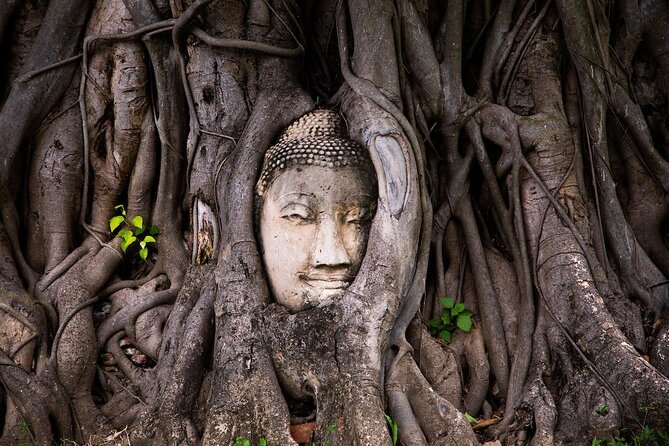
- Ayutthaya plus Sukhothai: two former capitals in one sweep, with temple ruins you can actually picture
- Chiang Rai border options: Mae Sai bridge and an optional Myanmar walk when conditions allow
- Hill tribe village visits: Akha and Yao villages plus the Chinese settlement of Doi Mae Salong
- Golden Triangle viewpoints: Ruak and Mekong river meeting points from a hilltop perspective
- Elephant Nature Park: a half-day sanctuary visit, followed by a vegetarian buffet lunch
- Chiang Mai highlights: Wat Phrathat Doi Suthep steps or cable car, then Kantoke folk dance
Bangkok To The North: How the Route Really Feels
The day-one start is 6:00 am, and you feel it. This isn’t a slow “one city at a time” trip. It is built like a route, with you hopping between regions while a guide handles timing, tickets, and the why behind each stop.
The payoff is that you cover a lot of ground without doing the planning math. You are also traveling with a small group setup, with a stated maximum of 3 travelers. Past guests noted they sometimes had just two people on the tour, which usually means you get more flexibility and clearer explanations.
Transport is by car or van between stops, and you’ll spend plenty of hours in transit. If you get car sick, bring what works for you. The upside is the scenery changes fast: canal views near old Siam sites, rice-field roads, and then the mountain roads approaching Chiang Rai.
More Ayutthaya day trips:
- From Bangkok: Ayutthaya Temples Guided Tour with Lunch
★ 4.7 · 10,535 reviews - From Bangkok: Ayutthaya Historical Park Guided Day Trip
★ 4.6 · 3,020 reviews - From Bangkok: Ayutthaya Day Tour by Bus with River Cruise
★ 4.3 · 1,892 reviews
Day 1 Ayutthaya, Lopburi, and Phitsanulok: Ruins With Context
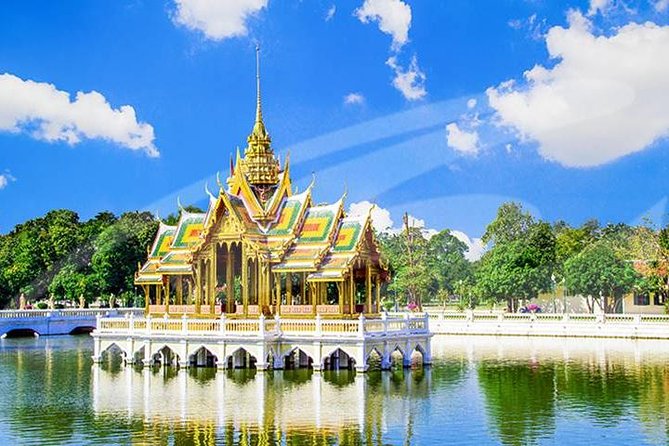
Day 1 aims straight at classic northern Thailand history, starting in Bangkok’s orbit with a royal palace stop at Bang Pa-In. This is a nice warm-up because it sets the tone: Thai and European design influences side by side, plus a calm garden lake setting.
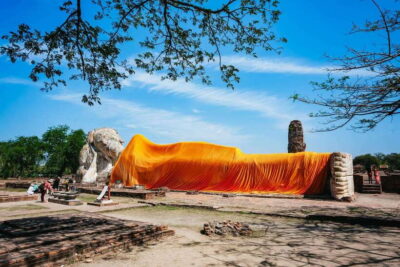
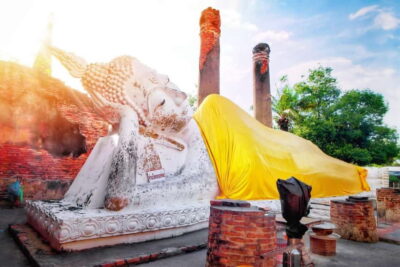
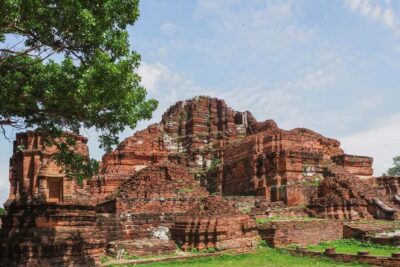
Then you head to Ayutthaya, the old capital of Siam. What makes this stop worth your time is not just the photos. You get to wander ruined temples and palaces, and you also get the canal and river story, how waterways once powered the city’s prosperity. If you like seeing how geography drives culture, this is a strong start.
After Ayutthaya, you drive through Lopburi, a smaller detour that still packs meaning. It connects ancient roots to later shrine highlights like Phra Prang Sam Yod and the Kala shrine of Sarn Prakarn. The practical benefit here is that it breaks the day so you are not only doing one type of ruins back to back.
You end Day 1 at Phitsanulok with a temple visit at Wat Mahathat. It’s a solid finish and a good way to understand Thai religious architecture without needing extra museum time. The only drawback is stamina: with all these stops in one day, you’ll want shoes that don’t mind walking on uneven ground.
Day 2 Sukhothai and Sri Satchanalai: Stone Buddhas and Calm Ruins
Day 2 shifts from Ayutthaya’s big-picture ruins to Sukhothai’s softer, more atmospheric feel. Sukhothai was built with earthen ramparts and moats around the core area, and you get the layout idea as you walk. That helps the sites make sense fast instead of feeling like random temple clusters.
The standing Buddha statues and the ruins of temples and monasteries are the center of the show. What I like here is how the design lets you slow down. Even if you are moving on a tight schedule, the pace of ruin-walking is naturally gentler than a modern city visit.
After exploring Sukhothai, you visit Sri Satchanalai, its twin city about 55 kilometers north. It’s a good “keep the story going” stop because it reinforces that this region was a network, not one isolated site.
Lunch is at a local restaurant, then the drive continues through rural Thailand with jungle-covered hills. This is one of those days where you feel your body switch from sightseeing mode to travel mode. If you can, hydrate early and often.
Day 2 Evening Chiang Rai Arrival Via Phayao: A Small Reset
You make a brief stop at Phayao, a town dating back to the 11th century. The key practical value is that it offers a breather by the lakeside. You get refreshments and a moment to step away from the temple-and-ruin rhythm.
You then continue to Chiang Rai, arriving by late afternoon. You stay at Teak Garden Spa Resort for the night, which is a useful staging base because the next day goes deep into border-country territory.
One smart thing about this plan is that it doesn’t force you to cram Chiang Rai city sights the same evening. You arrive, settle in, and then you are ready for the mountains and markets the next day.
A few more Bangkok days to weigh up
- Bangkok: Damnoen Saduak Market and Maeklong Railway Market
★ 4.5 · 26,723 reviews - The Old Siam: Damnoen Saduak and Maeklong Railway Market
★ 4.5 · 10,992 reviews - Bangkok: Train Market & Floating Market with Boat Ride
★ 4.7 · 9,547 reviews - Bangkok Canal Tour: 2-Hour Longtail Boat Ride
★ 4.5 · 5,909 reviews
Day 3 Doi Mae Salong, Mae Sai Border, Golden Triangle, and Chiang Saen
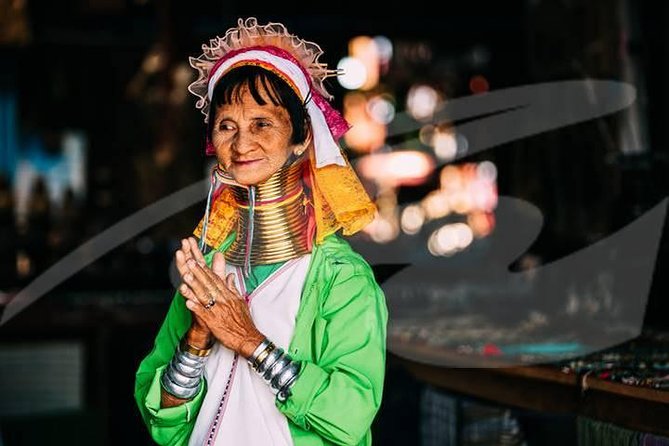
Day 3 is where the tour feels most like “northern Thailand in full color.” You ride to the mountains by pickup-style vans, which means winding roads and regular scenery changes. It is part of the experience, even if it is a little bumpy.
Your first major stop is Doi Mae Salong, tied to a Chinese settlement history. The area was established by Kuomintang soldiers who fled China after Mao Zedong’s 1949 victory. On the ground, that history shows up in what you see and the way the settlement is described, including Chinese herbal medicines and mountain views.
Then you visit Akha and Yao hill tribe villages. I like these stops when you treat them as cultural observation, not a photo hunt. You get to see traditional costumes and learn about daily life and customs in smaller village settings.
Next is Mae Sai, the northernmost town on the border with Myanmar. This is where practical travel meets real-world movement: the bridge connects Thailand and Myanmar, and the market area sells Burmese handicrafts at often-attractive prices.
There’s an optional Myanmar border crossing if conditions allow, with a brief exploratory walk of about an hour. You’ll need two passport photocopies and a border pass fee. If border rules tighten last minute, do not be surprised if the option gets adjusted, since it is explicitly condition-dependent.
From Mae Sai, you head to the Golden Triangle, where the Ruak and Mekong Rivers meet. The key point is the viewpoint on a hilltop, giving you scale for the way three countries overlap in geography. After that, you continue to Chiang Saen, a riverside town tied to a 13th-century city site. It is calmer than Mae Sai and works as a soft landing before you return to Chiang Rai for the night.
Day 4 Mae Ka Chan Hot Springs and Wat Stops on the Way to Chiang Mai
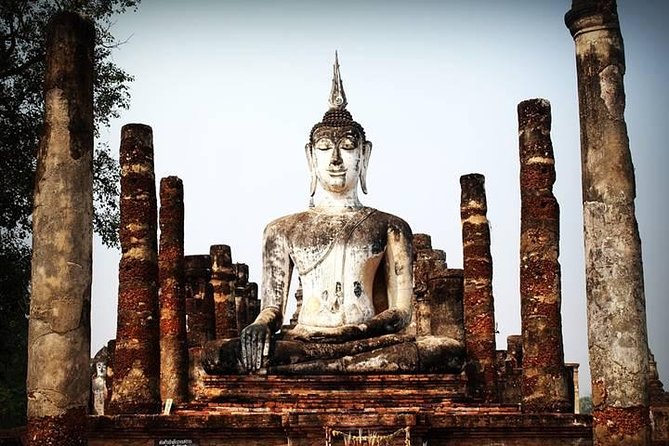
Day 4 starts with travel out of Chiang Rai to Chiang Mai. Before you reach the big “Rose of the North” city, you stop at Mae Ka Chan, known for hot springs. The practical value is local life: you see how people use the springs for therapeutic bathing, the kind of everyday tradition that doesn’t show up in Bangkok tour brochures.
Lunch is at a local restaurant, then you drive through mountain scenery and lush jungle areas. You arrive in Chiang Mai, and that arrival matters because the next part of the trip is city-focused and active.
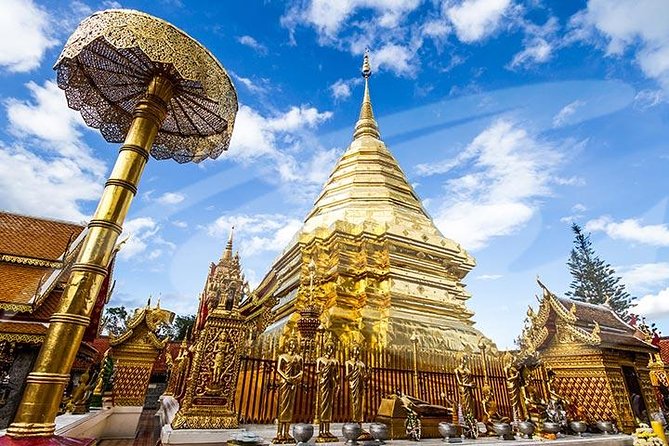
Once in Chiang Mai, the route hits one of the area’s most famous temples: Wat Phrathat Doi Suthep. You can climb 290 steps or take a cable car to the summit. If you like views and don’t mind stairs, the steps feel more rewarding. If you’d rather save your knees, the cable car is an easy choice.
The top views give you a sense of Chiang Mai’s basin and hills. It’s also one of the better “get your bearings fast” stops in the whole trip.
That night, you get a Kantoke dinner with northern Thai food and folk dance performances, plus additional hill tribe group performances in traditional attire. This is a great pairing with Doi Suthep because it keeps the theme cohesive: temples by day, cultural stage performance by night.
You stay at The Empress Chiang Mai for the night.
Day 5 Elephant Nature Park and San Kamphaeng Craft Village
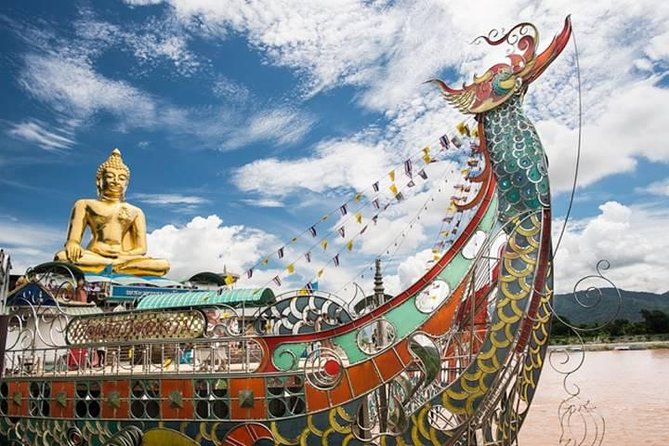
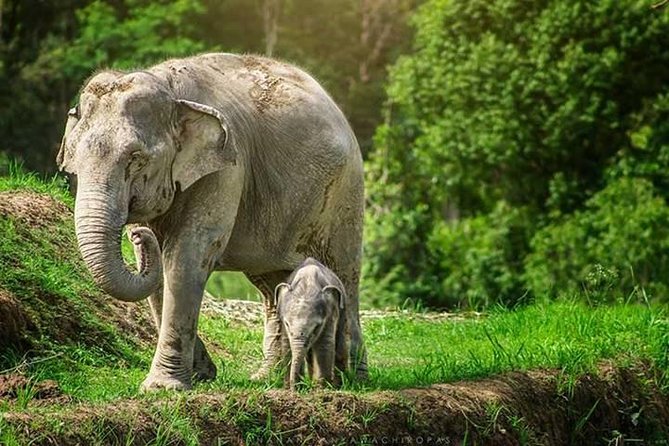
Day 5 is the day I think most people will remember for the right reasons. You get picked up from central Chiang Mai, then ride toward Mae Taeng District for a half-day visit to Elephant Nature Park.
This is a sanctuary approach, not a show. The park focuses on rescue and rehabilitation, and the visit includes stories about rescued elephants and their backgrounds. It is one of those experiences where the value is in being able to observe animals in a safer, more respectful setting.
You arrive at 9:30 am for your half-day, and you also get a vegetarian buffet lunch at the park. This matters because it keeps you fueled without turning the day into a separate hunt for food.
After the elephant sanctuary, you head to San Kamphaeng, one of Chiang Mai’s well-known handicraft areas. The plan includes watching craft processes in motion: silk production from silkworms to handloom weaving, plus hand-painted umbrella making and pottery. You can also see woodcarvers working in teak and furniture and ornament shaping.
If you enjoy markets, crafts, and watching how skills are passed down, this is a stronger souvenir day than shopping blind. Just go in with a shopping mindset that’s slower and more selective. Some pieces are work-intensive, so prices can reflect that.
Day 6 Departure From Chiang Mai: Clean Finish
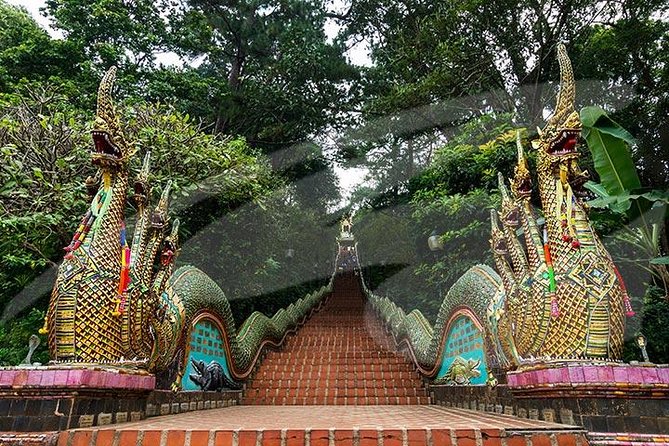
Day 6 is the simplest day. You eat breakfast, then transfer to the airport at the scheduled time. Flights are not included.
This is a good structure if you like your vacation ending on time rather than turning into a scramble. It also means you can plan your onward journey without too much guesswork, as long as you keep your flight timing realistic.
Price and Value: What Your Money Is Buying
At $1,914.66 per person for roughly 6 days, this is not a budget-only trip. But it can be good value depending on how you travel.
Here’s what you are paying for that a DIY plan often misses:
- Guiding and interpretation: you get an active guide who explains what you’re seeing, and past guests highlighted excellent English from their guides such as Vanda and Shannon.
- Route logistics: pickups are offered, and you move between multiple regions with less planning stress.
- Sight inclusions: admissions are listed as free for the main stops, and you have set temple and heritage moments rather than uncertain ticketing.
- Hotels on the ground: the stay is on a private double basis, with room details provided (twin beds or a queen bed).
- Food included daily: meals are served daily at typical Thai restaurants.
What is not fully included is the optional stuff. The boat ride to Laos is priced at about US$17, and the Myanmar bridge crossing is conditional and fee-based, with passport photocopies required.
So the value question becomes this: do you want a guided, packed route that covers a lot of landmarks fast? If yes, the cost can make sense. If you prefer a slower, cheaper, self-paced travel style, this price will feel heavy.
Practical Tips for Making This Trip Work Well
First, plan for early mornings. A 6:00 am start means you should be ready the night before. Pack light snacks and water for road days.
Second, think about heat and temple attire. You’ll be outdoors at ruins and temple areas, and you’ll do stairs at Doi Suthep. Comfortable shoes matter more than trying to look “touristy cute.”
Third, be clear about optional border and river choices. The Myanmar crossing depends on conditions, and you need two passport photocopies plus a border pass fee. The Laos boat ride is an add-on at around US$17, so decide based on your energy level. If you already feel travel-fatigued after the Golden Triangle day, skipping the boat is a totally reasonable call.
Fourth, set expectations about meals. They are at local Thai restaurants, and one past guest flagged that food could feel monotonous at times compared with Bangkok standards, while others praised it as very good. The safest approach is to be open to Thai staples like rice and noodles, and don’t go in expecting restaurant variety on par with a big-city foodie scene.
Finally, if your group is small, lean into it. With a maximum of 3 travelers, you can ask for clarifications on what you’re seeing. Guides in past trips were described as helpful and attentive, so don’t be shy.
Should You Book This Northern Thailand Route to Ayutthaya, Chiang Mai, and Chiang Rai?
Book it if you want a guided route that covers Ayutthaya and Sukhothai’s major ruins, adds Chiang Rai’s hill tribe and border-region experiences, and ends with Chiang Mai’s temple and craft highlights plus an elephant sanctuary day.
Skip it, or at least adjust your expectations, if you dislike long driving days or early starts. Also, if you are picky about hotel room condition, know that accommodation feedback has been mixed in the north, including one note about refurbishing needs.
If you like your travel with structure, strong interpretation, and a mix of heritage and real rural encounters, this trip has a lot going for it. Just come ready for motion, and you’ll get the best version of northern Thailand in a tight six days.
FAQ
What are the main places this tour visits?
It runs from Bangkok to the northern Thailand region, including Ayutthaya, Lopburi, Phitsanulok, Sukhothai, Sri Satchanalai, Chiang Rai (including Mae Sai, the Golden Triangle area, and Chiang Saen), and Chiang Mai (including Doi Suthep, Elephant Nature Park, and San Kamphaeng).
How long is the tour and when does it start?
The tour duration is approximately 6 days, and the start time is 6:00 am.
Are pickup and transportation included?
Pickup is offered, and you travel between stops by vehicle as part of the tour.
Are admissions included?
Admission tickets are listed as free for the stops included on the tour.
Are meals included?
Meals at typical Thai restaurants are served daily during the tour.
Is the boat ride to Laos included?
The boat ride to Laos is optional, and it costs approximately US$17.
Can you cross into Myanmar from Mae Sai?
There is an optional Myanmar border crossing on Day 3, depending on border conditions. You need two passport photocopies and a border pass fee. The walk is about one hour exploratory with your guide.
Where is the tour rating and what is the maximum group size?
The experience has a rating of 4.3 from 8 reviews, and the maximum group size is stated as 3 travelers.
What is the cancellation window for a full refund?
You can cancel up to 6 days in advance for a full refund.
Newest Bangkok reviews on the site
- Bangkok Dinner Cruise with Intl Buffet, Live Music & Hotel Pickup★ 4.5 · 12 reviews
- Half-Day Tour : PRIVATE Grand Palace & Temples★ 5.0 · 14 reviews
- Maeklong Railway and Damnoen Saduak Floating Market Tour★ 5.0 · 11 reviews
- The Luxury White Cruise Experience★ 3.5 · 34 reviews
- Luxury Dinner Cruise with Guide and Transfer (Opt. Executive Van)★ 5.0 · 9 reviews
- Bangkok Luggage Delivery from Hotel to Airport★ 5.0 · 25 reviews
- Baiyoke Sky Dinner Experience with Observation Deck Access★ 3.5 · 57 reviews
- Bangkok Luggage Storage★ 4.5 · 37 reviews
Ayutthaya Day Trips, compared.
Ayutthaya & Ayothaya Floating Market Day Trip
Read our review →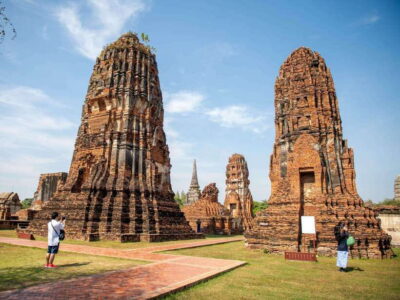
Ayutthaya Temples and River Cruise from Bangkok
Read our review →
UNESCO’s Ayutthaya Historical Park: Full-Day Tour from Bangkok
Read our review →
Floating Market and Ayutthaya Guided Day Tour
Read our review →
Ayutthaya, Railway & Floating Markets Full-Day Tour
Read our review →Browse the lists this tour appears in