
Review · STREET FOOD TOURS
Bangkok Hidden Gems: Talad Noi, Chinatown & Street Food Tour
Chinatown in Bangkok has a smell test, and this tour passes. You’ll walk Talad Noi’s tight lanes and then slide into Chinatown for Thai-Chinese street food plus quick stops at Holy Rosary Church and the Chow Sue Kong Shrine. It is timed for late afternoon, so you get better light for photos and calmer pacing than a midday crush.
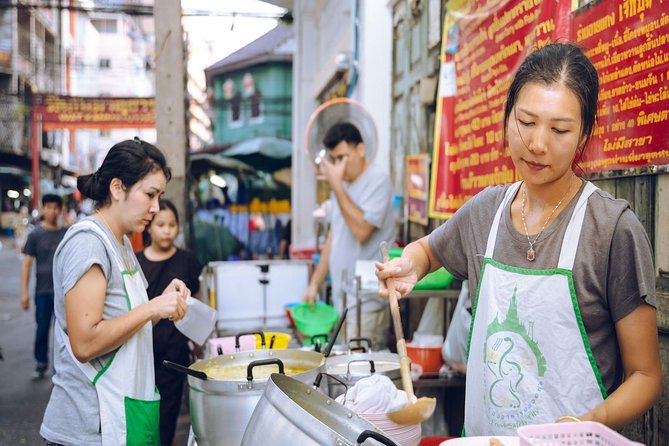
What I like most: you get real snack variety instead of one meal stop, and every bite is included as you go. I also like the small-group feel, where guides such as Nana and Pam (names I’ve seen in guide notes) keep things moving without turning it into a race.
One thing to plan for: you cover about 2 km on mostly crowded streets and market lanes. If it is raining or if the city closes certain roads for special events, the route can shift toward more food time, which is fine for most people, but less ideal if you came for every single sight.
In This Review
- Key highlights to know before you go
- Why Talad Noi and Chinatown work so well together
- Meeting at River City Bangkok, then walking straight into Talad Noi
- Talad Noi lanes, street art, and the first Thai and Chinese bites
- Holy Rosary Church: a Portuguese-built Gothic Revival pause
- Chow Sue Kong Shrine: blessings for well-being and protection
- Sol Heng Tai Mansion and Hong Sieng Kong, where old buildings meet modern use
- Chinatown crossings and Wat Mangkon Kamalawat to finish
- What street food samples you’ll likely eat, and how to pace yourself
- What the small group changes, from questions to crowd control
- Price and value: why $42.48 makes sense for a 2.5-hour evening
- Timing, timing changes, and how to plan for street closures
- Who should book this Chinatown street food tour
- Should you book this Talad Noi, Chinatown, and street food tour?
- FAQ
- Where is the meeting point and what time does the tour start?
- How long is the tour, and how much walking is involved?
- What street food is included?
- Can the tour accommodate vegetarians?
- Are tickets mobile, and do I need to bring anything?
- What age is the minimum for this tour?
Key highlights to know before you go
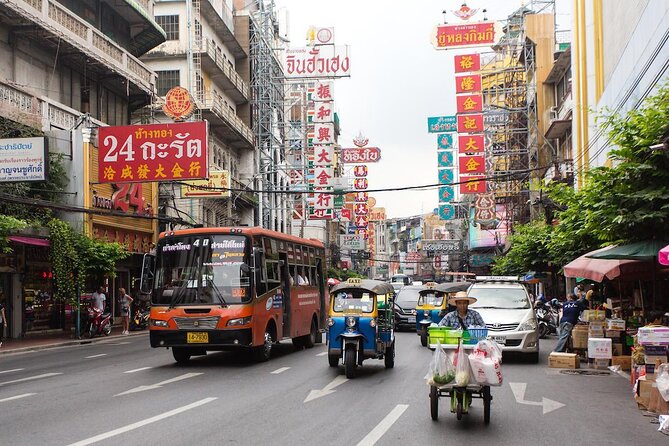
- Talad Noi and Chinatown, connected on foot: you see how the neighborhoods overlap, not just one postcard street
- Street food samples are built in: turnip cake, chwee kueh, duck noodle style Chao Tha, and Phad Thai Uncle Pom
- Two meaningful stops: Holy Rosary Church and the 200-plus-year-old Chow Sue Kong Shrine for blessings
- Old buildings with purpose: you pass places like Sol Heng Tai Mansion and stop at Hong Sieng Kong
- Small groups up to 12: enough attention for questions and food pacing
- Start at 4:00 pm from River City Bangkok: easy to reach by river and convenient for an evening schedule
Why Talad Noi and Chinatown work so well together
Bangkok’s Chinatown can feel overwhelming fast. Talad Noi is the calmer warm-up. It sits next to the better-known crowds, but it tends to reward you more for slowing down, looking up at old facades, and following the flow of people through side lanes.
This tour is a smart intro for first-timers because it mixes three things you normally do separately: street food, local religious sites, and neighborhood context. You’re not just eating. You’re learning why these streets look and taste the way they do.
And the timing helps. Starting around 4:00 pm means you get a transition from late-day market life into evening energy, without the hottest part of the day.
More Food Tours in Bangkok
- Bangkok: White Orchid Chao Phraya Dinner Cruise free Beer
★ 4.4 · 4,573 reviews - Bangkok by Night: Temples, Markets and Food Tuk-Tuk Tour
★ 5.0 · 3,752 reviews - Bangkok: Backstreets Food Tour with 15+ Tastings
★ 4.9 · 2,880 reviews
Meeting at River City Bangkok, then walking straight into Talad Noi
Your tour starts at River City Bangkok at the Si Phraya Pier area. The meeting point is specific, and it matters because this area sits right where river access meets busy city traffic. If you arrive early, take a minute to orient yourself so you do not feel rushed when you find your guide.
From there, you head into Talad Noi, a neighborhood tied to Chinese communities for over 300 years. That long timeline is why the streets feel layered, not themed. You’ll notice local street art, tight lanes, and the kind of everyday storefronts that tourists often miss because they stay on the main roads.
If you like walking tours that teach you how to read a neighborhood, this one fits. It is only about 2 km total, but it feels more like a guided stroll than a long hike.
Talad Noi lanes, street art, and the first Thai and Chinese bites
This is where the tour earns its name: street food as an experience, not street food as a checklist.
You’ll stop to sample a mix of Chinese and Thai flavors that are common here, plus a few dishes that help you understand the blending of cultures in Bangkok. The food samples listed for this tour include:
- Turnip cake (a Chinese dim sum-style dish)
- Chwee kueh (steamed rice cake with preserved radish)
- Chao Tha (duck noodle soup)
- Phad Thai Uncle Pom
You may also have tea or coffee at a café stop by the river.
What makes this portion valuable is that the guide does not just hand you food and move on. The pace is set around tasting, so you can compare textures and flavors: savory dim sum-style bites versus rice cakes versus noodle soups versus the familiar sweetness of phad thai.
One practical tip for your stomach: eat, but do it slowly. Street portions can be small, yet you get multiple samples in a short window, and Chinatown walking makes digestion work a bit harder.
Holy Rosary Church: a Portuguese-built Gothic Revival pause
After the Talad Noi lanes, you head to Holy Rosary Church. This is not your typical Bangkok temple stop. It is a European-style Roman Catholic church built in Gothic Revival style by Portuguese settlers, and it traces back to 1787.
Why it matters on a street food tour: it gives you a “wait, what else is here?” moment. Chinatown in Bangkok is Chinese in culture and commerce, but it is also full of other influences that came through trade, migration, and community life.
Your visit is short, about 15 minutes, so it works best as a visual break. Look for the style contrast against the surrounding market blocks. Even if you do not care about architecture deeply, it helps you remember that this neighborhood is not one single story.
More Street Food Tours in Bangkok
- Bangkok: Michelin Guide Street Food Tour by Tuk Tuk
★ 4.4 · 1,274 reviews - Bangkok Tuk-Tuk Tour by Night with Chinatown Street Food Meal
★ 5.0 · 635 reviews - Bangkok: E-Scooter Night Tour with Local Street Food
★ 4.8 · 488 reviews - Bangkok Tuk-Tuk by Night with Chinatown Street Food Meal
★ 4.6 · 263 reviews
Chow Sue Kong Shrine: blessings for well-being and protection
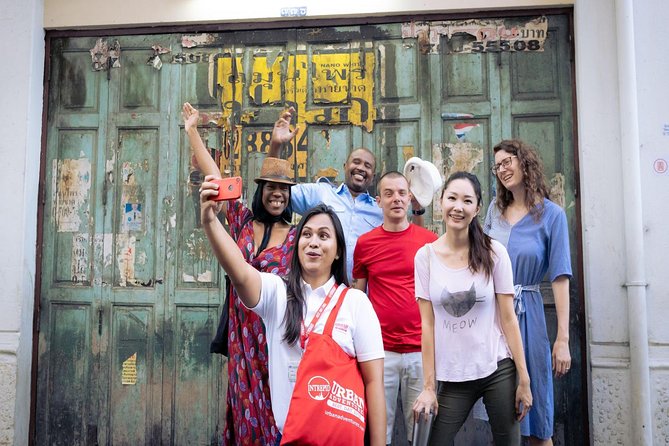
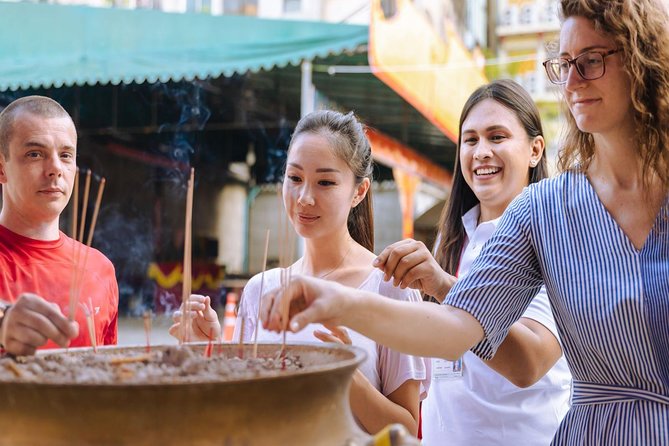
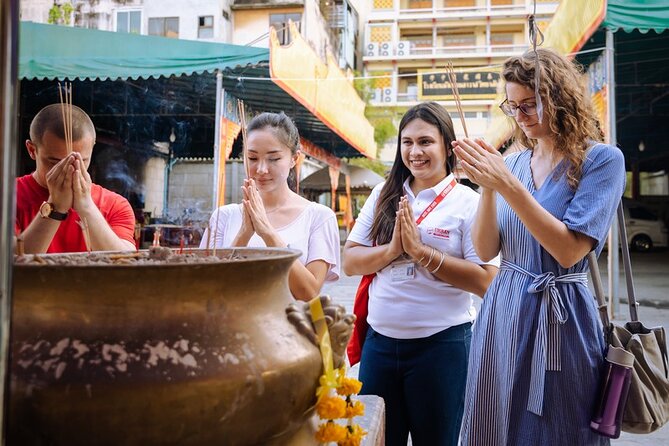
Next comes a more spiritual stop: the Chow Sue Kong Shrine, a Hokkien shrine more than 200 years old. This is where you can ask for blessings related to well-being, protection, and guidance.
This part is often the emotional high point for people who like travel that is more than shopping. It is not long, roughly 15 minutes, and you’re not expected to turn it into a lecture. Still, having a guide helps because the meaning of what you see feels less random when someone explains the context.
If you are respectful and quiet inside, you’ll likely feel the difference between this place and the noisy lanes outside. Then you head back into the flow of neighborhood life, which is the best way to balance culture with food.
Sol Heng Tai Mansion and Hong Sieng Kong, where old buildings meet modern use
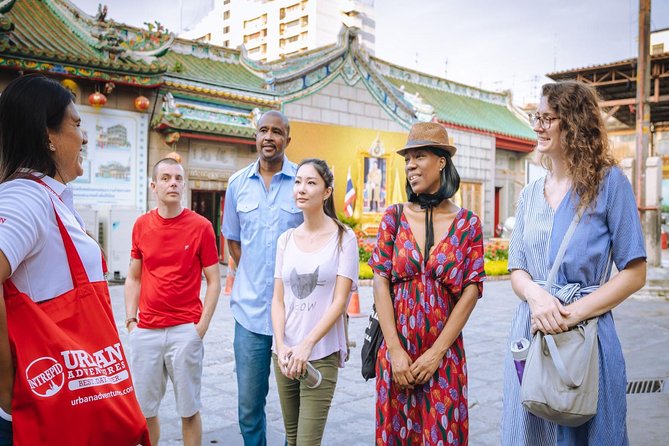
After the shrine, you pass Sol Heng Tai Mansion, described as one of the last remaining traditional Chinese houses in Bangkok. You do not spend hours here, but the stop helps you place Talad Noi and Chinatown into a timeline you can actually picture.
Then you shift to a stop at Hong Sieng Kong, which includes time for a local artist gallery and a café. The café setting is in a building dating to the reign of King Rama II in the Rattanakosin era.
This section works because it slows things down without killing the vibe. You get a look at old structures and then a chance to rest with a drink before you tackle the densest part of Chinatown.
If you like travel photography, this is also where you can get calmer angles than the street stalls. The building context makes your photos look more intentional.
Chinatown crossings and Wat Mangkon Kamalawat to finish
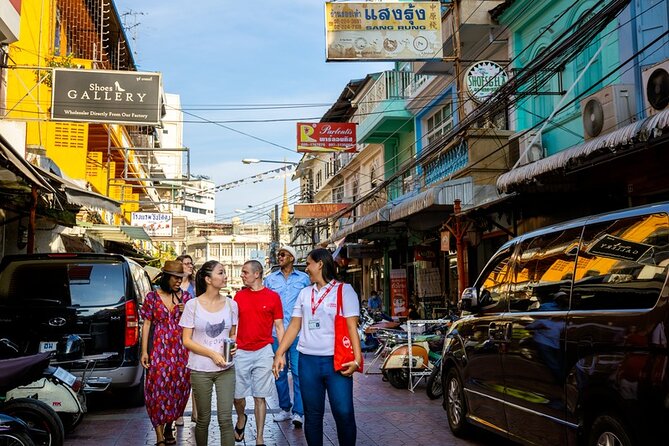
Then you cross into Bangkok’s Chinatown, described as the largest Chinatown in the world. In reality, that line makes sense the moment you’re there. The streets pack together quickly.
Your time here is about 15 minutes. That short window is not a flaw. It means the tour keeps a street-level feel without turning into an exhausting maze. Your guide helps you move through crowds efficiently, and that matters because Chinatown can be jammed during busy festival periods.
Finally, you end at Wat Mangkon Kamalawat, with a brief stop of around 5 minutes. It is a neat way to close the loop: food, street life, then a visible religious landmark as the neighborhood shifts into “evening Bangkok” mode.
What street food samples you’ll likely eat, and how to pace yourself
The included samples are specific, which is a big deal for value. You are not left guessing what you’ll get or paying extra for every stop.
You can expect the tour to serve you samples such as:
- Turnip cake
- Chwee kueh
- Chao Tha (duck noodle soup)
- Phad Thai Uncle Pom
On top of that, there are café moments where you can relax with coffee or tea.
How to pace it:
- Take the first bites as introductions, not as the main event.
- If a dish looks similar to another one, taste both anyway. Differences show up in sauce, texture, and temperature.
- Stop drinking if you’re feeling overly full. It is easy to overdo snacks when walking keeps your metabolism humming.
Also, if you have vegetarian needs, this tour can cater for that. You must share your dietary requirement at least 24 hours ahead.
What the small group changes, from questions to crowd control
This tour caps at 12 travelers, which is one of the biggest reasons it feels personal. In a big group, you spend time waiting. In a small one, you can ask real questions and the guide can adjust the pace to keep everyone together.
The guide style also matters. From guide names mentioned in prior accounts, people often call out how lively and helpful guides such as Nana, Pam, Gof, Dong, Joe, and Nop were. That tells me the format works when the guide can connect food to place and keep energy up without rushing.
You can also count on practical advice. The tour includes tips on what else to see, do, and eat during your stay. That is useful because Chinatown is not just about one afternoon.
Price and value: why $42.48 makes sense for a 2.5-hour evening
At $42.48 per person, this is not a budget-only street snack. It’s also not a full meal tour price. The value comes from the combination.
You are paying for:
- a 2.5-hour guided walk
- multiple included food samples
- time at Holy Rosary Church and Chow Sue Kong Shrine
- an experienced English-speaking guide
- small-group handling, so you do not get lost or stuck at stalls
If you were doing this on your own, you’d likely spend comparable money on food anyway, plus you’d pay in time and stress trying to figure out where to go and what to order. Here, someone picks the route and the specific dishes.
Where value can slip a bit: if your priorities are strictly sightseeing, the tour gives only short visits at each site. This is still a food-forward tour.
Timing, timing changes, and how to plan for street closures
Start time is 4:00 pm, and most of the walking happens over a short total duration of about 2 hours 30 minutes.
One thing you should know going in: the tour notes that if a site is closed due to reasons beyond control, an alternative site will be visited. It also notes that with so many street food stalls to choose from, if one planned stop is closed, you’ll find another delicious one.
In plain terms, this means you should not treat the schedule like a precision instrument. Bangkok can change quickly. But the tour is built to adapt without wasting your time.
If you want a low-stress evening, wear shoes that can handle uneven pavement and crowd jostling. You are walking about 2 km, but it is urban walking, not park walking.
Who should book this Chinatown street food tour
This works best for:
- First-time visitors who want a guided intro to both Talad Noi and Chinatown
- Food lovers who like mixing Thai and Chinese flavors
- Travelers who enjoy religious and cultural context, even if the stops are short
- Anyone who prefers a small-group pace
It is less ideal for:
- People who struggle with standing or walking for the full 2.5-hour window
- Travelers who want long time inside each major attraction
- Anyone who wants a quiet, low-crowd experience in Chinatown
If you love street scenes but hate getting stuck in them, this guide-led mix is a solid compromise.
Should you book this Talad Noi, Chinatown, and street food tour?
Yes, if you want a smart evening that mixes food and real neighborhood life. The included dishes, the shrine and church context, and the small-group size make it feel worth the money for a short, focused walk.
Skip it only if your main goal is slow sightseeing or if you need minimal walking. Otherwise, this is exactly the kind of tour that helps you understand Bangkok faster, without turning the whole afternoon into a guessing game.
FAQ
Where is the meeting point and what time does the tour start?
You meet at River City Bangkok at the Si Phraya Pier area. The start time is 4:00 pm, and the meeting location is listed at River City Bangkok, 23 Soi Charoen Krung 24.
How long is the tour, and how much walking is involved?
The tour lasts about 2 hours 30 minutes. It covers around 2 km (1.2 miles) of walking.
What street food is included?
Included food samples include Turnip cake, Chwee kueh, Chao Tha (duck noodles soup), and Phad Thai Uncle Pom. The tour also includes coffee or tea at stops.
Can the tour accommodate vegetarians?
Yes. Vegetarian dietary requirements can be accommodated if you provide the information at least 24 hours before the tour date.
Are tickets mobile, and do I need to bring anything?
The tour uses a mobile ticket.
What age is the minimum for this tour?
The minimum age is 8 years.
More Food & Drink in Bangkok
- Bangkok Midnight Food Tuk Tuk Tour
★ 5.0 · 2,542 reviews - Bangkok: Markets, Temples and Food Night Tour by Tuk Tuk
★ 4.9 · 2,371 reviews - Bangkok: Midnight Food Tour by Tuk-Tuk
★ 4.9 · 2,054 reviews - Bangkok Backstreets Food Tour with 15+ Tastings
★ 5.0 · 1,926 reviews
More Street Food Walks in Bangkok
- Bangkok Evening Street Food Tuk Tuk Adventure
★ 5.0 · 158 reviews - Bangkok Street Food Variety Cultures Local Tasty
★ 5.0 · 100 reviews - Bangkok: Street Art and Street Food Walking Tour
★ 4.1 · 58 reviews - Bangkok Street Food and Night Lights by Tuk Tuk
★ 4.6 · 49 reviews
Newest Bangkok reviews on the site
- Half-Day Tour : PRIVATE Grand Palace & Temples★ 5.0 · 14 reviews
- Maeklong Railway and Damnoen Saduak Floating Market Tour★ 5.0 · 11 reviews
- Bangkok Dinner Cruise with Intl Buffet, Live Music & Hotel Pickup★ 4.5 · 12 reviews
- The Luxury White Cruise Experience★ 3.5 · 34 reviews
- Luxury Dinner Cruise with Guide and Transfer (Opt. Executive Van)★ 5.0 · 9 reviews
- Bangkok Luggage Storage★ 4.5 · 37 reviews
- Bangkok Luggage Delivery from Hotel to Airport★ 5.0 · 25 reviews
- Baiyoke Sky Dinner Experience with Observation Deck Access★ 3.5 · 57 reviews
Street Food Tours, compared.
Small-Group Chiang Mai Evening Street Food Tour
Read our review →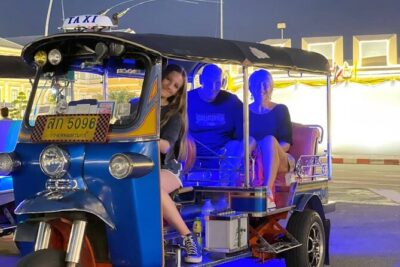
Bangkok Tuk-Tuk Tour by Night with Chinatown Street Food Meal
Read our review →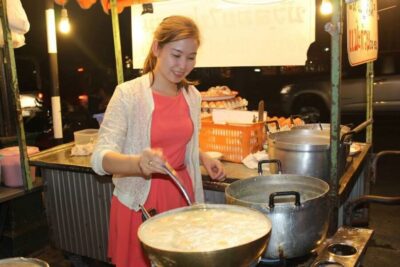
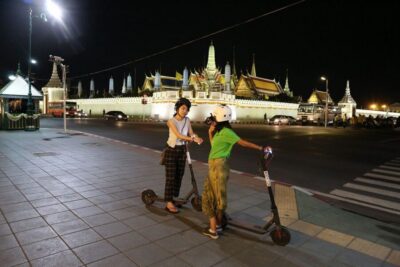
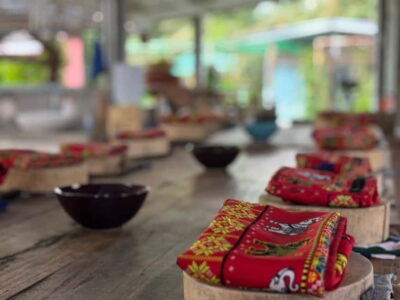
Hands-on Learn to Cook 3 Popular Thai’s street food
Read our review →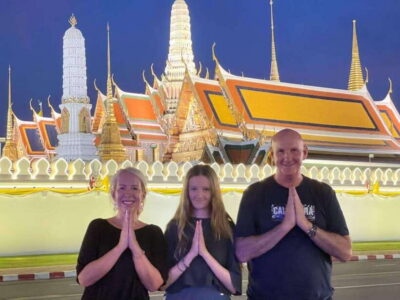
Bangkok Tuk-Tuk by Night with Chinatown Street Food Meal
Read our review →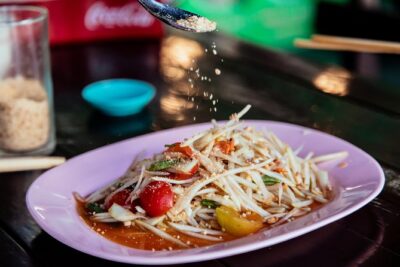
The 10 Tastings of Chiang Mai With Locals: Private Street Food Tour
Read our review →Browse the lists this tour appears in