
Review · TEMPLE TOURS
Bangkok: Private Old Quarter, Night Street Market, Temples
Chinatown in Bangkok hits you fast. This private 3-hour walk strings together Talat Noi street art and Yaowarat night food, plus temples and a calm canal break. I like how the route connects the Chinese roots with Thai culture in real street scenes. The main catch: on Mondays, the Chinatown market is closed, so parts of the night feel quieter.
You get a private guide in English, and you can keep the pace human. I also like that the plan includes quieter stops like Wat Liap, not just the famous photo spots. You meet your guide in front of the cafe at The House by Hongkong House, then you’re off on foot.
Wear comfortable shoes because this is mostly walking, and you’ll want to move quickly between streets. It is not suitable for people with mobility impairments, and luggage or large bags are not allowed.
In This Review
- Key Things That Make This Bangkok Old Quarter Tour Work
- Bangkok Old Quarter on Foot, Timed for Night Energy
- Where You Start and How the Guide Keeps It Simple
- Holy Rosary Church: A Quick Reset Before Chinatown
- Talat Noi Art Street: Street Art With Real Cultural Roots
- Rong Kueak Shrine and Chao Mae Shrine: Thai and Chinese Architecture Side by Side
- Chinagate and Wat Traimit: The Golden Buddha Moment
- Kuan Yim Shrine: A Calmer Stop for Mercy and Stillness
- Yaowarat Night Market: Where the Flavors Take Over
- Ong Canal Detour: The Breather Chinatown Rarely Gives You
- Pak Khlong Talat Flower Market: Scents, Color, and Motion
- Wat Ratchaburana Ratchaworawihan (Wat Liap): Peace When the City Goes Loud
- Memorial Bridge and Chao Phraya River Views to End the Walk
- Price and Value: When $76 Per Group Makes Sense
- Timing Notes That Can Change Your Experience
- Who Should Book This Tour (and Who Should Skip It)
- Should You Book This Bangkok Old Quarter Private Tour?
- FAQ
- How long is the Bangkok Old Quarter, temples, and night market tour?
- What is the price for this private tour?
- Where do we meet the guide?
- Is the tour private or group-based?
- What should I bring, and what is not allowed?
- Is the Chinatown market open on Mondays?
- When will I get a message before the tour starts?
Key Things That Make This Bangkok Old Quarter Tour Work
- Talat Noi alley art: narrow lanes with street art tied to centuries-old Chinese roots
- Shrines that slow the day down: Rong Kueak Shrine, Chao Mae Shrine, and Kuan Yim Shrine
- Wat Traimit Golden Buddha photo stop: Bangkok’s jaw-dropping gold moment
- Yaowarat night market food route: street food flavors from savory dim sum to sweet pastries
- Ong Canal reset: a calmer waterway break from the crowds
- Pak Khlong Talat flowers plus Wat Liap: bright market scents, then peaceful temple time
Bangkok Old Quarter on Foot, Timed for Night Energy
This is the kind of Bangkok tour that makes sense if you want a focused hit of the Old Quarter without spending your day jumping lines or figuring out routes. In three hours, you’re stitched from street art to shrines to big iconic sights, with stops that also give your eyes a breather.
I like the balance here. You get the loud, food-and-neon side of Yaowarat, then you get places where you can actually breathe. The Ong Canal pause is a smart example, because it breaks the walk before the day turns into full-on sensory overload.
Price matters too. It’s $76 per group up to 3, so the cost works best when you’re traveling with one or two people. If you’re solo, you’re paying for a private guide either way, but you still get a tight route with multiple named temples and major sights in one go.
And because it’s private, the guide can shape the pace. Guides such as Natty, Patt, and Tini are known for explaining what you’re seeing and tailoring the conversation, not just reciting a script.
More Market Tours in Bangkok
- Bangkok: Damnoen Saduak Market and Maeklong Railway Market
★ 4.5 · 26,723 reviews - The Old Siam: Damnoen Saduak and Maeklong Railway Market
★ 4.5 · 10,992 reviews - Bangkok: Train Market & Floating Market with Boat Ride
★ 4.7 · 9,547 reviews
Where You Start and How the Guide Keeps It Simple
You meet your guide at The House by Hongkong House, in front of the cafe. After that, you follow the guide’s plan through the Old Quarter on foot.
A practical tip: this kind of walk is easiest when you keep your day light. The tour does not allow luggage or large bags, so plan on a small crossbody or daypack. Also, wear shoes you can keep on for hours, since you’re moving through narrow lanes and market sidewalks.
You also get a heads-up before you go. You’ll receive a text message or WhatsApp message 3 hours before the tour starts. That helps with last-minute location tweaks, especially in areas where the streets can be confusing the first time.
Holy Rosary Church: A Quick Reset Before Chinatown
The tour begins with a short stop at Holy Rosary Church. It’s not the main headline of the Old Quarter, but it sets a useful tone. You get a moment of calmer architecture before you plunge into the streets where Thai and Chinese influences sit side by side.
This first walk also helps you get bearings fast. In Bangkok, that matters. One minute you’re thinking about where to go next, the next minute you’re in alleyways and busy intersections. Starting with a defined landmark gives you a smoother mental map before the Chinatown stretch.
Talat Noi Art Street: Street Art With Real Cultural Roots
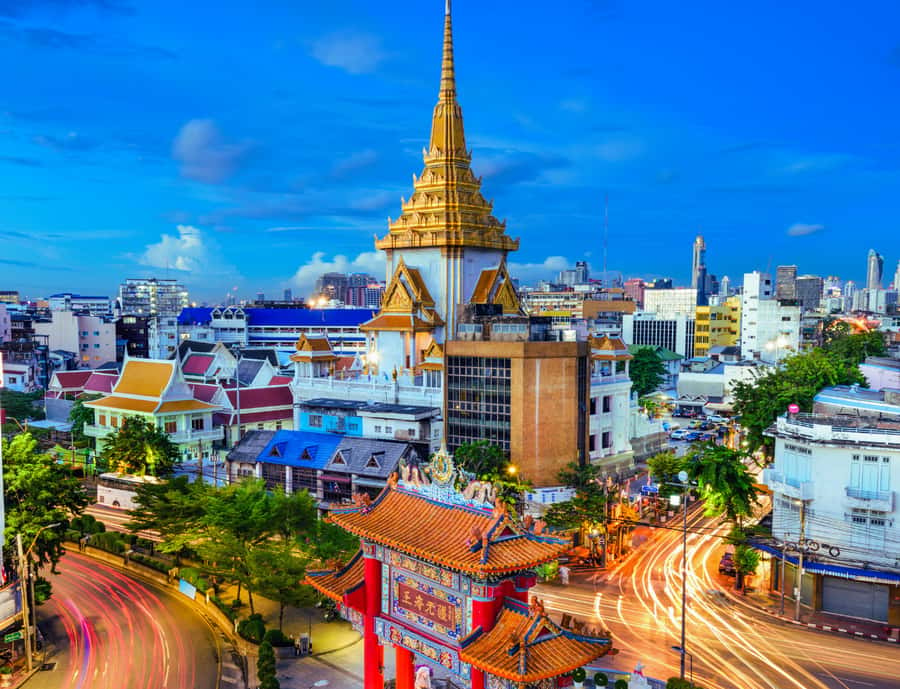
Next comes Talat Noi, where the streets feel like a living gallery. You’ll explore Talat Noi Art Street, known for narrow alleyways decorated with street art. What makes this stop more than just photos is the context your guide can provide about how these scenes connect to the area’s Chinese heritage.
I like Talat Noi for two reasons:
- The lanes are intimate. You’re close to the walls, the textures, and the everyday activity.
- The art isn’t random decoration. It helps explain why this neighborhood still feels deeply connected to Chinese community life.
You’ll also get time to look for the “in-between” moments: storefronts, side streets, and the subtle mix of styles you miss if you only rush between big attractions. If you’re the type who likes to understand a place instead of just ticking off landmarks, Talat Noi is usually the best payoff.
More Shopping Tours in Bangkok
- Bangkok: City Highlights Temple and Market Walking Tour
★ 4.5 · 3,990 reviews - Half-Day Railway Market and Floating Market Tour in Thailand
★ 4.5 · 3,924 reviews - Bangkok: Damnoen Saduak, Train Market & Mahanakhon Day Trip
★ 4.7 · 2,162 reviews - From Bangkok: Damnoen Saduak Floating Market Guided Tour
★ 4.4 · 2,020 reviews
Rong Kueak Shrine and Chao Mae Shrine: Thai and Chinese Architecture Side by Side
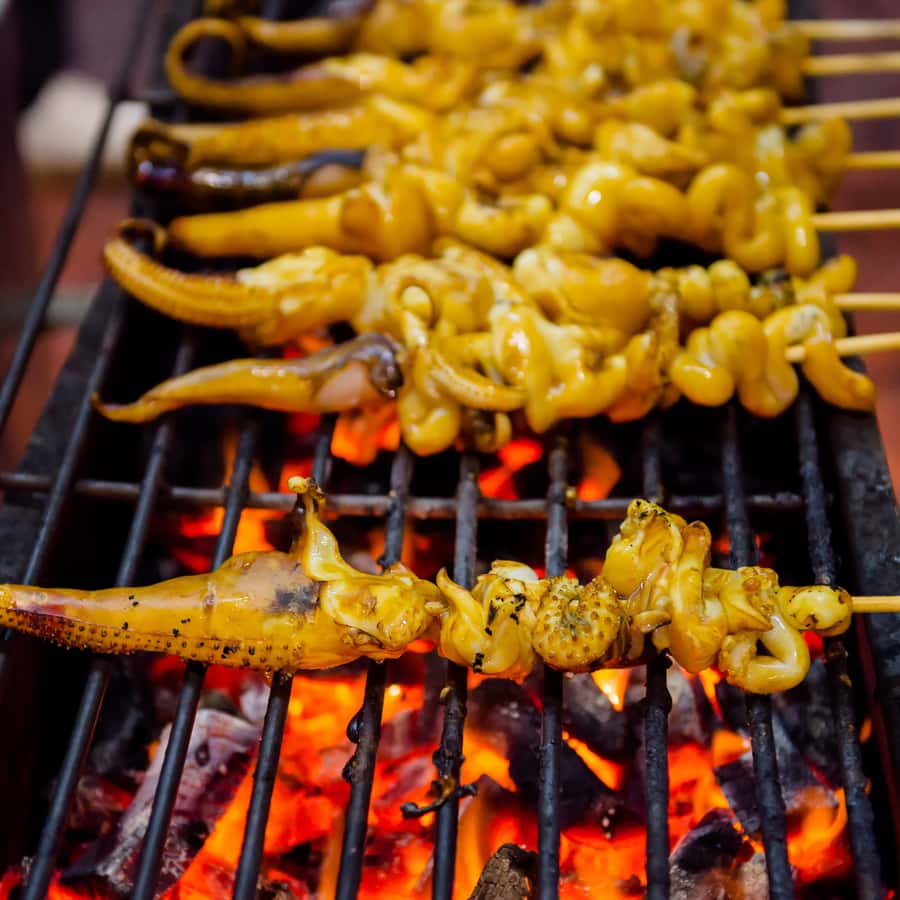
After Talat Noi, the tour shifts into spiritual landmarks: Rong Kueak Shrine and Chao Mae Shrine. These are the kinds of stops where your guide’s commentary can matter a lot, because the details are easy to walk past if you don’t know what to look for.
You’ll spend a guided visit with time to appreciate the blend of Thai and Chinese architecture. That mix is the point. Bangkok’s Chinatown isn’t just about food. It’s also about how communities build worship spaces, maintain traditions, and keep identity visible in daily life.
Even if you’re not religious, shrines like these often feel like a pause button. The air changes. People move slower. And you start seeing the neighborhood as a place where faith and community still function, not just a theme for tourists.
Chinagate and Wat Traimit: The Golden Buddha Moment
Then you head toward Chinagate, the iconic gateway to Bangkok’s Chinatown. This is one of those visual checkpoints that helps you understand you’re really entering the Old Quarter core.
From there, you reach Wat Traimit, home to the world’s largest golden Buddha statue. You’ll have a photo stop here. This is the classic “stop and look up” moment, and your timing matters since the crowd level can change quickly once night food markets start running full steam.
If you’re sensitive to crowds, this is where the private format helps. Your guide can pace you through the route so you’re not constantly getting jostled between groups.
Kuan Yim Shrine: A Calmer Stop for Mercy and Stillness
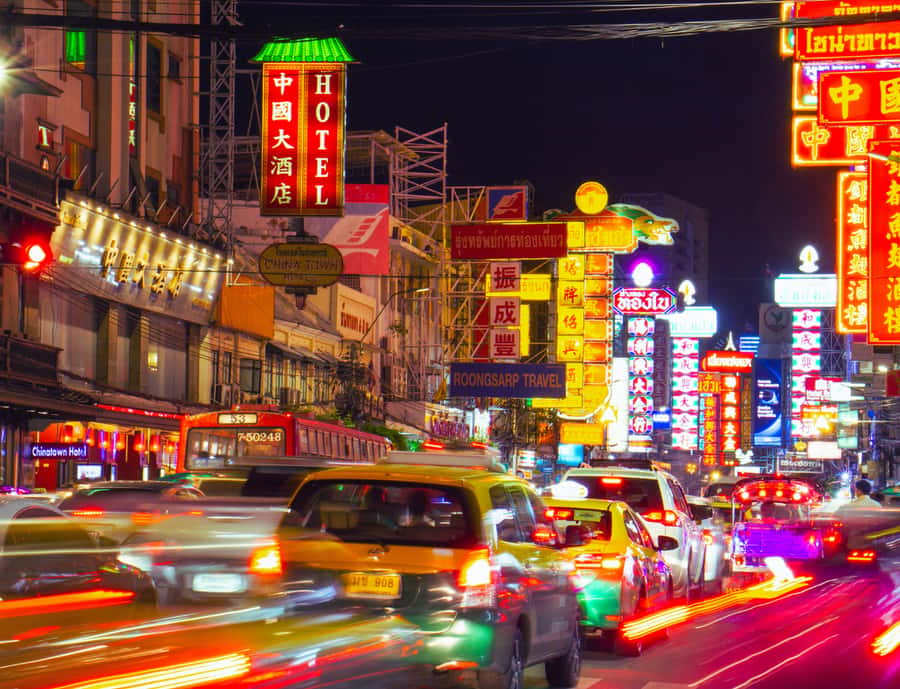
Nearby you visit Kuan Yim Shrine, dedicated to the goddess of mercy. This stop is a nice counterweight to the louder parts of Chinatown.
I like Kuan Yim because it gives you a different kind of attention. Instead of scanning for snacks, you’re noticing details: the way people conduct prayers, the atmosphere inside, and the quiet rhythm in a place that otherwise runs fast outside.
It’s also a useful reset before Yaowarat, because you’re about to shift from temple calm to street market intensity.
Yaowarat Night Market: Where the Flavors Take Over
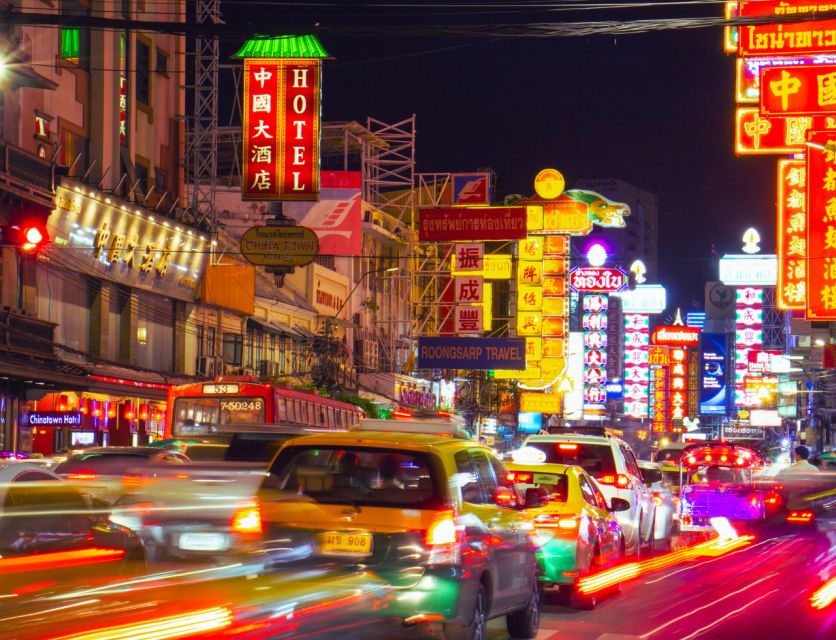
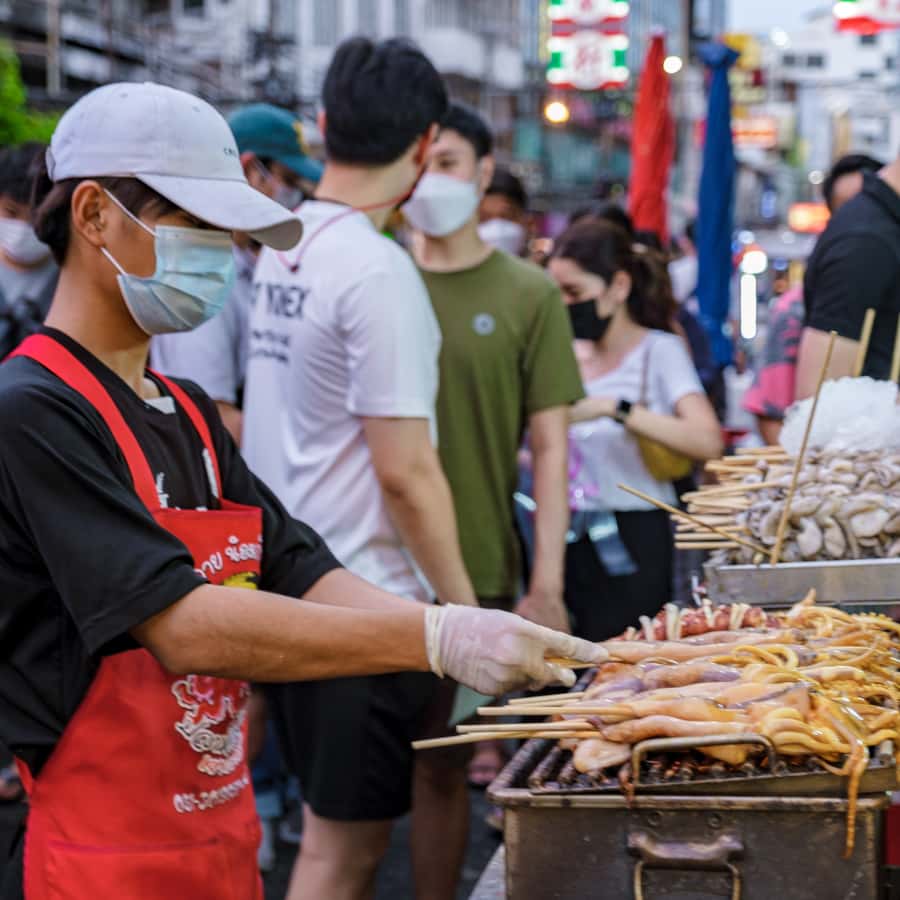
Next is Yaowarat Street, the heart of Chinatown and the center of night street food energy. This is your big sensory stretch, and it’s the reason many people book this tour.
You’ll explore the night market and stroll with guidance, with time to experience the atmosphere and take in what’s for sale. The guide can help you choose from a range of Chinese and Thai dishes, including savory dim sum and sweet pastries.
What I think is smart here is the pacing. Your route is not just “walk fast, buy something, leave.” You get enough time to look around, smell the food, and understand why the area is famous in the first place. Yaowarat can be overwhelming on your own, especially when you’re hungry and trying to decode menus.
Tip if you want the best experience: keep your appetite flexible. The food scene is a mix, and part of the fun is letting the guide steer you toward what fits your taste.
Ong Canal Detour: The Breather Chinatown Rarely Gives You
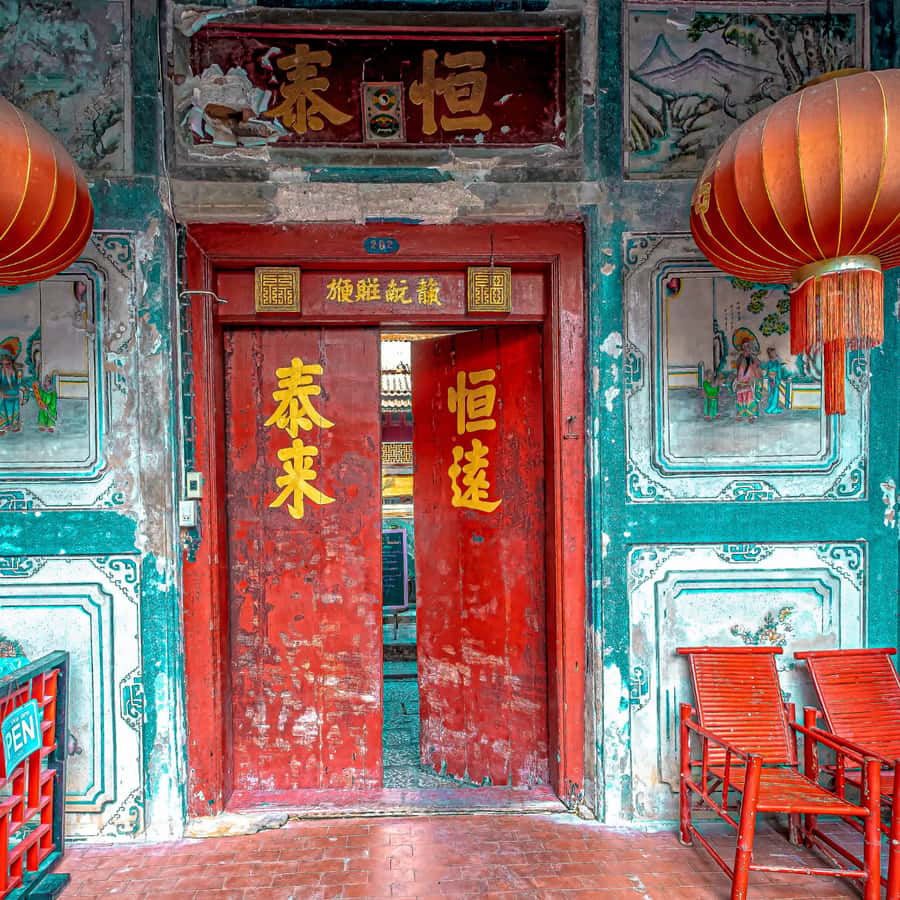
Then you take a detour to the Ong Canal. This is a quieter waterway stop that gives you a refreshing break from the street-level action.
Walking along the canal edge helps you see another side of Chinatown, one that feels more everyday and less market-performative. You can observe traditional way-of-life details still happening nearby, which adds texture to the neighborhood beyond temples and food stalls.
This is also where the tour feels more “real Bangkok” and less like a checklist. You get a slice of the city’s rhythm that you simply cannot capture if your plan is only famous landmarks.
Pak Khlong Talat Flower Market: Scents, Color, and Motion
After the canal, the tour heads to Pak Khlong Talat, Bangkok’s flower market area. Expect a crowded, fragrant zone full of blooms and active vendors.
I like this stop because it changes your senses again. You’ve been in gold, shrines, and night food smells. Now you’re dealing with color, fragrance, and a fast-moving market pace. It’s a good contrast to the temple visit later, because the flower market is energetic, but it’s not chaotic in the same way a night food street can be.
If you care about photos, this is one of the best places for them during the walk. The colors give you instant visual variety, and the motion of the market makes pictures feel alive.
Wat Ratchaburana Ratchaworawihan (Wat Liap): Peace When the City Goes Loud
Right near Pak Khlong Talat you visit Wat Ratchaburana Ratchaworawihan (Wat Liap). This is the stop highlighted for its tranquility.
Here’s what you’re looking for: a calmer temple atmosphere after the market. You’ll have a guided visit and time to appreciate the temple’s details and architecture. In a tour that’s already packed with named sights, Wat Liap is the one that helps the day feel balanced instead of exhausting.
If you like “one more quiet place” in your day, this is it. It’s also a great moment to slow down and let everything you saw earlier settle into place.
Memorial Bridge and Chao Phraya River Views to End the Walk
The tour finishes at Memorial Bridge, where you can enjoy city views along the Chao Phraya River.
This ending works because it gives you space. After walking lanes and market sidewalks, seeing open river and city viewpoints helps your brain reframe what you experienced. It also helps you transition smoothly, since your guide can help you reach your desired destination or back to your hotel.
Price and Value: When $76 Per Group Makes Sense
At $76 per group up to 3 for a 3-hour private English-guided walk, this tour is best value when you’re splitting the guide cost with at least one other person. For two people, it often feels like paying for one guided experience and getting several major stops packaged into it.
What you get for the money is a lot of named places in a tight route:
- A street art neighborhood in Talat Noi
- Multiple shrines including Rong Kueak, Chao Mae, and Kuan Yim
- Wat Traimit with the golden Buddha photo moment
- Yaowarat night street market time
- Ong Canal break
- Pak Khlong Talat flowers
- Peaceful Wat Liap
- A final viewpoint at Memorial Bridge
That density is exactly why private tours cost more. The guide saves you time and helps you connect the dots while you’re walking.
If you’re the kind of traveler who likes structure but also wants room to ask questions, private tends to pay off quickly. And based on guide stories like Natty, Patt, and Tini, the best versions of this tour are the ones where you talk, not just follow.
Timing Notes That Can Change Your Experience
One timing issue you should plan around is the Monday schedule. The Chinatown market is closed on Mondays. That matters because Yaowarat’s evening energy depends on active market areas. On a Monday, the streets can feel less filled, so your nighttime food experience might be more subdued.
Another practical timing thought: this is a walking tour with several stops. If you’re sensitive to long walks, start hydrating early and keep an eye on your energy. The tour is short at three hours, but the city streets can feel longer when you’re switching environments every 10 to 20 minutes.
Who Should Book This Tour (and Who Should Skip It)
This tour suits you if:
- You want a private, guided Old Quarter route rather than wandering with Google Maps
- You want street scenes plus temples in one plan
- You like street art, shrines, and food areas
- You travel as a small group, since it’s priced per group up to 3
It’s not a great fit if:
- You have mobility issues. The tour is not suitable for people with mobility impairments.
- You need to bring luggage or large bags, since those are not allowed.
Should You Book This Bangkok Old Quarter Private Tour?
If your goal is a high-signal evening in Bangkok’s oldest neighborhood, I think this is a strong choice. The route gives you the best mix of Talat Noi street art, Yaowarat night food, and multiple named temples, with a smart calm break at Ong Canal and a peaceful finish at Wat Liap.
I would book it if you’re traveling with one or two people and you enjoy walking tours where the guide explains what you’re seeing. If you’re going on a Monday, set expectations that the Chinatown market will be closed and the evening may feel less market-focused.
If you want a structured Old Quarter experience without the stress of planning each stop yourself, this one is built for that.
FAQ
How long is the Bangkok Old Quarter, temples, and night market tour?
It lasts 3 hours.
What is the price for this private tour?
The price is $76 per group up to 3.
Where do we meet the guide?
You meet your guide in front of the cafe at The House by Hongkong House.
Is the tour private or group-based?
It is a private group tour with an English live guide.
What should I bring, and what is not allowed?
Bring comfortable shoes. Luggage or large bags are not allowed.
Is the Chinatown market open on Mondays?
No. The Chinatown market is closed on Mondays.
When will I get a message before the tour starts?
You will receive a text message or WhatsApp message 3 hours before the tour starts.
More Temple Visits around Bangkok
- Hidden Bangkok Longtail Boat Tour to Big Buddha&Canal Life 2hrs
★ 5.0 · 1,404 reviews - Bangkok: Railway and Floating Market Tour with Dragon Temple
★ 4.6 · 1,225 reviews - The Old Siam: Ayutthaya Temples Small Group Tour with Lunch
★ 4.6 · 992 reviews - Grand Palace & Temples of Bangkok with experienced guide
★ 5.0 · 890 reviews
More Temple Tours in Bangkok
- From Bangkok: Ayutthaya Temples Guided Tour with Lunch
★ 4.7 · 10,535 reviews - Bangkok by Night: Temples, Markets and Food Tuk-Tuk Tour
★ 5.0 · 3,752 reviews - Bangkok: Markets, Temples and Food Night Tour by Tuk Tuk
★ 4.9 · 2,371 reviews - Ayutthaya Temples and River Cruise from Bangkok
★ 4.0 · 1,692 reviews
Newest Bangkok reviews on the site
- Bangkok Dinner Cruise with Intl Buffet, Live Music & Hotel Pickup★ 4.5 · 12 reviews
- Half-Day Tour : PRIVATE Grand Palace & Temples★ 5.0 · 14 reviews
- Maeklong Railway and Damnoen Saduak Floating Market Tour★ 5.0 · 11 reviews
- The Luxury White Cruise Experience★ 3.5 · 34 reviews
- Luxury Dinner Cruise with Guide and Transfer (Opt. Executive Van)★ 5.0 · 9 reviews
- Bangkok Luggage Storage★ 4.5 · 37 reviews
- Bangkok Luggage Delivery from Hotel to Airport★ 5.0 · 25 reviews
- Baiyoke Sky Dinner Experience with Observation Deck Access★ 3.5 · 57 reviews
Temple Tours, compared.

Chiang Rai Temples, Karen Tribe and Hot Springs
Read our review →
City Highlights Temple and Market Walking Tour
Read our review →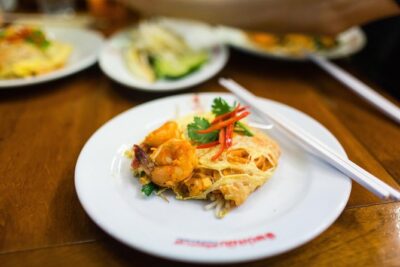
Bangkok by Night: Temples, Markets and Food Tuk-Tuk Tour
Read our review →
Tiger Cave Temple, Emerald Pool and Hot Springs Tour
Read our review →
Chiang Rai White Temple and Blue Temple Day Tour
Read our review →
Tiger Cave, Hot Springs and Emerald Pool Jungle Tour
Read our review →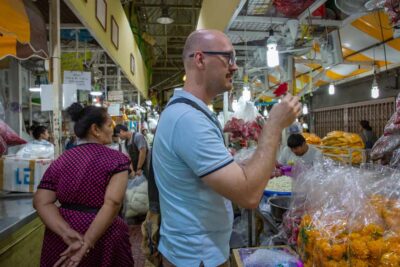
Markets, Temples and Food Night Tour by Tuk Tuk
Read our review →Browse the lists this tour appears in