
Review · OBSERVATION DECKS
Chiang Mai: Day for Elephant Observation Only Half-day Trip
Ethical elephant time, plus Pad Thai. This half-day program pairs up-close observation with hands-on elephant feeding, then finishes with a Pad Thai lunch you cook yourself. You are in the hills near Doi Inthanon National Park, watching elephants eat and act like elephants, not performers.
Two things I really liked: the sanctuary’s strict no-control approach, and the guide stories that make the whole day feel human and grounded. Guides like Su share practical elephant care info in clear English and with a sense of humor, which helps you understand what you’re seeing.
One consideration: you do spend time outdoors and close to muddy, uneven paths, so it is not ideal if you have back problems, limited mobility, or if you are pregnant. Also, this is observation first, so if you want riding or forced “walk-and-do” tricks, this won’t match your expectations.
In This Review
- Why this elephant observation day feels different
- Big Boy’s ethics: no-control elephant rules you can actually feel
- Timing and hotel pickup: it’s a real half-day, but the drive is part of it
- First stop: elephant education briefing that sets the tone
- Elephant food prep: hands-on work from natural materials
- Ethical feeding experience: close viewing without touching or controlling
- Vitamin workshop and habitat care: helping with health routines
- Watching elephants roam in the hills near Doi Inthanon
- Pad Thai cooking workshop: the lunch you actually make
- What to bring, what to avoid, and how to get better photos
- Price and value check: what $46 really covers
- Who should book this elephant observation half-day trip
- Should you book Big Boy for your Chiang Mai day?
- FAQ
- How long is the program, and what are the pickup times?
- What ethical rules does the sanctuary follow with the elephants?
- What will I do during the elephant portion of the trip?
- What happens after the elephant activities?
- What should I bring, and what are the restrictions?
- Is this trip suitable for everyone?
Why this elephant observation day feels different
- No-riding, no-controlled walking, no mandatory bathing, and no ordering elephants to follow commands
- You prepare and feed elephant food and help make vitamin balls from natural materials
- Close, but not touch-focused: you can get good viewing moments and photos while keeping space
- Real care stories for rescued elephants, including guidance on elderly and sick elephants
- Mountain setting with a stream, plus lunch that comes from your own cooking hands
Big Boy’s ethics: no-control elephant rules you can actually feel
Let’s start with the part that matters most. Big Boy Elephant Sanctuary is built around a straightforward idea: elephants should live as naturally as possible, without people controlling them.
That means no elephant riding. It also means no controlled walking, no forced bathing, and no commanding elephants to follow orders. If you’ve seen other elephant shows where an elephant is “managed” into doing what humans want, you’ll notice the difference right away here. You are not trying to make a performance happen. You are learning what the elephants choose to do.
This also shows up in how close you get. You may be near enough for great viewing, and you can often get photos, but you are not meant to touch the animals. That no-touch rule is a big part of why this feels reassuring. It lets you focus on the elephants’ behavior instead of grabbing the moment for a selfie.
Guides play a role, too. Su, for example, is the kind of guide who can explain elephant behavior in a way that sticks. You’ll get stories that connect daily routines like eating and resting to what the sanctuary is trying to protect.
A few more Chiang Mai days to weigh up
- Chiang Mai 2-Day: Trekking, Tubing & Elephant Observation
★ 4.9 · 95 reviews - Chiang Mai Full-Day: Trekking, Tubing & Elephant Observation
★ 4.9 · 30 reviews - Bangkok: Baiyoke Observation Deck with Lunch/Dinner Buffet
★ 4.3 · 1,749 reviews
Timing and hotel pickup: it’s a real half-day, but the drive is part of it
You’ll usually choose either a morning session or an afternoon session. The start times are set, morning runs 07:00-14:30 and afternoon runs 11:00-18:30.
Even though it’s described as half-day, the program runs about 6 to 7 hours including transport. That matters in Chiang Mai, because the sanctuary is around 2 hours from town. If you’re tight on time for other plans, plan a lighter day before or after.
Pickup is from your Chiang Mai hotel. Your voucher time is a reference point, and the exact pickup time gets confirmed the day before based on your hotel and the group size. Build in a little buffer, since local traffic can change how fast things move.
One practical tip: wear comfortable shoes you don’t mind getting a little dusty or wet. You’re in an active setting, not a lobby.
First stop: elephant education briefing that sets the tone
Before you start feeding, you get an education briefing. Think of this as the “how to look” part, not just “elephant facts.”
You’ll learn what to expect from the elephants and what respectful behavior looks like for this sanctuary. That includes the basic interaction rules like no smoking and no flash photography. It also includes how you should watch, especially if elephants come close or if they wander away.
This briefing also helps you understand why certain activities are included. Feeding is not about getting an instant thrill. It’s about giving the elephants natural, appropriate nutrition, and doing it in a way that does not turn them into a controlled attraction.
Elephant food prep: hands-on work from natural materials
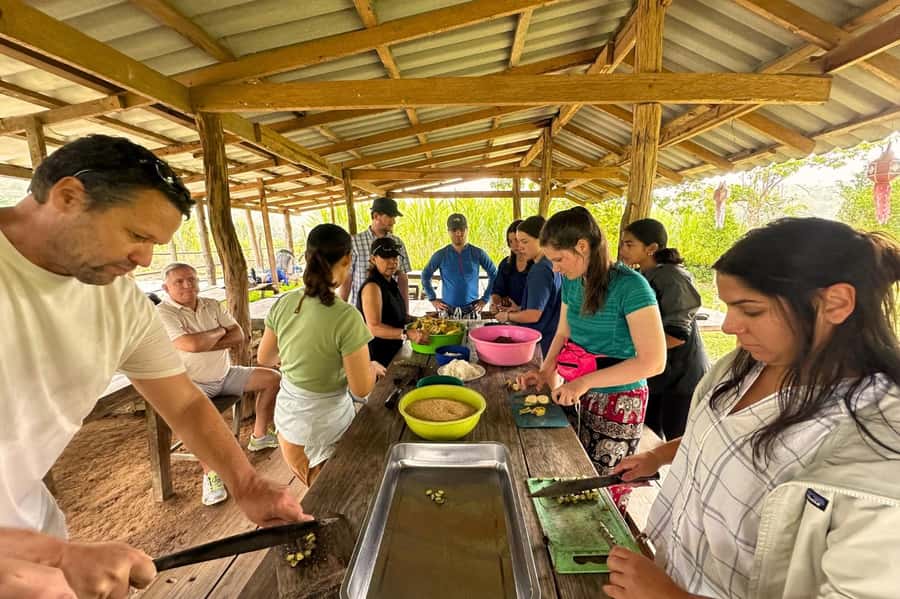
Then comes the part you can help with. You prepare elephant food using natural materials. It is not complicated, but it is real work, and you’ll feel the difference between doing something carefully versus “just holding out food” for a photo.
You also learn what kinds of materials are used during the process. In this program you may prepare bamboo shoots and vitamin balls, then later you feed those items directly during the feeding portion.
This is also where the day turns from watching to caring. Even if you’re not an animal expert, you can still help with basic steps that support daily feeding routines.
The vibe stays friendly and warm. The sanctuary guides keep things simple so you can focus on the elephants rather than on getting instructions correct.
Same stretch of coast, a different sort of day:
- Half-Day Thai Cooking Class at Organic Farm in Chiang Mai
★ 5.0 · 19,087 reviews - Chiang Mai: Elephant Sanctuary, Waterfall & Bamboo Rafting
★ 4.9 · 9,160 reviews - Chiang Mai: Doi Inthanon National Park Eco-Friendly Tour
★ 4.6 · 6,667 reviews - Chiang Mai: Elephant Sanctuary & Waterfall Group Tour
★ 4.9 · 5,780 reviews
Ethical feeding experience: close viewing without touching or controlling
Feeding time is the core experience. You’ll stand where you can observe well, then feed the elephants with the food you prepared, plus vitamin balls.
The sanctuary keeps a strict boundary here. You get close enough to see how the elephants eat and how they react. But you do not direct them like you would in a more commercial setup. You are offering food and observing the elephants’ choices, not walking them on cue.
In practice, this means the elephants may come toward the area when they want to, or they may move away when they prefer. That natural pacing is the point. It’s why the experience feels calm instead of chaotic.
You’ll likely notice the elephants eating at their own speed, along with small signs of comfort and familiarity with the routine. That’s a better way to learn than a schedule where elephants are marched from one “spot” to the next.
Vitamin workshop and habitat care: helping with health routines
Between the main feeding moments, you get a vitamin workshop and habitat care activities. This is where the education gets more specific.
You’ll help prepare vitamin balls, which are tied to daily health routines for the rescued elephants. The guides share stories about elephant health and care, including how the sanctuary approaches supporting elderly and sick elephants.
You might also do small habitat-care tasks as part of the routine. These are not big “construction” projects, but they are meaningful. They show you that the work is ongoing, not just a one-time feeding for visitors.
What I like about this part is the logic. Food, vitamins, and health support are not glamorous, but they’re essential. Once you understand that, the rest of the observation feels more respectful.
Watching elephants roam in the hills near Doi Inthanon
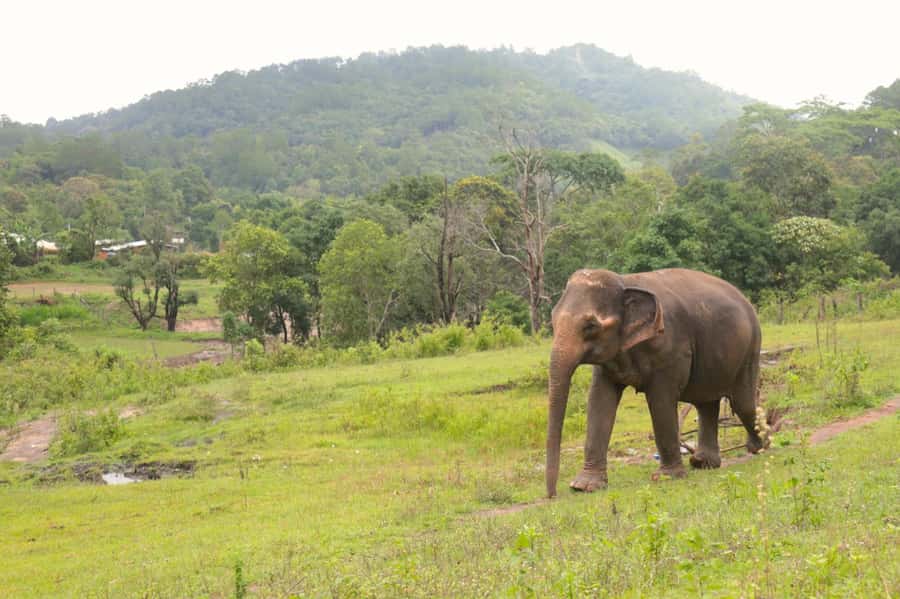
After the care activities, you settle into observation mode. This sanctuary sits in lush hills with a stream running through the area, and it shows in the atmosphere. You’re not in a fenced-in arena designed for performance.
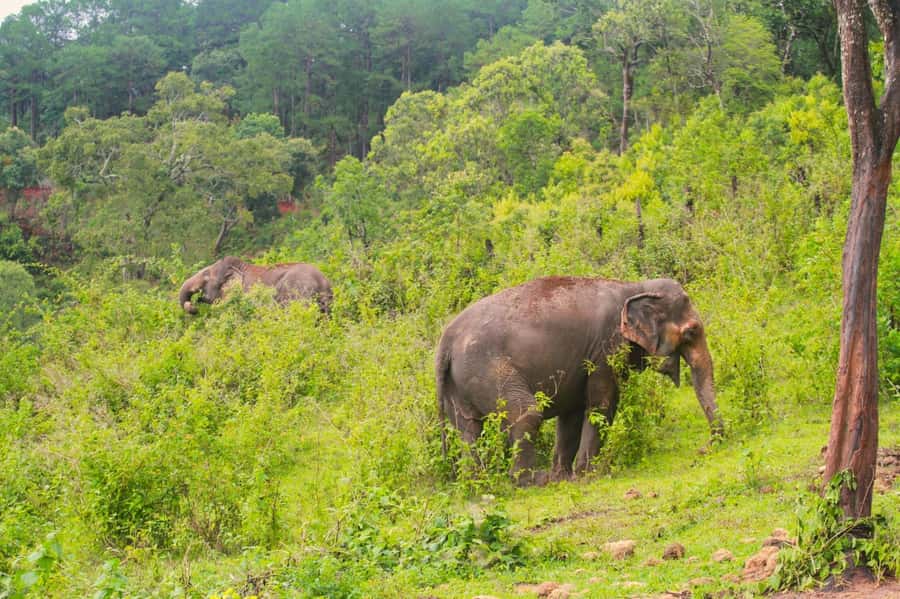
You may see four rescued elephants living in a way that feels close to their natural pattern: roaming when they want, staying together like a family, and spending time eating, playing, and resting.
You also get space to watch their behavior without constant human prompts. That’s a big deal. If you’ve ever visited elephant places where people orchestrate every moment, you’ll probably find this slower and more honest.
And yes, you can still get great photos. The difference is that you’re not chasing the elephant into doing tricks. You’re waiting for the elephant to do elephant things, then capturing it respectfully.
Pad Thai cooking workshop: the lunch you actually make
After elephant time, you switch gears to food. The program includes an authentic Pad Thai cooking workshop where you cook lunch under local culinary guidance.
You’ll learn the traditional process using an ancient family recipe passed down through generations. That matters because it’s not just a cooking lesson. It’s a cultural one, tied to real technique and flavor balance.
Then you eat what you make. In this kind of program, that simple act is satisfying because you’re pairing two different forms of care: helping with elephant feeding, then cooking a classic Thai dish.
If you’re worried you’ll be too tired after the morning or afternoon drive, don’t. Cooking is seated work. You still get hands-on practice, but the pace is gentler than the elephant portion.
What to bring, what to avoid, and how to get better photos
You want to be comfortable and practical. Bring:
- Comfortable shoes
- Sun hat
- Camera
- Insect repellent
Bring a refillable water bottle too. It’s outdoor time, and Chiang Mai heat and insects are not polite.
Rules to remember:
- No smoking
- No flash photography
For photos, this means you may rely on natural light and good positioning instead of flashing close-up. So use your camera early if you can, and keep your settings ready. Also, if you’re unsure whether you are standing too close, follow the guide’s cues. The sanctuary’s ethic is distance with respect.
Price and value check: what $46 really covers
At $46 per person, this is not the cheapest thing on the Chiang Mai map, but it also isn’t a short, one-note visit.
What you’re paying for is a full “experience stack”:
- Transportation from Chiang Mai
- Elephant education briefing
- Food preparation for the elephants
- Ethical feeding and vitamin-related activities
- A Pad Thai cooking workshop and lunch
So you’re not only seeing elephants. You’re doing real care-oriented tasks, learning what the sanctuary is trying to protect, and then getting a complete meal out of the cooking class.
To me, the best value is the “no gimmicks” feel. When a place takes ethics seriously, you spend less of your money on staged moments, and more on meaningful time and education. The small-group feel also helps with this. It keeps the day from turning into a rushed line.
Who should book this elephant observation half-day trip
This fits best if you:
- Want elephant viewing that follows a strict ethical policy
- Like hands-on activities, like preparing food and making vitamin balls
- Appreciate learning through behavior and care stories, not tricks
- Want a real cooking class after animal time, not just a quick snack stop
It may not fit you well if you:
- Want elephant riding or forced “performances”
- Need a fully accessible route, since it is outdoor and active
- Have back problems or pregnancy constraints
- Prefer minimal walking or staying completely off uneven ground
Should you book Big Boy for your Chiang Mai day?
If you care about animal welfare and you want elephants observed in a way that respects their space, I think this is a strong choice. The strict no-control rules, the careful feeding approach, and the guide storytelling from Su give this trip a grounded feel.
Book it if you also want a Pad Thai lunch you cook yourself. You get a full day’s worth of value packed into a half-day schedule, as long as you’re ready for a real drive, real outdoor time, and calm elephant observation.
FAQ
How long is the program, and what are the pickup times?
The program runs about 6 to 7 hours including transportation time. Morning pickups are scheduled for 07:00-14:30, and afternoon pickups are scheduled for 11:00-18:30. The exact pickup time is confirmed 1 day prior based on your hotel and guest count.
What ethical rules does the sanctuary follow with the elephants?
The sanctuary follows a no-control policy with rules such as no elephant riding, no controlled walking, no mandatory bathing, and no commanding elephants to follow orders. Flash photography is also not allowed.
What will I do during the elephant portion of the trip?
You’ll attend an elephant education briefing, prepare elephant food from natural materials, and take part in an ethical feeding experience. You’ll also join an elephant vitamin workshop and habitat care activities, including vitamin ball feeding.
What happens after the elephant activities?
You’ll take part in an authentic Pad Thai cooking workshop and lunch. After that, you’ll bid farewell to the elephants and return to Chiang Mai town.
What should I bring, and what are the restrictions?
Bring comfortable shoes, a sun hat, a camera, and insect repellent. A refillable water bottle is also recommended. Smoking is not allowed, and flash photography is not allowed.
Is this trip suitable for everyone?
It is not suitable for pregnant women, people with back problems, or people with mobility impairments. It operates in English.
Newest Chiang Mai reviews on the site
- Tour with Hike in Kiew Mae Pan Natural Trail from Chiang Mai★ 4.8 · 26 reviews
- Chiang Mai: 22 km XC Mountain Biking from Sticky Waterfall★ 4.7 · 13 reviews
- Sticky Waterfall Half-day with Private Car★ 4.9 · 37 reviews
- Sticky waterfalls- Elephants- Bamboo or White water rafting.★ 5.0 · 9 reviews
- Red, Blue, White Temples & Hot Spring Trip from Chiang Mai★ 4.4 · 143 reviews
- Private Tour Pha Chor Canyon & Doi Inthanon National Park★ 5.0 · 23 reviews
- Private Tour Doi Inthanon, Trekking Kew Mae Pan Nature Trail★ 5.0 · 11 reviews
- Private Doi Inthanon, Nature Trail, Wat Phra That Doi Kham★ 5.0 · 6 reviews
Observation Decks, compared.

Baiyoke Observation Deck with Lunch/Dinner Buffet
Read our review →
Baiyoke 82nd Floor: Crystal Grill Buffet & Observation Deck
Read our review →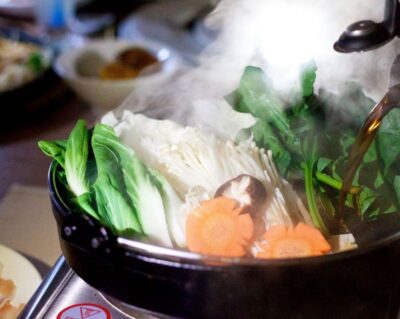
Baiyoke Tower Balcony Buffet & Observation Deck
Read our review →
Baiyoke Observation Deck Ticket with Buffet Meal
Read our review →
Mahanakhon SkyWalk Observation Deck Entry Ticket
Read our review →
Chiang Mai 2-Day: Trekking, Tubing & Elephant Observation
Read our review →
Baiyoke Sky Dinner Experience with Observation Deck Access
Read our review →
Erawan Park & Elephant observation Private Tour
Read our review →Browse the lists this tour appears in