
Review · EVENING EXPERIENCES
Chiang Mai: Evening Chanting & Meditation
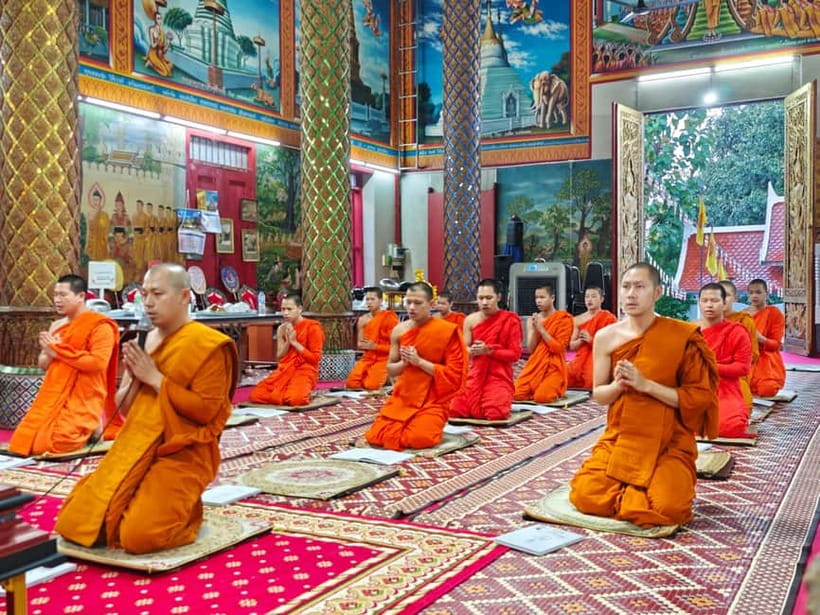
Monk chants can slow your whole day. At Wat Chai Sri Phoom, you sit close enough to feel the rhythm of the monks’ evening chanting, then shift into Metta practice for a calmer mind. It is the kind of experience where spirituality feels practical, not distant.
I also like how much time you get with real people behind the tradition, including an English-speaking guide such as Son, a former monk, who can explain what you are hearing and doing. One consideration: the chanting itself may not come with a word-by-word English script, so if you want language clarity, you will probably get the best answers during the Q and A after.
In This Review
- Key highlights worth knowing before you go
- Wat Chai Sri Phoom: why this evening session hits differently
- Meeting up at Wat Lok Moli, and what to do with those first 15 minutes
- The chanting with monks: what you should actually pay attention to
- Metta practice: turning compassion into an actual exercise
- The guided 15-minute silent meditation: short enough to work
- Wisdom and Q and A with monks and lay practitioners
- Who this experience suits best, and who should skip it
- Practical etiquette: small rules that keep the experience peaceful
- Timing and value: getting $20 worth of meaning in 3 hours
- Quick booking decision: should you do this evening chanting and meditation?
- FAQ
- What is the duration of Chiang Mai evening chanting and meditation?
- Where does the tour start?
- What is included in the price?
- Is transportation included to Wat Chai Sri Phoom?
- What should I bring?
- What is not allowed during the experience?
- What should I wear?
- Is this suitable for kids or people with mobility issues?
- What language is the tour guide?
Key highlights worth knowing before you go
- Wat Chai Sri Phoom evening chanting with the monastic community, not just a quick photo stop
- Metta practice to extend heartfelt wishes to loved ones, those who have passed, and all beings
- A guided 15-minute silent meditation to help you settle after the chanting
- Close guidance from the guide (often Son), plus time to ask questions after
- Respectful temple etiquette built into the experience, with rules like no flash photography
Wat Chai Sri Phoom: why this evening session hits differently
Chiang Mai temples are beautiful in the daytime, but evenings have a different pace. The light softens, the air cools down, and the temple shifts from sightseeing mode to something more human and shared. This is one of those rare temple experiences where you are not just watching, you are participating.
The setting matters. You are at Wat Chai Sri Phoom, and the evening ritual is led by resident monks. When the chanting begins, it is less about reading the meaning and more about feeling the tempo in your body. For many people, that is the quickest path to mental quiet.
Another reason I like this format: it strings together three different mental tools, chanting, silence, and Metta. You get sound, then you get stillness, then you move into compassion practice. That sequence helps you go from busy mind to softer attention without forcing it.
A few more Chiang Mai days to weigh up
- Half-Day Thai Cooking Class at Organic Farm in Chiang Mai
★ 5.0 · 19,087 reviews - Chiang Mai: Elephant Sanctuary, Waterfall & Bamboo Rafting
★ 4.9 · 9,160 reviews - Chiang Mai: Doi Inthanon National Park Eco-Friendly Tour
★ 4.6 · 6,667 reviews
Meeting up at Wat Lok Moli, and what to do with those first 15 minutes
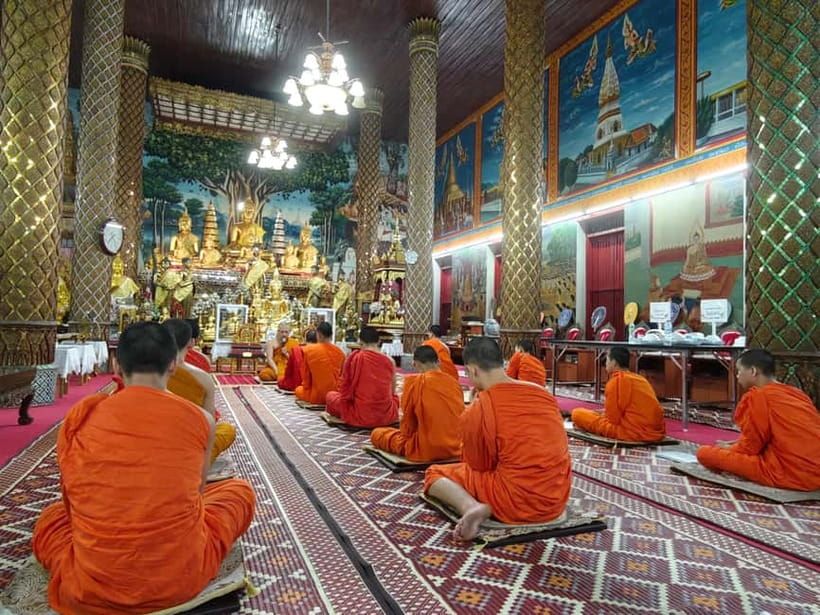
Your guide meets you at Wat Lok Moli, waiting in front of the temple. The exact meeting location may be subject to change, so keep your eye out for your guide and plan to arrive a bit early.
Arriving at least 15 minutes early is not just a suggestion. It is your chance to settle your breathing and match the tone of the place. You’ll want time to adjust your clothing, refill your water, and mentally switch from the street pace to temple calm.
Small practical notes that make a big difference here:
- Bring water and wear comfortable, modest clothes
- Silence your mobile before the session starts
- Expect rules to be taken seriously, because everyone is sharing the space
If you show up late, you will feel it. The experience works best when you can arrive ready to sit, listen, and participate.
The chanting with monks: what you should actually pay attention to
The core moment is the monks’ evening chanting. The experience is typically 40 to 50 minutes, long enough for you to stop thinking in English and start noticing how your attention changes.
What I would focus on during the chanting:
- The breathing rhythm behind the sound, even if you do not understand every word
- How your body responds, especially in your chest and throat area
- The group energy, because chanting is collective and it can feel grounding
This is not meant to be a performance for tourists. You join the ritual respectfully, and the voices carry in the temple space in a way that feels more like a shared practice than a show. That is why people describe feeling vibrations. You do not need to interpret it as anything supernatural. It is simply sound traveling through air and through your own physical presence.
Also, this is where guides help you most. If you get a guide like Son (a former monk), he can explain what you are hearing and how it connects to Buddhist practice. If your mind keeps trying to translate everything, that conversation after the chant becomes your mental bridge.
Metta practice: turning compassion into an actual exercise
After the chanting fades, you shift into Metta. Think of Metta as training your intention. Instead of only appreciating compassion as an idea, you practice directing sincere wishes toward others.
You will extend heartfelt wishes of well-being to:
- loved ones
- those who have passed
- and all beings
This part often lands well because it is structured. Your mind gets a job to do, and it is a kind job. Even if you do not call yourself Buddhist, the method is accessible because it is about intention and attitude. You can keep it simple and still get value: wish well, include more people than your usual inner circle, and notice how your heart softens.
If you struggle with the emotion side, you are not alone. Metta is not forced happiness. It can start as neutral wishing, then gradually warm up. I like that this practice is built into the evening, not tacked on as a random lecture.
Same stretch of coast, a different sort of day:
- Chiang Mai: Elephant Sanctuary & Waterfall Group Tour
★ 4.9 · 5,780 reviews - Chiang Mai: Chiang Rai Temples, Karen Tribe and Hot Springs
★ 4.7 · 5,401 reviews - Chiang Mai: Cooking Class, Market & Thai Herbs Garden Tour
★ 4.9 · 4,824 reviews - Chiang Mai: Authentic Cooking Class with Market & Farm Visit
★ 4.9 · 4,546 reviews
The guided 15-minute silent meditation: short enough to work
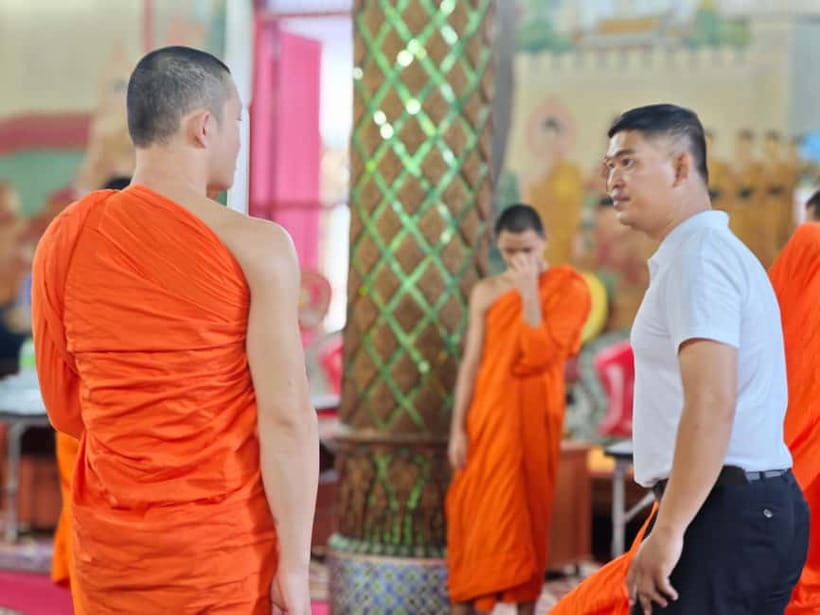
Then comes the silent meditation, guided for about 15 minutes. Fifteen minutes sounds short, but silence can still be challenging. The guidance is key because it helps you quiet the inner commentary without telling you to instantly become a calm statue.
Here’s what you can do to make it easier:
- Focus on your breath or a simple point of attention the guide suggests
- Relax your shoulders and let your posture support you
- If your thoughts run wild, treat it like noticing, not failing
This meditation segment is valuable because it gives you a clean aftertaste. Chanting is active listening, Metta is relational intention, and silent meditation is the moment you test how much quiet you can create on purpose.
By the time it ends, you usually feel a noticeable shift. Even if you only manage a few truly quiet breaths, that still counts.
Wisdom and Q and A with monks and lay practitioners
One of the strongest reasons to book this is what happens after the main practice. Senior monks and lay practitioners may share insights, and you get time for questions. In several sessions, guides like Son, described as a former monk, can explain both philosophy and daily practice in a way that feels human, not textbook-heavy.
You also might hear personal context, such as how monks approach daily life, why certain practices matter, and what mindfulness looks like outside the temple. That is the difference between hearing about Buddhism and understanding how people actually live it.
Many people also appreciate that the monks may stay around afterward to answer questions. That transforms the experience from a one-way ritual into a conversation, and you leave with clarity instead of just a memory.
One possible drawback to consider: if you want a fully English narration of everything that gets chanted, you may not get it in real time. If that matters to you, come with curiosity and plan to ask your questions after.
Who this experience suits best, and who should skip it
This is best for you if you want:
- a calm evening in a real temple setting
- a guided meditation you can actually follow
- a respectful introduction to Buddhist concepts like chanting and Metta
- a guide who can explain the practice, not just announce it
It may not be the right fit if:
- you want loud, active sightseeing
- you struggle with long sitting (the session includes chanting and silent meditation)
- you have significant mobility limits
The activity is not suitable for children under 10 years old, people with back problems, or wheelchair users. If you fall into one of those categories, it is worth choosing a different Chiang Mai activity that is easier on your body.
Practical etiquette: small rules that keep the experience peaceful
Temple rules are part of the respect, not just admin. A few you should know clearly:
- Dress modestly
- No smoking
- No flash photography
- Silence mobile devices before the session begins
Comfort matters because you are sitting. Comfortable clothes and a calm mindset do more than you think. Also, bring water, since you may be in temple grounds for a few hours total.
If you feel unsure about what counts as modest, choose something that covers shoulders and knees and avoids overly tight or revealing styles. When in doubt, you will feel better being a touch more covered than you think you need.
Timing and value: getting $20 worth of meaning in 3 hours
At about $20 per person for roughly 3 hours, you are paying for a guided, temple-based spiritual practice. That is the main value here: you get real participation with monks, plus guided meditation and explanation.
This is not a long workshop. It is a focused evening format with three distinct parts:
1) chanting with monks
2) guided Metta practice
3) guided silent meditation and Q and A
That combination is what makes the price feel reasonable. You are not just buying entry to a temple, and you are not just buying a meditation class with a random instructor. You are buying the chance to practice inside the monastic rhythm and then ask questions directly.
Also, note what is not included. Transportation to and from Wat Chai Sri Phoom is not included, and meals and beverages are not included. That means the real cost is usually a little more once you handle how you get there and what you eat after.
Quick booking decision: should you do this evening chanting and meditation?
You should book if you want an evening in Chiang Mai that is calm, respectful, and genuinely participatory. I especially recommend it if you like meditation but find it hard to do alone, or if you want a guide like Son (or another ex-monk guide such as Big or Earth in some sessions) who can make the philosophy understandable and practical.
Skip it if you need your activities to be highly scripted and continuously explained during the chanting, or if you have back or mobility issues that make sitting uncomfortable. Also, if you are sensitive to rules and quiet expectations, know that this experience asks for a steady, gentle tone.
Overall, this is one of those simple, grounded nights in Chiang Mai where you leave with a quieter mind, not just photos.
FAQ
What is the duration of Chiang Mai evening chanting and meditation?
The experience runs for about 3 hours.
Where does the tour start?
The guide waits at Wat Lok Moli in front of the temple. The meeting location may be subject to change.
What is included in the price?
You get a guided meditation session, the chanting experience with monks, and insights into Buddhist philosophy and practices.
Is transportation included to Wat Chai Sri Phoom?
No. Transportation to and from Wat Chai Sri Phoom is not included.
What should I bring?
Bring water and wear comfortable clothes.
What is not allowed during the experience?
Smoking and flash photography are not allowed.
What should I wear?
Dress modestly to respect the temple’s traditions.
Is this suitable for kids or people with mobility issues?
It is not suitable for children under 10 years old, people with back problems, or wheelchair users.
What language is the tour guide?
The live tour guide speaks English and Thai.
Newest Chiang Mai reviews on the site
- Tour with Hike in Kiew Mae Pan Natural Trail from Chiang Mai★ 4.8 · 26 reviews
- Chiang Mai: 22 km XC Mountain Biking from Sticky Waterfall★ 4.7 · 13 reviews
- Sticky Waterfall Half-day with Private Car★ 4.9 · 37 reviews
- Sticky waterfalls- Elephants- Bamboo or White water rafting.★ 5.0 · 9 reviews
- Red, Blue, White Temples & Hot Spring Trip from Chiang Mai★ 4.4 · 143 reviews
- Private Tour Pha Chor Canyon & Doi Inthanon National Park★ 5.0 · 23 reviews
- Private Tour Doi Inthanon, Trekking Kew Mae Pan Nature Trail★ 5.0 · 11 reviews
- Private Doi Inthanon, Nature Trail, Wat Phra That Doi Kham★ 5.0 · 6 reviews
Evening Experiences, compared.

Bangkok by Night: Temples, Markets and Food Tuk-Tuk Tour
Read our review →
7 Islands Sunset Tour with Buffet Dinner & Snorkeling
Read our review →

Markets, Temples and Food Night Tour by Tuk Tuk
Read our review →
Krabi 4 Island Sunset Snorkeling Cruise + Bioluminescent Swim
Read our review →
Doi Suthep and Wat Umong Enchanting Evening Tour
Read our review →
Browse the lists this tour appears in