
Review · TUK-TUKS
Chiang Mai: Exploration of Old City by Private Tuk-Tuk
Four hours, one tuk-tuk, and you get the city. This is a fun way to hit major sights without wrestling traffic, and I like the contrast of Wat Sri Suphan silver details plus the open-air tuk-tuk ride through narrow old-city lanes. I also like that your stops are paced, with short enough site time to keep the day moving, yet enough time to look around. One catch to plan for, this is not a full guided tour with guaranteed deep English explanations, and you should expect to pay temple entrance fees on site.
You’ll be based in Chiang Mai’s Old City area, where the sights cluster close together but the streets can be tight. That makes a tuk-tuk a smart choice when it’s warm out, because you get movement and airflow, not just a stuffy ride. It also feels personal: you and your group are in control of the pace, and you’re not stuck waiting for a big group to finish one photo.
The tradeoff is simple. You get transport and drop-offs, plus some local commentary that depends on your driver, not a formal English-speaking guide at every stop. If you want a lot of structured storytelling, come prepared with a phone translation app and a basic game plan for what you want to see and photograph at each temple and monument.
In This Review
- Key things to know before you roll in a tuk-tuk
- Private Tuk-Tuk Timing: How a 4-hour Old City loop actually feels
- Wat Sri Suphan: The Silver Temple stop that turns heads fast
- Wat Chedi Luang: A massive chedi with a 15th-century backbone
- Wat Phra Singh Woramahawihan: Royal Lanna style, quick but satisfying
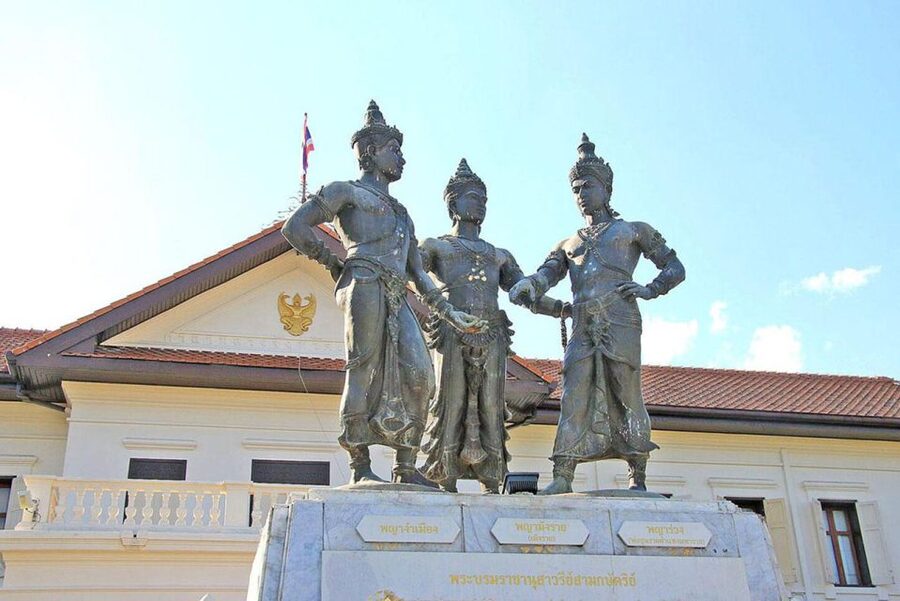
- Three Kings Monument: A quick pause that adds meaning
- Tha Phae Gate and canal-area vibes: Where old defenses meet street life
- Muang Mai Market and Warorot Market: The best finish for food and souvenirs
- Price and value: When $50 makes sense, and when it doesn’t
- Who this tour suits best (and who should look elsewhere)
- Should you book this Chiang Mai Old City tuk-tuk tour?
- FAQ
- How long is the Chiang Mai Old City exploration by private tuk-tuk?
- What’s included in the price?
- Are temple entrance fees included?
- Is there an English-speaking guide included?
- Which places are visited during the tour?
- What should we wear when visiting temples?
- Is the tour suitable for people with mobility impairments?
Key things to know before you roll in a tuk-tuk
- Private half-day format in a tuk-tuk, scheduled to cover multiple Old City landmarks in about 4 hours
- Wat Chedi Luang, Wat Sri Suphan, Wat Phra Singh, plus Three Kings Monument, so you hit classic Chiang Mai icons
- Open-air comfort helps when Chiang Mai heat has you sweating before you even reach the first gate
- Skip-the-line access is included, but entrance fees still apply (about 90 THB)
- Driver, not a full guide is the usual setup, with English quality varying by driver
- Two people per tuk-tuk are standard, with a possible third depending on size, so plan your group fit
Private Tuk-Tuk Timing: How a 4-hour Old City loop actually feels
This is a half-day tour built for efficiency. Your total time is about 4 hours, and each main stop is designed as a quick visit, roughly 20 minutes each. That sounds short on paper, but it works well in the Old City because most of the big temples and monuments sit in walkable, easy-to-scan areas.
The pace is also the point. You’re not spending the day commuting between far-flung districts. Instead, you’re moving temple to temple, gate to monument, then ending with market time. The tuk-tuk makes that sequence realistic, even with narrow streets and the kind of stop-and-go you get around popular sites.
One practical plus: pickup and drop-off are included for hotels within about 5 km of Chiang Mai Old City. If you’re staying inside or near the old lanes, that door-to-door convenience can save you time you’d otherwise waste on finding transportation and rechecking routes.
Also, remember the capacity rule. Two people are allowed per tuk-tuk, and a third person might fit depending on size (especially for kids around the early teens). If you’re traveling as a family, that matters for comfort, seating, and just how much you can comfortably move in and out between sites.
A few more Chiang Mai days to weigh up
- Half-Day Thai Cooking Class at Organic Farm in Chiang Mai
★ 5.0 · 19,087 reviews - Chiang Mai: Elephant Sanctuary, Waterfall & Bamboo Rafting
★ 4.9 · 9,160 reviews - Chiang Mai: Doi Inthanon National Park Eco-Friendly Tour
★ 4.6 · 6,667 reviews
Wat Sri Suphan: The Silver Temple stop that turns heads fast
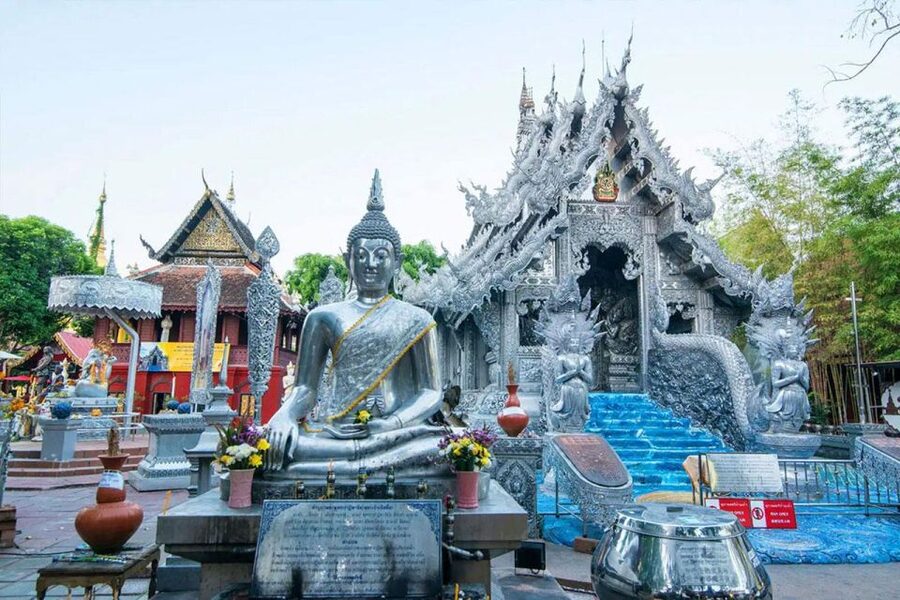
Your tour starts with Wat Sri Suphan, often called the Silver Temple. This is one of those places where the name tells you what to watch for: the glint, the metalwork, and the feeling that craftsmanship is part of the temple experience, not just an attraction.
In about 20 minutes, you’ll have time to:
- See the temple features up close
- Notice the shining silver-style decorations and details
- Watch silversmith work if it’s happening during your visit
Why this stop is worth putting first: it sets a cultural tone. Chiang Mai’s temples are not only about buildings and views. They’re also about craft, labor, and heritage passed down over generations. Even if your driver’s English is limited, your eyes can still read a lot here because the craft is visible.
Dress matters. Cover your shoulders and legs before you enter temple areas. This is not a casual vibe, and it’s also the fastest way to avoid delays or being asked to adjust clothing.
Wat Chedi Luang: A massive chedi with a 15th-century backbone

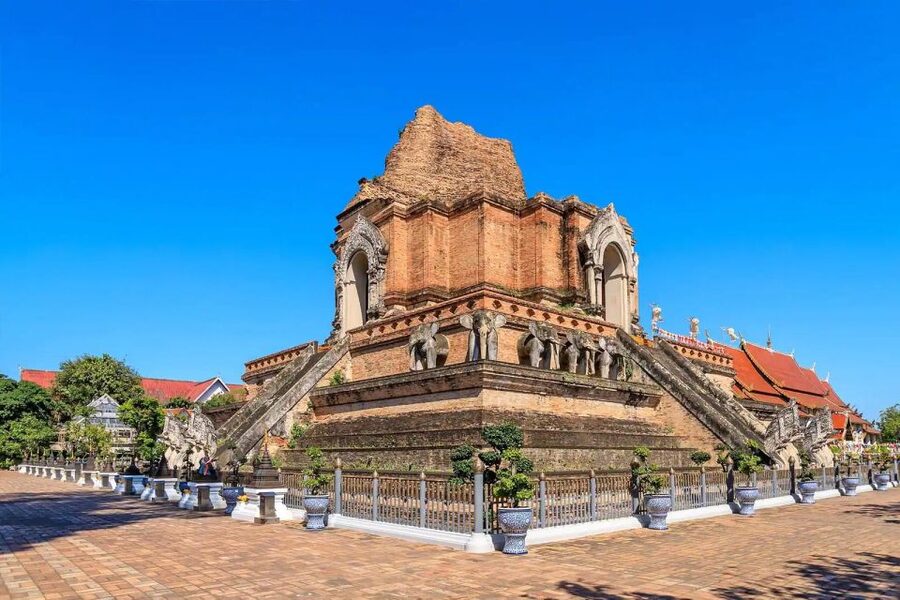
Next up is Wat Chedi Luang, home to a huge chedi that dominates the area. You’re looking at a landmark connected to the northern Thailand tradition of Lanna. The temple’s story is older and more specific than it looks, and the schedule gives you enough time to appreciate the scale before you move on.
What I like about this stop in a half-day plan is how it creates a “time jump.” The site is tied to the 15th century, and it’s linked to the famous Emerald Buddha history in the region. Even if you don’t go deep into the legend, the setting helps you feel why people treated this place as important for so long.
In your 20 minutes, try to:
- Walk around key viewpoints and notice how the chedi sits within the temple grounds
- Take a few wide shots before you get too focused on one corner
- Pause long enough to let the place sink in, because once you’re on the tuk-tuk again, you’ll lose that stillness
A small timing tip: temple lighting and shadows can change fast. If you care about photos, do your wide shots first, then your detail shots.
Wat Phra Singh Woramahawihan: Royal Lanna style, quick but satisfying
Then you’ll head to Wat Phra Singh Woramahawihan, one of Chiang Mai’s major temple names. This is where Lanna style shows up strongly in architecture and layout, and it’s a great contrast after the scale of the chedi at Wat Chedi Luang.
This stop is also paced well. You’re not just dropping into a random temple. It’s one of the most recognizable in the Old City, and the design makes it relatively easy to see why it matters even in a short visit.
If your driver shares any extra context, focus on the temple’s role in royal or cultural life, because that’s where the symbolism lives. If they do not, you can still get value by paying attention to:
- The craftsmanship in the temple areas you can reach
- The general flow of the compound, how worship spaces are arranged
- The overall atmosphere, which tends to feel calmer than the streets outside
Same stretch of coast, a different sort of day:
- Chiang Mai: Elephant Sanctuary & Waterfall Group Tour
★ 4.9 · 5,780 reviews - Chiang Mai: Chiang Rai Temples, Karen Tribe and Hot Springs
★ 4.7 · 5,401 reviews - Chiang Mai: Cooking Class, Market & Thai Herbs Garden Tour
★ 4.9 · 4,824 reviews - Chiang Mai: Authentic Cooking Class with Market & Farm Visit
★ 4.9 · 4,546 reviews
Three Kings Monument: A quick pause that adds meaning
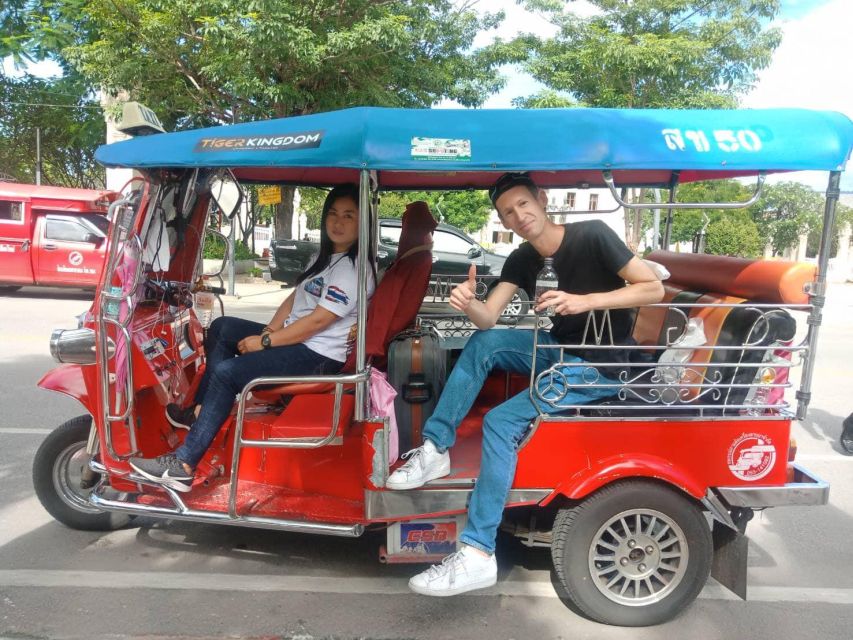
After the temples, the route includes the Three Kings Monument. This is a smaller stop than the temples, but it adds structure to the day. It helps connect what you saw in sacred spaces with the broader story of the city and its ruling traditions.
In about 20 minutes, you’re mainly there to stand, look around, and place it in your mental map of the Old City. It’s also an easy time to reset, drink water, and regroup before you head to the market portion of the tour.
If you’re the type who likes photos with context, take one establishing shot, then one closer shot from the side that shows surrounding streets. The area around monuments often tells you how people actually move through the city day to day.
Tha Phae Gate and canal-area vibes: Where old defenses meet street life
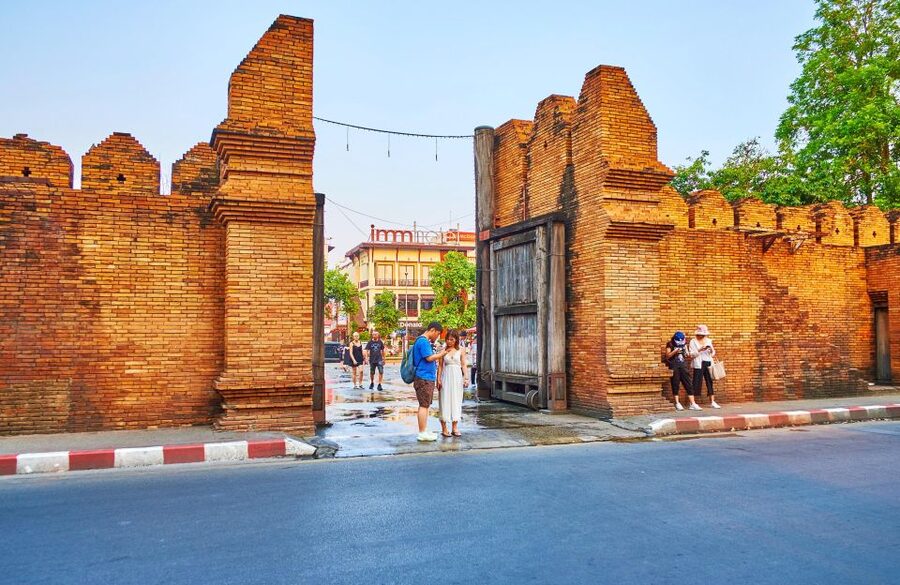
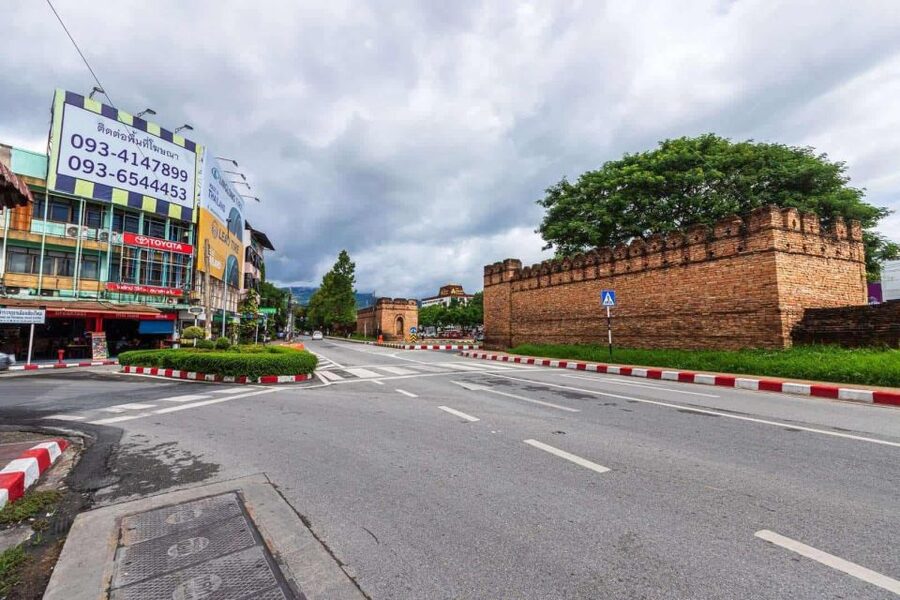
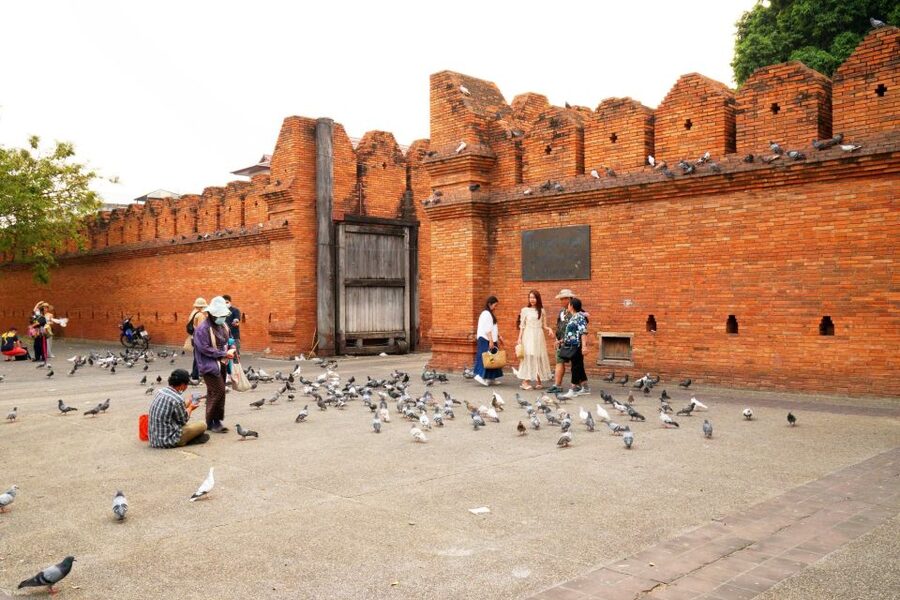
Then you’ll hit Tha Phae Gate, one of the city’s well-known gates. The gate matters because Chiang Mai’s Old City was historically organized around defenses and boundaries, and the gates were key points in how the city functioned.
You’ll likely get a sense of the canal-area setting and the gate’s role from the route itself, not only from the gate view. That’s one reason a tuk-tuk tour works here. You aren’t stuck staring at one building for hours. You’re moving through the kind of urban pattern that makes the old-city story click.
In this segment, I’d treat it like a photo and orientation moment. You’ll walk a bit around the gate area, and then you’ll be ready for the more sensory part of the tour at the markets.
Muang Mai Market and Warorot Market: The best finish for food and souvenirs
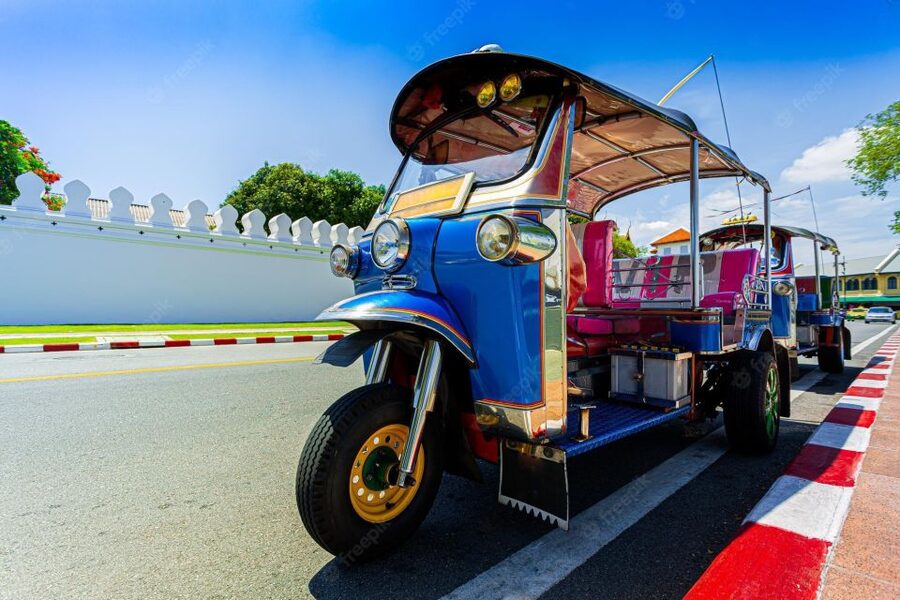
Your tour ends with shopping and sightseeing at Mueang Mai Market or Warorot Market (both are included stops on the plan). This is where the half-day tour becomes more than temples.
Markets are practical. You get a chance to:
- Buy snacks, fruit, or small meal items
- Look at local goods and everyday products
- Pick up souvenirs that feel more Thai and less generic
In about 20 minutes at each market stop, you won’t become a shopping expert, but you can still make smart buys. My favorite approach is to set a goal before you arrive. For example, pick one snack to try and one type of souvenir to browse, like silk items or small crafts.
One thing to watch for. Some drivers may steer you toward shopping stops beyond the listed temples and markets, especially jewelry or high-end goods. In my view, that’s not automatically bad, but it changes the character of your time. If you prefer temple and market time, you can politely skip those extra stops and keep your focus on your chosen souvenirs and food.
Price and value: When $50 makes sense, and when it doesn’t
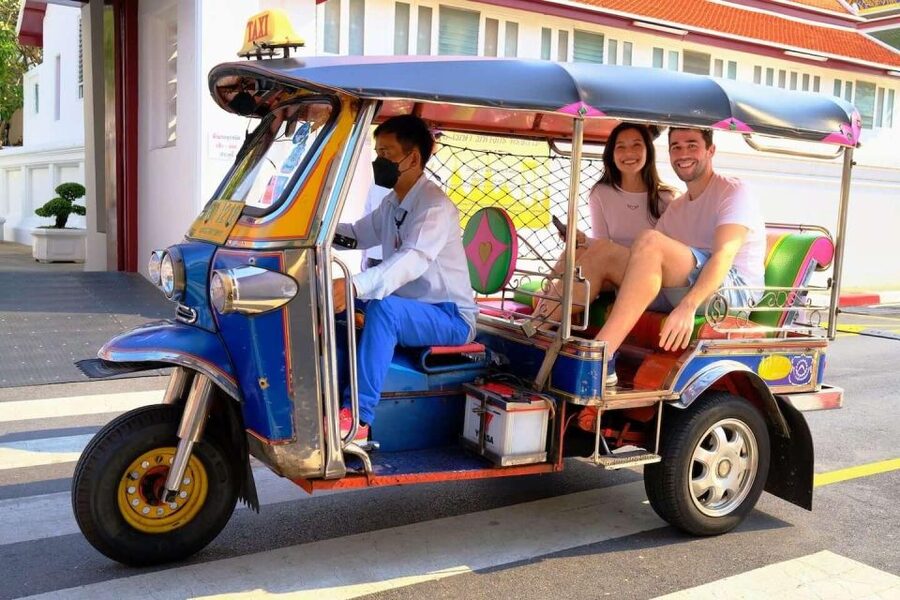
This costs $50 per group for up to 2 people, lasting about 4 hours. That’s not the cheapest way to tour the Old City, but it can be good value because you’re paying for convenience and time.
Here’s where the value comes from:
- You get private tuk-tuk transport, meaning you’re not sharing seats or waiting on a big group
- You avoid logistics stress between scattered stops inside the Old City area
- You get hotel pickup and drop-off within the 5 km zone
- You get skip-the-line for tickets (even though entrance fees are still not included)
When it might not feel like a slam dunk:
- If you’re expecting a fully guided, English-rich explanation at each site, this setup may disappoint, since a full English guide is not included
- If your driver spends more time on shopping stops you do not want, the effective value of the temple time drops
For couples, solo travelers who want a car-like experience without hiring a driver all day, and families who want the thrill of a tuk-tuk ride, this price can feel fair. For people who strongly want museum-style commentary, you might want a different kind of tour.
Who this tour suits best (and who should look elsewhere)
This is a great match if you want a stress-free half-day that hits the Old City essentials. It’s especially good for:
- First-timers who want a clear hit list of major temples and monuments
- Couples who like to move quickly and take photos
- Families with kids, since the open-air tuk-tuk ride is part of the fun
It’s less ideal if you need mobility support. The tour is not suitable for people with mobility impairments, so choose an alternative with step-free access and a more adaptable vehicle.
And one more reality check that helps: language can vary by driver. Some drivers provide friendly, patient history and context, but English clarity is not guaranteed in the same way a dedicated guide would be. If you care about detail, use translation tools for signage and keep your expectations aligned with what you’re actually getting.
Should you book this Chiang Mai Old City tuk-tuk tour?
Book it if you want a quick, private, open-air way to cover Wat Sri Suphan, Wat Chedi Luang, Wat Phra Singh, the Three Kings Monument, and then finish at the markets, without spending your day figuring out transport.
Skip it or pair it with extra planning if you need a consistent, fluent English guide at every stop, because this setup is more driver-led than lecture-led. Also skip extras if you are shopping-avoidant. You can focus on the temples and markets that are on the plan.
If your main goal is to see the highlights, move smoothly, and enjoy the tuk-tuk experience in Chiang Mai, this is an easy yes. Just show up dressed for temple visits, bring water, and decide what you want from the markets so you end the day feeling you got your money’s worth.
FAQ
How long is the Chiang Mai Old City exploration by private tuk-tuk?
The tour runs for about 4 hours.
What’s included in the price?
You get half-day tuk-tuk transport plus hotel pickup and drop-off within a 5 km radius of Chiang Mai Old City, travel accident insurance, and the tuk-tuk ride for a private group.
Are temple entrance fees included?
No. Entrance fees are not included, and the listed entrance fee amount is 90 THB.
Is there an English-speaking guide included?
No English-speaking guide is included. Your driver can speak Thai and English, but the level of explanation may vary.
Which places are visited during the tour?
The route includes Wat Sri Suphan, Wat Chedi Luang, Wat Phra Singh Woramahawihan, the Three Kings Monument, Tha Phae Gate, and market stops at either or both Mueang Mai Market and Warorot Market.
What should we wear when visiting temples?
Cover your shoulders and legs when entering temples.
Is the tour suitable for people with mobility impairments?
No, it is not suitable for people with mobility impairments.
Newest Chiang Mai reviews on the site
- Tour with Hike in Kiew Mae Pan Natural Trail from Chiang Mai★ 4.8 · 26 reviews
- Chiang Mai: 22 km XC Mountain Biking from Sticky Waterfall★ 4.7 · 13 reviews
- Sticky Waterfall Half-day with Private Car★ 4.9 · 37 reviews
- Sticky waterfalls- Elephants- Bamboo or White water rafting.★ 5.0 · 9 reviews
- Red, Blue, White Temples & Hot Spring Trip from Chiang Mai★ 4.4 · 143 reviews
- Private Tour Pha Chor Canyon & Doi Inthanon National Park★ 5.0 · 23 reviews
- Private Tour Doi Inthanon, Trekking Kew Mae Pan Nature Trail★ 5.0 · 11 reviews
- Private Doi Inthanon, Nature Trail, Wat Phra That Doi Kham★ 5.0 · 6 reviews
Tuk-Tuks, compared.
Bangkok by Night: Temples, Markets and Food Tuk-Tuk Tour
Read our review →
Markets, Temples and Food Night Tour by Tuk Tuk
Read our review →
Evening Tour with Wat Arun, Wat Pho & Tuk Tuk Ride
Read our review →
Bangkok Tuk-Tuk Tour by Night with Chinatown Street Food Meal
Read our review →Browse the lists this tour appears in