
Review · AYUTTHAYA DAY TRIPS
Colors of Ayutthaya: UNESCO Heritage 6 hour Bicycle Tour
Ayutthaya looks different at bicycle speed. This UNESCO Heritage 6-hour ride mixes temple classics with quiet village roads, so you’re not just bouncing between photo stops.
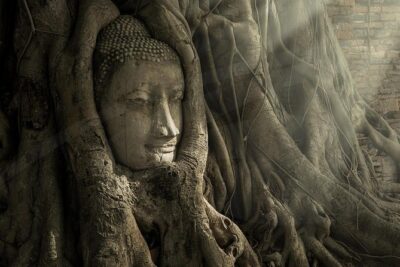
I really like two parts of this tour: the countryside stretch with rice paddies and local life, and the temple-and-statue sequence that hits the big Ayutthaya moments in a logical order. Wat Mahathat’s famous Buddha head in tree roots is the kind of scene you keep thinking about after you pedal away.
One caution: explanations depend on the guide and language fit. If spoken English clarity is important to you, there’s a chance you might miss some details, and lunch portions have been called out as a bit small by at least one guest.
In This Review
- Key things to know before you go
- Ayutthaya by bike: a 5.5-hour way to see the city’s layers
- Getting to the meeting point near PomPhet Fort
- The morning ride north: villages, rice paddies, and elephant history
- Wat Mahathat: the Buddha head in tree roots
- Wat Phra Si Sanphet and the three distinctive pagodas
- Lunch around 12:30: what you should expect and how to plan
- Local elementary school visit: respectful interaction if open
- Market stop for baked and fried delicacies
- Luang Phor Lokayasutharam: the huge reclining Buddha
- Wat Chaiwatthanaram on the west bank: the final temple payoff
- What makes the guides matter: Bung, Beam, and Spike
- Bike comfort, time on the saddle, and what to bring
- Value for $70: what you’re really paying for
- Should you book Colors of Ayutthaya?
- FAQ
- What time does the tour start, and how long is it?
- Where is the meeting point?
- How many people are in the group?
- What’s included in the price?
- Do you visit an elementary school?
- What languages are the guides?
- What temples and sites are visited?
- What is the minimum age to join?
- How does cancellation work?
Key things to know before you go
- Small group, calmer roads: capped at 9 participants, which helps when you’re moving through village streets.
- A real countryside start: you ride north through neighborhoods and rice fields before you hit the heavy-hitter ruins.
- Wat Mahathat is the headline: the Buddha head entwined in roots is the signature sight.
- Elephant Kraal history fits the route: you pass Phaniat Royal Elephant Kraal, tied to how elephants were herded and selected for war and labor.
- Lunch at a riverside restaurant: typically around 12:30, with drinking water provided and cold drinks mentioned in recent experiences.
- Wat Chaiwatthanaram gives you an end-of-tour payoff: west bank views of the Chao Phraya River, plus a boat crossing back.
Ayutthaya by bike: a 5.5-hour way to see the city’s layers
This tour works because it doesn’t treat Ayutthaya like a checklist. You start in the everyday rhythms outside the old capital, then slowly steer toward the ruins, so the temples feel earned instead of rushed.
You’ll ride for most of the half day, with a structured flow: countryside cruising, then a cluster of major sites inside the historic zone, then a final run along the west bank. At around 12:30 you stop for lunch, which is a smart timing choice. It keeps you fueled before the last temple stretch that includes Wat Chaiwatthanaram.
And you’re not just seeing temples. You also pass by a site linked to elephant round-ups, plus you have a market stop with local baked and fried snacks. That mix makes the day feel like Ayutthaya beyond the obvious photos.
More Ayutthaya day trips:
- From Bangkok: Ayutthaya Temples Guided Tour with Lunch
★ 4.7 · 10,535 reviews - From Bangkok: Ayutthaya & Ayothaya Floating Market Day Trip
★ 4.7 · 6,084 reviews - From Bangkok: Ayutthaya Historical Park Guided Day Trip
★ 4.6 · 3,020 reviews
Getting to the meeting point near PomPhet Fort
The meeting point is close to PomPhet Fort on Uthong Road. It’s also described as a short walk from Ayutthaya train station, which makes train-arrival days easier than you might expect.
Plan to arrive a few minutes early, because the tour begins with bike setup. There’s bike fitting right after you meet your guide. That matters more than it sounds. A good fit keeps your wrists from aching and helps you stay relaxed during longer temple-road stretches.
Your guide is with you the whole time, and language support is listed as English and Thai. In real life, the way information lands can vary by guide and by your comfort with the pace of explanations, so give yourself some grace and focus on the sights, not just the spoken facts.
The morning ride north: villages, rice paddies, and elephant history
Tours run daily starting at 10:00, and you travel north by bike right away. You’ll see the countryside around Ayutthaya in the truest sense of the word, not just a distant view from a bus window.
Expect an easy-to-moderate ride through idyllic villages and alongside rice paddies. This is where you get your reset time, too. You’re on a bike, so you move slower than traffic, and you can notice things you’d otherwise miss, like how far houses sit from the road or how water channels shape the fields.
Then you pass Phaniat Royal Elephant Kraal. This part is especially interesting because it’s tied to Ayutthaya’s animal-wrangling history. During the city’s heyday, this structure was used to entrap wild elephants herded down from the north. The elephant round-ups were traditionally presided over by Ayutthaya kings, who chose the best and strongest elephants to be trained for war and labor.
Even if you’re not a history buff, this stop gives meaning to what you’re riding past. It also helps you connect temple architecture to the practical world the kingdom depended on.
Wat Mahathat: the Buddha head in tree roots
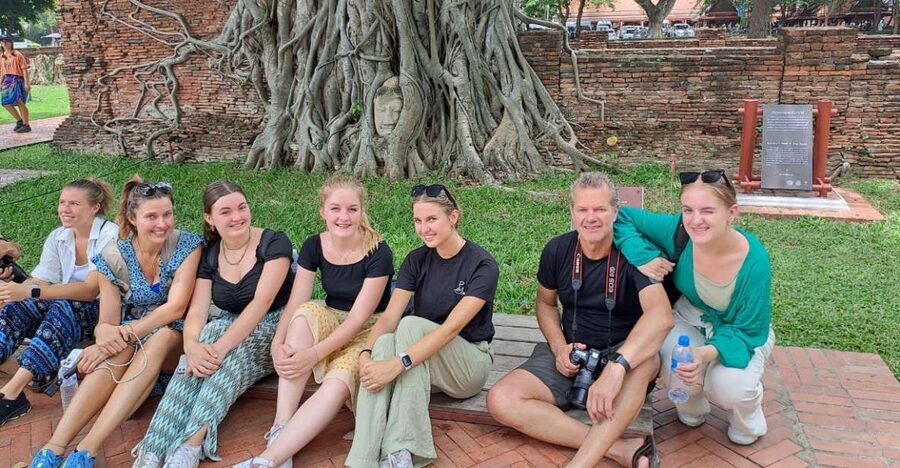
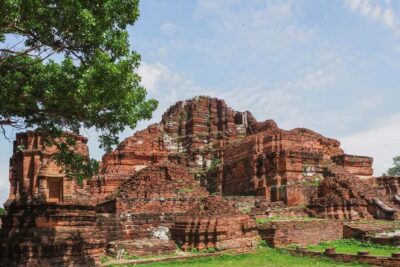
Around the time you’re getting deeper into the old capital zone, the temple ruins become more frequent. The tour then takes you to Wat Mahathat, one of Ayutthaya’s most iconic sights.
The famous scene is the Buddha head entwined within tree roots. It’s dramatic in photos, but on a real visit you’ll notice the texture and the angle, how the roots frame the head like a living sculpture. It’s also one of those places where people tend to slow down, because it feels strange and haunting in a good way.
From a practical standpoint, this is the kind of stop that rewards patience. You’ll want a few minutes to look from different directions. Also, since you’re cycling earlier in the day, this temple visit is a helpful change of pace. You’re not spending the entire tour in a moving line.
If you care about storytelling, this is where your guide’s explanation can really shape your experience. One guest highlighted how their guide did a strong job describing traditions and daily life, not just dates and names. When the guide connects the temple to the way people lived, it clicks.
A few more Thailand days to weigh up
- UNESCO’s Ayutthaya Historical Park: Full-Day Tour from Bangkok
★ 4.5 · 1,559 reviews - From Bangkok: Historical Day Tour to River Kwai
★ 4.6 · 868 reviews - Historical City of Ayutthaya – Unesco Full Day Tour From Bangkok
★ 5.0 · 847 reviews - Chiang Mai: Historic Temples and City Guided Walking Tour
★ 4.7 · 650 reviews
Wat Phra Si Sanphet and the three distinctive pagodas
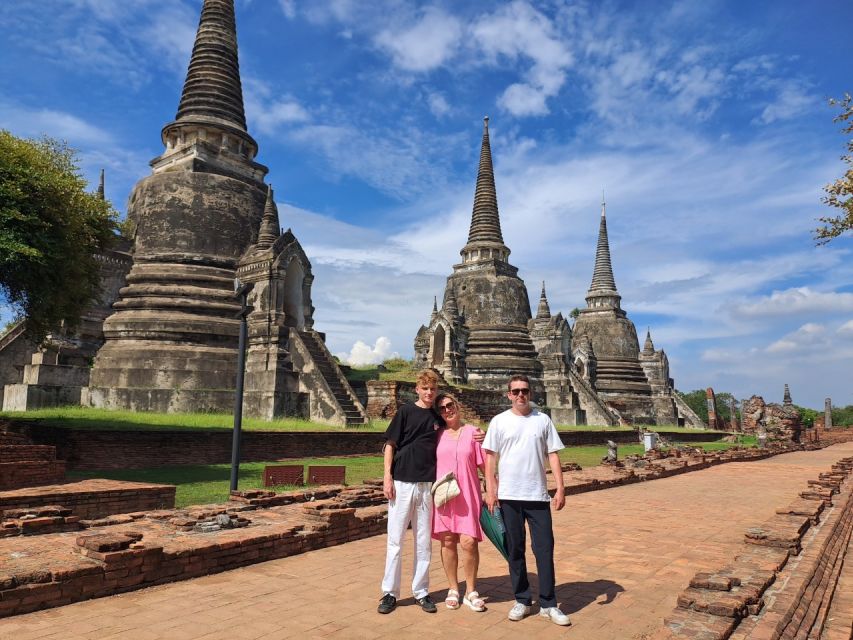
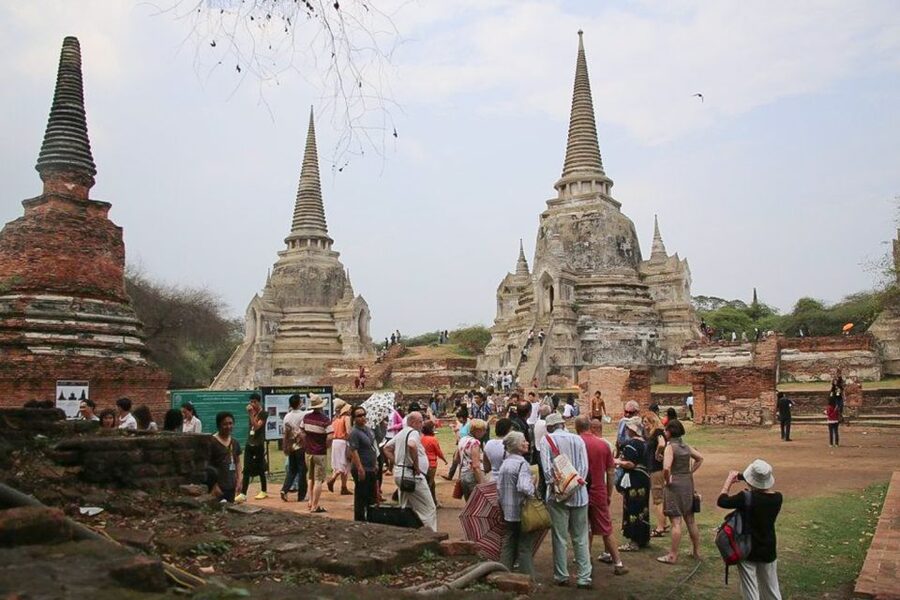
Next comes Wat Phra Si Sanphet, another must-see within the old capital. The standout here is the trio of distinctive pagodas.
This stop gives you a different temple vibe than Wat Mahathat. Instead of one signature image, you’re looking at a larger sacred complex where the form of the structures helps you understand the visual power of Ayutthaya’s royal period.
Your guide explains the history of Ayutthaya and its temples and kings. That can sound broad, but in practice it helps you keep track of what you’re seeing. Without context, pagodas and ruins can blend together. With it, you start to see why certain spots mattered.
If you’re traveling with family, this is also a good moment. Even kids who don’t care about history usually respond to the “big structure” feel of pagodas and the scale of the ruins.
Lunch around 12:30: what you should expect and how to plan
At about 12:30, you stop for Thai lunch at a riverside restaurant. This is a real midday break, not a quick snack stop.
The quality of the meal seems to land well for many people. Several comments describe lunch as tasty, and one guest specifically praised the restaurant setting by the river. There’s also mention of cold drinks, which is a nice touch in Thailand heat.
That said, at least one guest found the portion size on the smaller side and felt the overall value was average. So here’s my practical advice: if you know you eat a lot, consider bringing a small snack to tide you over, or plan to rely on the market stop later for extra bites.
Also, since you’re cycling afterward, keep lunch balanced. You want enough energy for the last stretch, but not so full that you feel heavy on the pedals.
Local elementary school visit: respectful interaction if open
The tour includes a visit to a local elementary school if open. If the school is operating that day, you’ll have a chance to interact with the children.
This can be one of the most meaningful parts of the day, mainly because it turns the tour outward to real people, not just ruins. The key is how you handle it: stay flexible, be polite, and follow your guide’s cues. Also, don’t assume every school visit runs the same way. The fact that it depends on being open is your signal that it’s more situational than guaranteed.
If you’re traveling with teens, this can also be a useful stop for perspective. It helps you balance the grandeur of the temples with the everyday place those communities still live.
Market stop for baked and fried delicacies
After the main temple time, you ride a short distance to a local market. This is where you can try typical local baked and fried delicacies.
The market stop is a good complement to lunch. It lets you snack at your own pace, and it also makes the day feel less like a scripted route with only set meals. If you have dietary restrictions, you’ll want to use the market moment to check options, because your choices will depend on what’s available that day.
This also adds variety to the visuals. Temples are stone and symmetry. Markets are colors, smells, and quick conversations. That contrast keeps the tour from feeling monotonous.
Luang Phor Lokayasutharam: the huge reclining Buddha
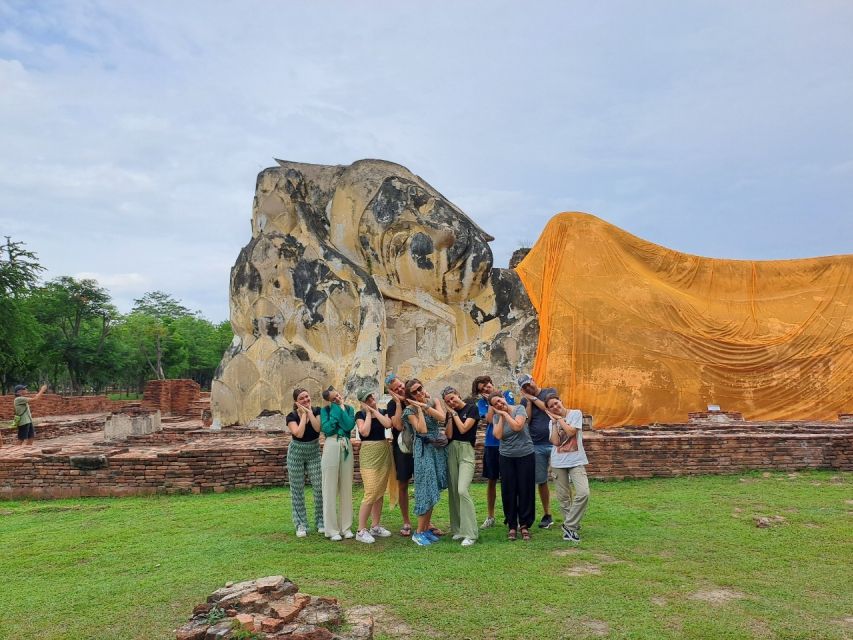
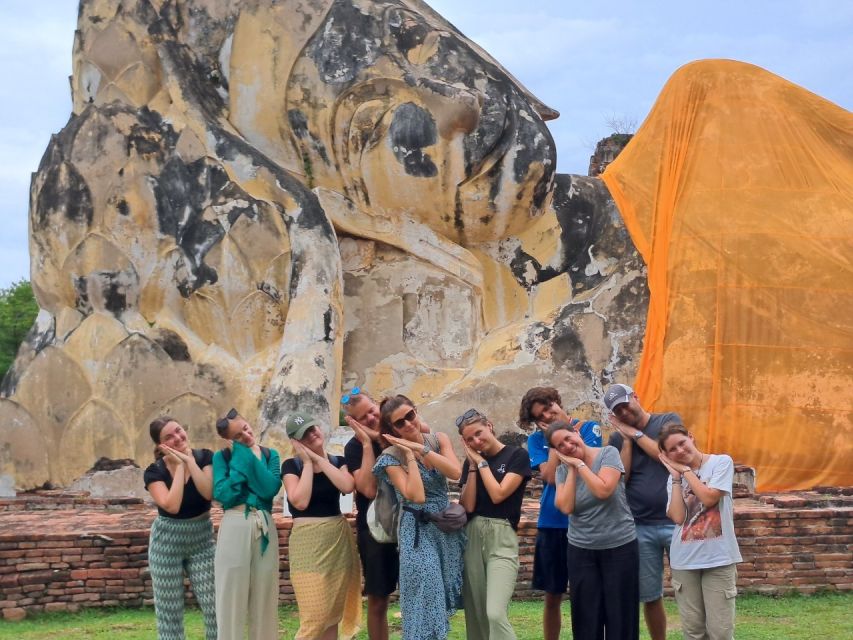
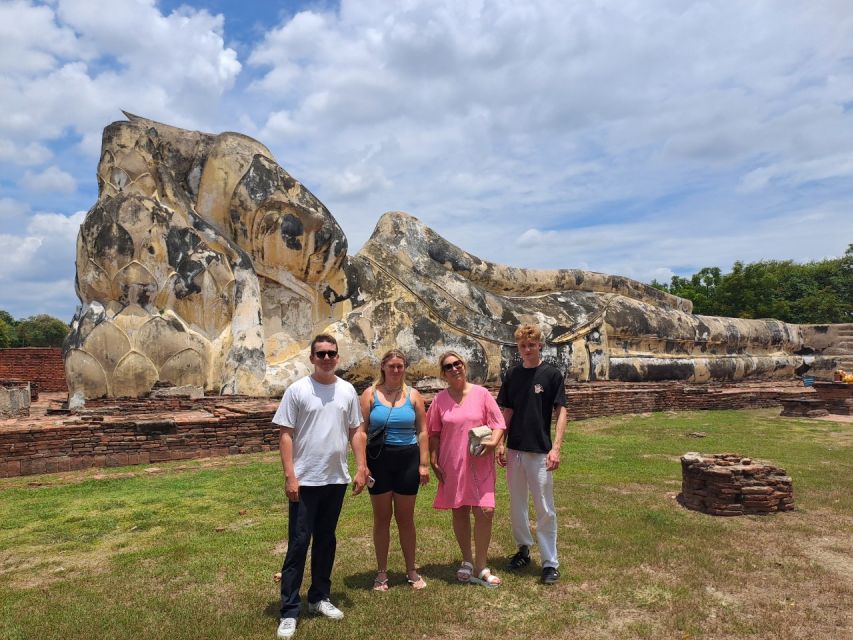
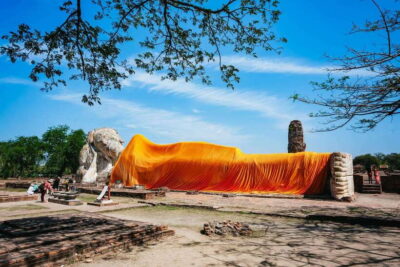
Next you’ll head to the large reclining Buddha statue at Luang Phor Lokayasutharam.
This stop is different from the upright temple icons earlier in the day. A reclining Buddha changes how you move through the space. You’ll naturally look upward from angles you might not expect, and it tends to slow people down.
This is also a nice “reward” after the market and temple stops. It gives you a big centerpiece again, with enough scale that even people who’ve seen a dozen statues can still appreciate the size.
If you’re the type who likes to take a few photos but then actually look closely, this is a good place to do both.
Wat Chaiwatthanaram on the west bank: the final temple payoff
The last major site is Wat Chaiwatthanaram on the west banks of the Chao Phraya River.
The temple was constructed in 1630 by King Prasat Thong as a memorial of his mother’s residence in the area. That bit of context matters, because it turns the temple from a pretty ruin into a deliberate family tribute from a specific ruler.
This is also where the day’s rhythm shifts. By now you’re tired enough to appreciate breaks, but still energized enough to enjoy the views along the river.
After visiting, you keep riding until you reach the pier, then cross the river by boat to return toward the city and finish the tour.
That included boat crossing is a small detail, but it helps you end the day in a way that feels like traveling, not just commuting back.
What makes the guides matter: Bung, Beam, and Spike
A lot of tour quality boils down to the guide. In the feedback tied to this experience, guides such as Bung, Beam, and Spike were praised for explaining traditions and history in a way that actually connects to what you see that day.
You’ll still have moments where explanations overlap with heat, moving between sites, and holding your position on a bike. That’s normal. But guides who tell the story with clear, grounded details tend to make the entire route feel smoother.
If language clarity is a concern for you personally, your best move is to set expectations: listen for main ideas, don’t try to catch every word. Focus on the visuals that the guide points out, like the elephant site, the pagodas, and the Buddha scenes.
Bike comfort, time on the saddle, and what to bring
You’re on a rented bike with a helmet provided. The biggest comfort variable you control is your readiness for a 330-minute ride day. Even if the pace feels friendly, you’re covering real distance and spending hours alternating between cycling and walking through temple grounds.
Bring sunscreen, and something to protect your head since you start riding at 10:00 and work into midday sun. Also consider light layers, because temple areas can feel cooler once you step into shade, and the walkways can be uneven in places.
Hydration is supported with drinking water included. And as mentioned earlier, cold drinks have shown up on recent departures, but water is what you can count on.
If you’re prone to leg fatigue, plan stretching breaks. Short pauses at temples do that for you naturally, but you’ll still want to keep your body moving and your posture relaxed.
Value for $70: what you’re really paying for
At $70 per person for about 330 minutes of guided biking, this price can make sense for a few reasons.
First, the tour isn’t just a long bike ride. It includes bike rental and helmet, a guide, drinking water, and entrance fees at Wat Mahathat, Wat Phra Si Sanphet, and Wat Chaiwatthanaram. It also includes a boat crossing, which saves you time and avoids local navigation headaches.
Second, the itinerary bundles countryside time with multiple major UNESCO-area temple stops in one day. That saves you the hassle of coordinating transport between sites, especially if you’re arriving by train.
Where value can vary is lunch and the explanation style. If you eat a lot, the portion size might feel short. If you need very clear spoken English to enjoy history talk, you’ll want to tune your expectations. Still, with a small group size of 9, the experience often feels guided without feeling crowded.
Should you book Colors of Ayutthaya?
I think you should book this tour if you want Ayutthaya in motion, not just from the curb. It’s a great fit when you love cycling through real countryside, you want to see the core temples like Wat Mahathat and Wat Chaiwatthanaram, and you appreciate context that connects ruins to daily life and royal decisions.
You might skip it if you’re not comfortable with a few hours of riding, or if you strongly rely on detailed spoken explanations and worry about language clarity. Also consider whether a smaller lunch portion could leave you hungry.
If your goal is a balanced day with UNESCO ruins, elephant-era context, and a riverside finish, this is a solid choice.
FAQ
What time does the tour start, and how long is it?
The tour runs daily starting at 10:00 and lasts 330 minutes.
Where is the meeting point?
You meet near PomPhet Fort on Uthong Road, in Ayutthaya.
How many people are in the group?
It’s a small group limited to 9 participants.
What’s included in the price?
Bike rental and a helmet, a live guide, boat crossing, drinking water, Thai lunch at a local restaurant, and entrance fees at Wat Mahathat, Wat Phra Si Sanphet, and Wat Chai Wattanaram.
Do you visit an elementary school?
Yes, you visit a local elementary school if it is open.
What languages are the guides?
The tour guide speaks English and Thai.
What temples and sites are visited?
You’ll visit Wat Mahathat, Wat Phra Si Sanphet, Wat Chaiwatthanaram, plus you’ll also see the reclining Buddha at Luang Phor Lokayasutharam and pass Phaniat Royal Elephant Kraal.
What is the minimum age to join?
The minimum age to join is 12 years old.
How does cancellation work?
You can cancel up to 24 hours in advance for a full refund. Cancellations between 24 and 48 hours before the tour have a 50% cancellation fee, and cancellations less than 24 hours before the tour, or no-shows, have a 100% cancellation fee.
Newest Thailand reviews on the site
- Half-Day Tour : PRIVATE Grand Palace & Temples★ 5.0 · 14 reviews
- Maeklong Railway and Damnoen Saduak Floating Market Tour★ 5.0 · 11 reviews
- Bangkok Dinner Cruise with Intl Buffet, Live Music & Hotel Pickup★ 4.5 · 12 reviews
- The Luxury White Cruise Experience★ 3.5 · 34 reviews
- Luxury Dinner Cruise with Guide and Transfer (Opt. Executive Van)★ 5.0 · 9 reviews
- Bangkok Luggage Storage★ 4.5 · 37 reviews
- Bangkok Luggage Delivery from Hotel to Airport★ 5.0 · 25 reviews
- Baiyoke Sky Dinner Experience with Observation Deck Access★ 3.5 · 57 reviews
Ayutthaya Day Trips, compared.
Ayutthaya & Ayothaya Floating Market Day Trip
Read our review →
Ayutthaya Temples and River Cruise from Bangkok
Read our review →
UNESCO’s Ayutthaya Historical Park: Full-Day Tour from Bangkok
Read our review →
Floating Market and Ayutthaya Guided Day Tour
Read our review →
Ayutthaya, Railway & Floating Markets Full-Day Tour
Read our review →Browse the lists this tour appears in