Review · GUIDED
Colors of Chiang Mai Guided Bicycle Tour
One half-day. Two wheels. And a side of Chiang Mai most people miss by staying in the old city. This Colors of Chiang Mai ride threads through quiet roads, rice fields, and riverside air, then finishes among centuries-old ruins in Wiang Kum Kam. I especially like how the route mixes everyday life stops with real temple time, without turning the ride into a history lecture.
Two things I really like: first, the cycling is mostly on leafy, low-traffic land roads, so you can enjoy the scenery without white-knuckle stress. Second, the breaks feel purposeful, like a local market stop for fresh fruit or a snack, plus a proper Thai meal such as Khao Soi Kai.
One drawback to consider: if you’re unlucky with the season or the day’s closures, the operator may swap around parts of the route because rice fields and fruit orchards are not always in bloom, and local shops or schools can be closed on weekends or holidays.
In This Review
- Key Points I’d Use to Choose This Tour
- The Ride’s Core Idea: Countryside Quiet, City Culture, One Easy Plan
- Distance, Timing, and What 270 Minutes Really Means
- Starting Point and Getting Ready Without Stress
- Quiet, Green Roads and the City’s Edges
- Temple Stop: Where Buddhism Becomes Personal, Not Just Facts
- Local Village Life and Thai Traditional Products
- Market Snacks and Fresh Fruit Stops That Keep You Going
- Along the Ping River: A Scenic Breather
- Wiang Kum Kam: The Ancient Ending That Makes the Effort Worth It
- Food, Breaks, and the Included Khao Soi Kai Meal
- Safety and Guide Style: Why This Tour Works Even for Nervous Riders
- Seasonal Route Changes: What to Expect When Rice Fields Do Their Own Thing
- Who This Tour Suits Best
- Price and Value: Why $38 Can Be a Good Deal Here
- Should You Book Colors of Chiang Mai?
- FAQ
- Where is the meeting point?
- How long is the tour?
- How far do you cycle?
- Is a bike and helmet included?
- What language is the guide?
- What food and drinks are included?
- What historic and cultural sites do you visit?
- Can I book if I’m traveling solo?
- What is the cancellation policy?
- What is included in the price, besides the ride?
Key Points I’d Use to Choose This Tour
- Quiet riding style: designed around green lanes and calmer side roads, with safer crossings handled by your guide
- Local culture stops: you’ll visit a temple and may also see village makers of Thai traditional products
- Ping River atmosphere: a change of pace that keeps the ride scenic and relaxed
- Wiang Kum Kam ruins: founded in 1286 by King Mengrai, with temples and remains dating back hundreds of years
- A real meal included: you can expect Thai food, often Khao Soi Kai, plus water or soft drinks
The Ride’s Core Idea: Countryside Quiet, City Culture, One Easy Plan
If you want Chiang Mai that feels personal, this tour is built for that. You start in the city area, then spend most of the time moving through quieter outskirts where you can actually hear daily life, not just traffic. It’s the kind of half-day you can do even if you are not a hardcore cyclist, because the goal is comfort and curiosity, not speed.
The itinerary is also designed to prevent the usual “bike tour fatigue.” You do not just pedal and stare. You stop at points with meaning, like a temple with Buddhism context, a local market for a snack or fruit, and historic ruins at the end. The result is a ride that feels like a guided day out, not a checklist.
Your group can be private or small-group. That matters, because it keeps the pace friendlier and helps your guide manage safer crossings. Also note the tour only operates with a minimum of 2 participants. If you book solo, keep an eye on that, because the slot may shift or cancel if the minimum is not reached.
A few more Chiang Mai days to weigh up
- Half-Day Thai Cooking Class at Organic Farm in Chiang Mai
★ 5.0 · 19,087 reviews - Chiang Mai: Elephant Sanctuary, Waterfall & Bamboo Rafting
★ 4.9 · 9,160 reviews - Chiang Mai: Doi Inthanon National Park Eco-Friendly Tour
★ 4.6 · 6,667 reviews
Distance, Timing, and What 270 Minutes Really Means
The tour runs 270 minutes, and the cycling portion is about 20 to 25 km. In plain terms, you are usually looking at roughly 3 to 4 hours of actual ride time spread across breaks, photo stops, and temple or market stops. That length is long enough to feel like you got out of town, but short enough that you are not wiped by midday.
Pace is generally easy. More than one guide on this route has been described as patient, careful, and good at keeping people comfortable. A big part of that is how they approach junctions and crossings, plus how they guide your group’s movement so you are not constantly stopping and waiting.
If you are not confident on busier roads, you will still be okay because most of the ride is on quiet roads. When you do hit a heavier traffic moment, your guide should handle it with clear hand signals and local timing choices.
Starting Point and Getting Ready Without Stress
Meeting point is straightforward: arrive 5 to 10 minutes before the tour starts. That’s the sweet spot to get your bike and helmet sorted so you do not feel rushed.
Bikes and a helmet are included, along with an English-speaking guide and insurance. You also get water or soft drinks during the excursion, so you are not scrambling for hydration mid-ride.
One small extra detail that helps if you want to settle in: the operator offers free WiFi at their office. It is not why you book a bike tour, but it is convenient for quick messaging or planning before you head out.
Quiet, Green Roads and the City’s Edges
This is where the tour starts to feel special. Rather than looping through the most obvious tourist corridors, the route leans into green land roads and calmer lanes around Chiang Mai. You pass through local communities, and that shift is the point. You get to see how the city meets fields and small neighborhoods.
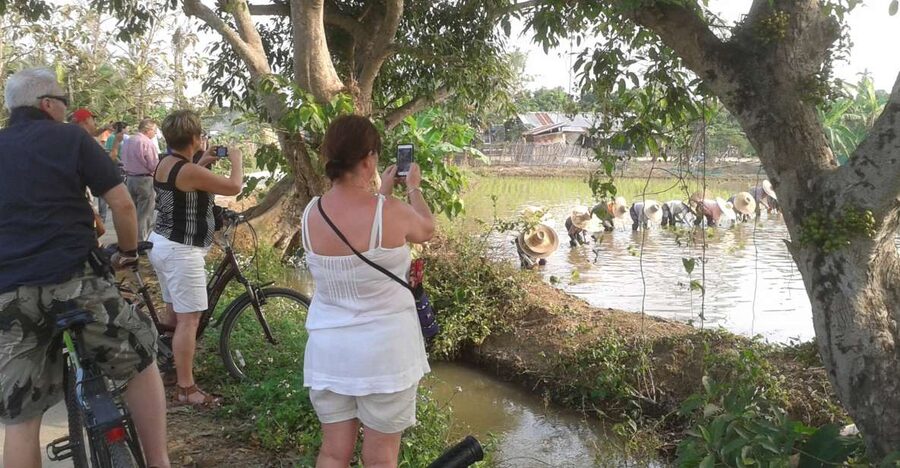
The ride is not just scenery. It is also a gentle introduction to how the north works day to day, especially around farming areas. You may spot rice fields and fruit orchards along the way. Just be aware of the seasonal reality: the operator notes that these areas are not in blossom year-round, so some days may look greener than others.
Also, because this is a guided ride, you are not stuck guessing what you are looking at. Your guide can explain what you are passing and why it matters, especially when the route turns toward temples and Lanna-era areas later.
Same stretch of coast, a different sort of day:
- Chiang Mai: Elephant Sanctuary & Waterfall Group Tour
★ 4.9 · 5,780 reviews - Chiang Mai: Chiang Rai Temples, Karen Tribe and Hot Springs
★ 4.7 · 5,401 reviews - Chiang Mai: Cooking Class, Market & Thai Herbs Garden Tour
★ 4.9 · 4,824 reviews - Chiang Mai: Authentic Cooking Class with Market & Farm Visit
★ 4.9 · 4,546 reviews
Temple Stop: Where Buddhism Becomes Personal, Not Just Facts
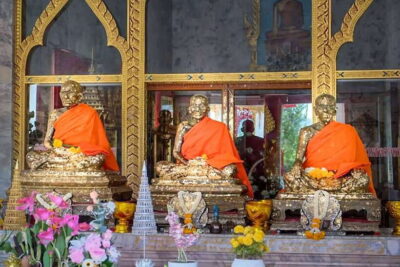
Half-day tours often use temples as photo stops. This one tries to slow things down. You stop at a local temple where your guide shares what you need to understand about Buddhism, so you know what you are seeing rather than just photographing it.
One thing that makes this temple time work is the guide style. Several guides described in the tour experience have personal connections to Buddhist practice. For example, some have shared experiences from time as monks, which gives their explanations more lived-in meaning. Even if you are not religious, it can make the temple details feel clearer and more respectful.
A practical note: temple stops can add walking time beyond your bike. It is usually manageable, but it is worth wearing comfortable clothes and shoes you can move in easily.
Local Village Life and Thai Traditional Products
One of the highlights is a chance to see women from a local village making Thai traditional products. This is the kind of stop that often gets skipped when tours stay focused only on big sights. Here, it helps you see craft and daily production as part of community life, not as something staged for tourists.
What makes this valuable is the contrast. You are cycling through quiet roads, then you suddenly switch to a human-scale moment: people working, making things, and carrying traditions forward. It adds warmth to the tour, especially if you like travel that feels grounded in real people.
Depending on the day, you might also encounter other small community stops described by past tour participants, such as local school visits or craft-related places like pottery making. The operator also notes that itineraries can change when shops or schools are closed, so your exact mix can vary.
Market Snacks and Fresh Fruit Stops That Keep You Going
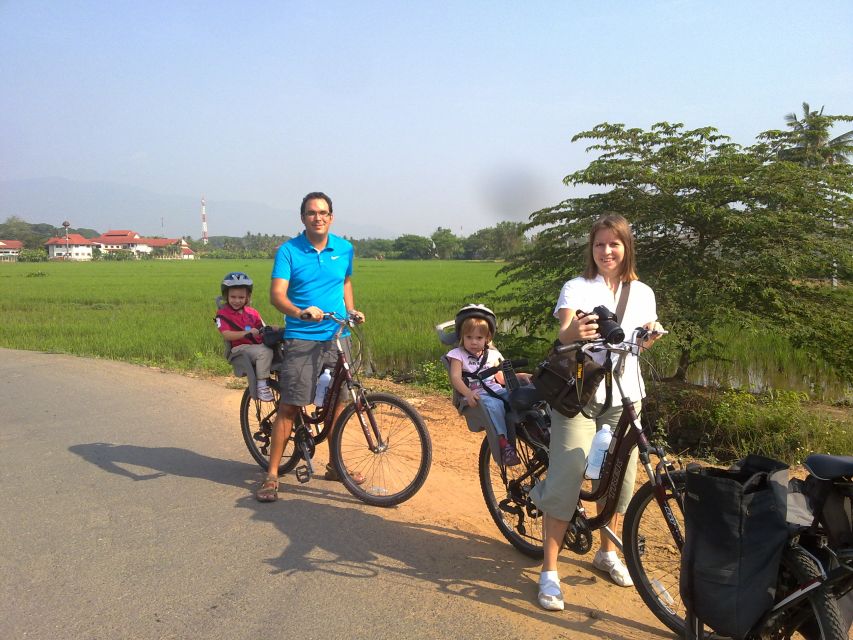
After cycling past rice fields and fruit orchards, you stop for snack or fresh fruit at a local market. This is a well-timed break, and it helps keep energy steady for the river section and the historic finish.
Market timing can affect what’s running. One past experience notes that a weekend visit lined up with a market day, while other days may look different. The good part is that the tour is built to make these stops flexible, so you still get a real taste experience, just in a form that matches the day.
If you are picky about food, Thai market snacks are usually easy to manage because you can often choose what looks good in front of you. And since you get a meal later, this snack stop is more about tasting and recharging than filling up.
Along the Ping River: A Scenic Breather
Riding along the Ping River changes the whole rhythm of the day. Even if you are not a nature person, river air tends to reset your senses. The roads feel calmer, and the visuals turn from “fields near town” to “movement with water.”
This portion also helps break the tour into chapters. You go from village and farming cues to a more open, scenic stretch. It is a nice moment to slow down, take photos, and notice how Chiang Mai’s geography shapes daily life.
If you like cycling tours where the ride is part of the sightseeing, this river section is one reason to choose this route over a vehicle-only tour.
Wiang Kum Kam: The Ancient Ending That Makes the Effort Worth It
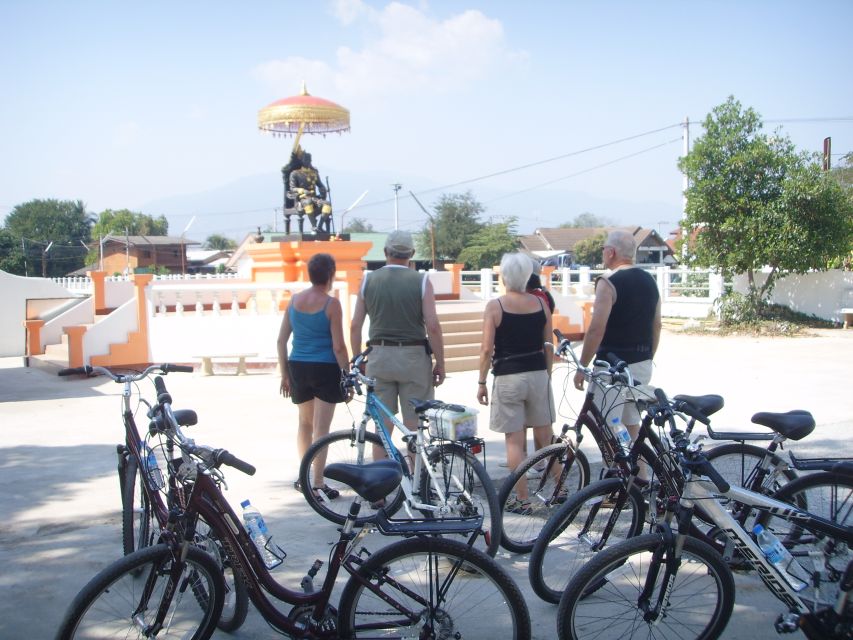
The final stretch is the big historical payoff. You cycle through Wiang Kum Kam, founded in 1286 by King Mengrai. It served as the Lanna empire’s capital for a period of only 10 years, which makes the place feel both early and fleeting in the broader sweep of history.
Expect temples and ruins dating back hundreds of years. You will stop for photographs and time to absorb the atmosphere. This is not just “see ruins, move on.” The tour is timed so you arrive when you can appreciate what’s left and imagine what these areas looked like when they were central.
The highlight list also mentions a 700-year-old Chedi, which adds a strong anchor point to the visit. If you like architectural details, you will probably enjoy the chance to linger, look up, and trace how the structures sit within the present-day setting.
One consideration: you should expect some uneven ground and more walking around ruins. You are on a bike for most of the day, but the historic area is where you will switch from pedaling mode to sightseeing mode.
Food, Breaks, and the Included Khao Soi Kai Meal
This tour is not only about cycling and temples. It includes a small Thai meal, and Khao Soi Kai is specifically mentioned as part of the experience. That’s a smart inclusion. Khao Soi is one of Chiang Mai’s signature flavors, and having it in the middle of a half-day prevents the classic problem where you bike all morning and then scramble for lunch.
You also get a snack or fruit earlier, plus water or soft drinks during the ride. That combination makes the tour feel practical, especially if you plan to keep sightseeing after.
If you enjoy learning through food, this itinerary is friendly for that. Guides have been described as suggesting foods to try and explaining what you are eating in context. Even if you do not want a deep lecture, the meal break adds a relaxed pace where you can talk, rest, and reset.
Safety and Guide Style: Why This Tour Works Even for Nervous Riders
Cycling in any city can make you nervous. This tour’s reputation centers on how guides manage that. Clear group control, careful handling of crossings, and a calm pace have been called out again and again.
Some guides, such as Wit, have been described as using clear hand signals and being attentive at intersections. Others, like Dong or Koi, have been noted for making riders feel safe, even when roads briefly get busier.
That matters because it affects your enjoyment. If you spend the ride worrying, you will not see much. Here, the safer rhythm gives you space to watch the river, notice the orchards, and actually pay attention to temple details.
Seasonal Route Changes: What to Expect When Rice Fields Do Their Own Thing
One honest factor is that parts of the scenery depend on the season. The operator states that they may change the advertised itinerary because rice fields and fruit orchards are not in blossom year-round.
Schools and local shops can also be closed during weekends, school holidays, and national holidays. So if you have your heart set on a specific kind of roadside view or a particular market atmosphere, keep a flexible mindset.
The upside is that the tour is designed around multiple types of stops: temple time, a market snack, river riding, and Wiang Kum Kam ruins. Even if a field looks less photogenic, the cultural and historic spine of the tour usually stays intact.
Who This Tour Suits Best
This is a strong match if you want a half-day that feels cultural but not stuffy. You will likely enjoy it if you like:
- cycling but prefer quiet roads
- temple visits with explanations tied to what you are seeing
- local market time and a real Thai meal
- a final historical finish at ruins, not just a turnaround ride
If you are a very fast cyclist who wants big mileage and speed, this may feel too relaxed. If you want a car tour with zero bike time, this is also not it, since 20 to 25 km is the point.
It’s also a good solo option in terms of comfort, since solo travelers are welcome. Just remember the minimum group size requirement means your slot may shift if the operator cannot run it with at least two participants.
Price and Value: Why $38 Can Be a Good Deal Here
At $38 per person for a 270-minute experience, the value comes from what’s actually included, not just the bike ride.
You get:
- bicycle and helmet
- an English-speaking guide
- water or soft drinks
- insurance
- WiFi at the office
- a Thai snack or fruit stop plus a Thai meal, often Khao Soi Kai
For Chiang Mai, that package reduces decision fatigue. You do not have to line up bike rental, worry about safe crossings without local help, or hunt for lunch midday. The tour also gives you built-in pacing and breaks, which is where many bike days fall apart for visitors.
If you’re already planning to eat Khao Soi and see Wiang Kum Kam, this price can feel especially fair because you’re getting both plus the guided ride connecting it all.
Should You Book Colors of Chiang Mai?
I’d book it if you want a practical, calmer bike tour that still delivers real culture. The mix of quiet roads, a temple stop with meaningful explanations, a market snack, Ping River riding, and the Wiang Kum Kam ruins ending is exactly the kind of half-day that makes Chiang Mai feel more personal.
You might skip it if you hate the idea of cycling 20 to 25 km, or if you’re only interested in a single big attraction. This tour is best when you like the journey itself, not just a final destination.
If you go, bring a flexible mindset for seasonal scenery changes and enjoy the fact that the guide’s job is to keep things safe, smooth, and easy to follow. That is what turns a simple bike ride into a memorable Chiang Mai morning.
FAQ
Where is the meeting point?
You should arrive at the operator’s place 5 to 10 minutes before the tour starts.
How long is the tour?
The tour duration is 270 minutes.
How far do you cycle?
The route is listed as 20 to 25 km.
Is a bike and helmet included?
Yes. Bicycle and bicycle helmet are included.
What language is the guide?
The live guide is available in English and Thai.
What food and drinks are included?
You’ll get a delicious Thai meal or snack, plus water or soft drinks during the excursion. A Thai meal such as Khao Soi Kai is mentioned in the tour description.
What historic and cultural sites do you visit?
You’ll stop at a local temple and cycle through Wiang Kum Kam, including a 700-year-old Chedi.
Can I book if I’m traveling solo?
Solo travelers are welcome, but the tour only operates with a minimum of 2 participants.
What is the cancellation policy?
You can cancel up to 24 hours in advance for a full refund.
What is included in the price, besides the ride?
In addition to the bike and helmet, the tour includes an English-speaking guide, delicious Thai meal/snack, water or soft drinks, insurance, and free WiFi at the office.
Newest Chiang Mai reviews on the site
- Tour with Hike in Kiew Mae Pan Natural Trail from Chiang Mai★ 4.8 · 26 reviews
- Chiang Mai: 22 km XC Mountain Biking from Sticky Waterfall★ 4.7 · 13 reviews
- Sticky Waterfall Half-day with Private Car★ 4.9 · 37 reviews
- Sticky waterfalls- Elephants- Bamboo or White water rafting.★ 5.0 · 9 reviews
- Red, Blue, White Temples & Hot Spring Trip from Chiang Mai★ 4.4 · 143 reviews
- Private Tour Pha Chor Canyon & Doi Inthanon National Park★ 5.0 · 23 reviews
- Private Tour Doi Inthanon, Trekking Kew Mae Pan Nature Trail★ 5.0 · 11 reviews
- Private Doi Inthanon, Nature Trail, Wat Phra That Doi Kham★ 5.0 · 6 reviews
Guided, compared.
Bangkok by Private Guide: Full Day Tour In and Around
Read our review →
Grand Palace, Wat Pho, and Wat Arun Guided Tour
Read our review →
Guided Tour of Phuket City with Hotel Transfers
Read our review →
Grand Palace and Wat Phra Kaew Guided Walking Tour
Read our review →