
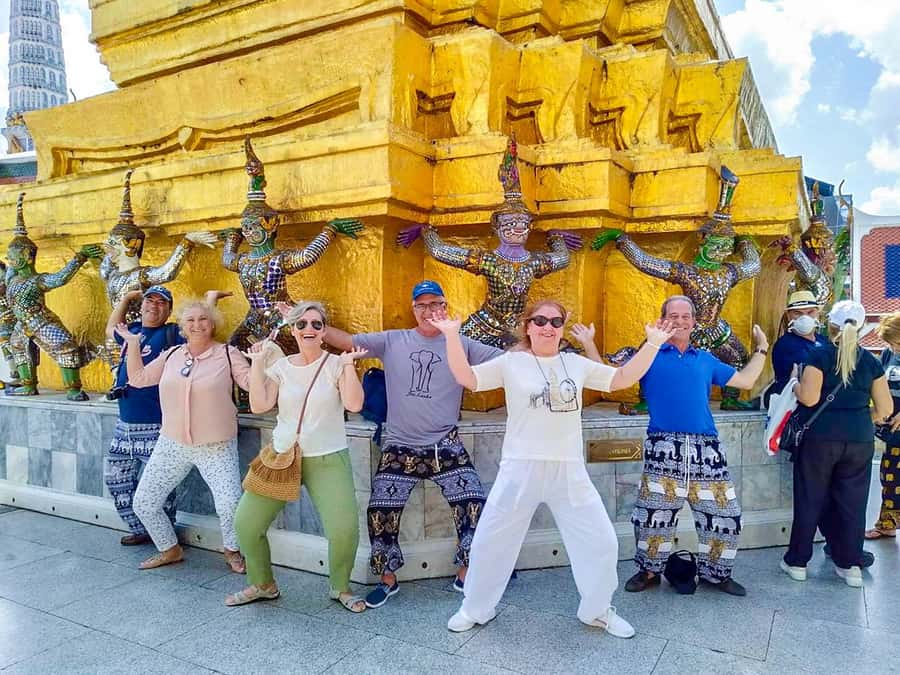
Review · GRAND PALACE & BANGKOK TEMPLES
Grand Palace, Wat Pho, and Wat Arun: Guided Tour in Spanish
Three temple icons in one Spanish route.
This guided tour strings together Bangkok’s most famous spiritual landmarks in a single day, with a Spanish-speaking guide helping you connect the sights to Thai history and the monarchy. I like that it is designed for real life in Bangkok, with walking plus public transportation between stops to reduce the pain of traffic and save your energy. The first temple stop, Wat Pho, sets the tone fast with the Reclining Buddha and one of the largest temple areas in the city.
What I also like is how the day is paced to hit the big hitters without feeling like you are sprinting. You see the Grand Palace and the Temple of the Emerald Buddha, then you cross the river by boat for panoramic views before finishing at Wat Arun, where you can hear the story behind its pagoda. The one drawback to keep in mind: access can sometimes change when royal ceremonies or related events affect the palace area, so the exact flow of the day can shift.
In This Review
- Key points you will care about
- Meeting at Bangkok City Pillar Shrine, then straight into temple time
- Walking plus public transport, a smart way to beat Bangkok gridlock
- Wat Pho first: Reclining Buddha, big grounds, and the feeling of age
- Grand Palace and the Temple of the Emerald Buddha: the Siam monarchy connection
- A river boat crossing to reset your brain before Wat Arun
- Wat Arun, the Temple of Dawn: porcelain tiles, bell tower, and a pagoda climb
- The Spanish guide experience, and the real value of Nori
- Price and value: what $109 buys you in a 5-hour temple day
- What to wear and bring so you do not get stuck at the gate
- Getting your day to feel smooth, not stressful
- Should you book this Spanish Grand Palace, Wat Pho, and Wat Arun tour?
- FAQ
- How long is the Grand Palace, Wat Pho, and Wat Arun guided tour in Spanish?
- What language is the guide?
- Where do we meet for the tour?
- What is included in the price?
- What should I wear and what is not allowed?
- Can I cancel and get a full refund?
Key points you will care about
- Spanish guide support: You get explanations in Spanish, not just a self-guided audio experience.
- Wat Pho first: Start at the Reclining Buddha temple, known as Bangkok’s oldest and largest complex.
- Grand Palace + Emerald Buddha as a package: You visit both the palace grounds and the most important Buddha shrine in Thailand.
- Boat crossing for views: You get a sightseeing boat ride after the inner-temple portion.
- Wat Arun climb and context: You can go up to the pagoda area to hear its history.
- Traffic-smart routing: Walking sections are paired with public transport for smoother travel.
Meeting at Bangkok City Pillar Shrine, then straight into temple time
You meet at the gate of the Bangkok City Pillar Shrine. From there, you are set up for a classic temple day in central Bangkok, built around three of the most recognizable names in Thai culture: Wat Pho, the Grand Palace with the Emerald Buddha, and Wat Arun.
The total time is about 270 minutes, so you are looking at a half-day that feels full. This is the kind of schedule that works best when you want one solid hit of the city’s top sights, without trying to piece it together on your own while navigating streets, crossings, and crowds.
Because the tour includes hotel pickup and drop-off for private tours, you can also plan for an easier start and finish. That matters when your biggest challenge is not just seeing the temples, it is timing the travel between them.
More Grand Palace and temple mornings in Bangkok:
- Bangkok: Grand Palace, Wat Pho, and Wat Arun Guided Tour
★ 4.8 · 3,632 reviews - Bangkok: Grand Palace and Wat Phra Kaew Guided Walking Tour
★ 4.4 · 2,417 reviews - Bangkok: Grand Palace, Wat Pho, Wat Arun Sacred & Local Tour
★ 4.3 · 2,256 reviews
Walking plus public transport, a smart way to beat Bangkok gridlock
Bangkok traffic is legendary, and this tour is designed with that in mind. You walk between key points, then you take public transport to move between locations. The goal is simple: keep you seeing temples, not sitting in slow-moving traffic.
In practical terms, this helps you keep your momentum. Temples are not just photo stops, you need time to read signs, move through courtyards, and pause to take in details like spires, mosaics, and murals. If your transit time is stuck in jams, you lose that temple time. This route tries to protect it.
Also, note the limits that keep the day moving. Luggage or large bags are not allowed, and sleeveless shirts are not allowed. If you pack light and dress for temple rules, the transitions feel smoother.
Wat Pho first: Reclining Buddha, big grounds, and the feeling of age
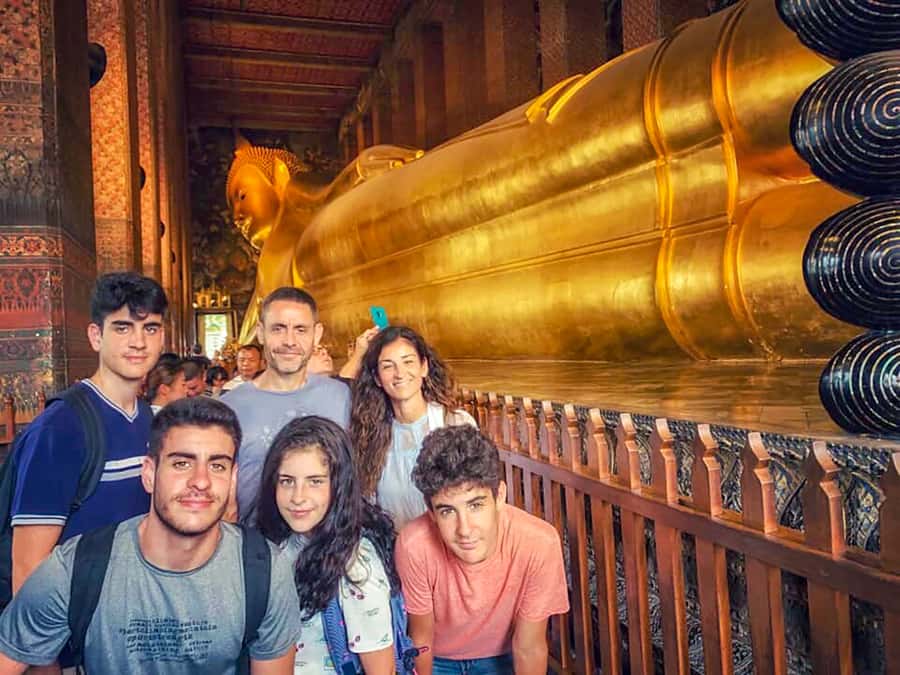
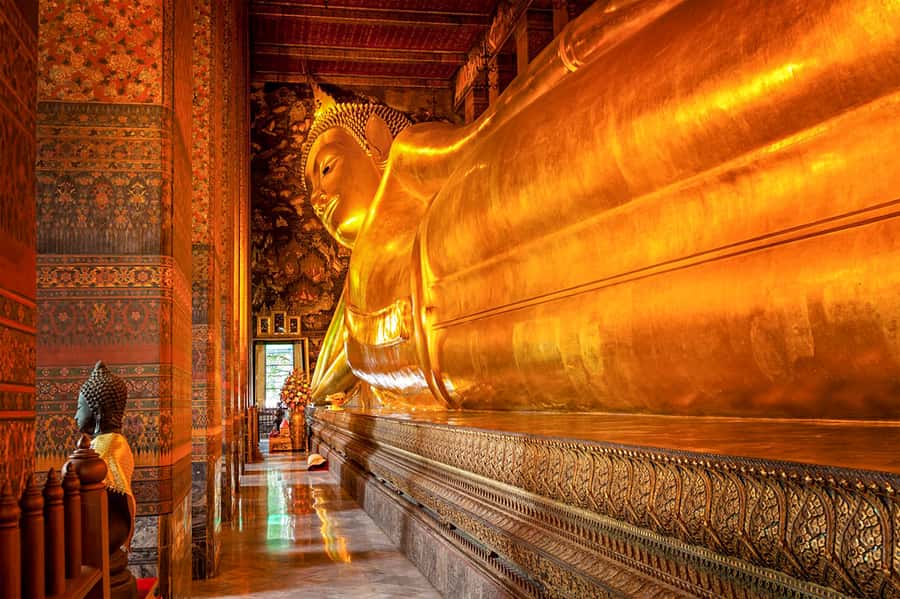
The day starts with Wat Pho, the Temple of the Reclining Buddha. It is famous as Bangkok’s oldest and largest temple complex, with an area of almost 20 acres. That size shows up in the experience: more enclosures, more courtyards, and more space than you might expect from a single temple visit.
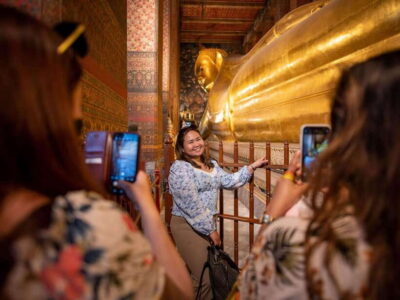
The Reclining Buddha is the centerpiece here, and the visit is more than just a quick look. You learn history and context, and you get time to appreciate the layout and the scale of the complex. If you like temples that feel like they grew over centuries instead of being rebuilt into a single photo spot, Wat Pho is a strong start.
Wat Pho also sets you up well for the rest of the day. After seeing one major religious site with monumental sculpture, the Grand Palace and Emerald Buddha stop will make more sense. You are going from the temple that is known for age and size, to the palace-related religious centerpiece of Thai devotion.
One practical tip: start your day with a steady pace. Wat Pho’s size can make it tempting to rush, but it is worth slowing down so you can actually take in the enclosures and the way the complex is arranged.
Grand Palace and the Temple of the Emerald Buddha: the Siam monarchy connection
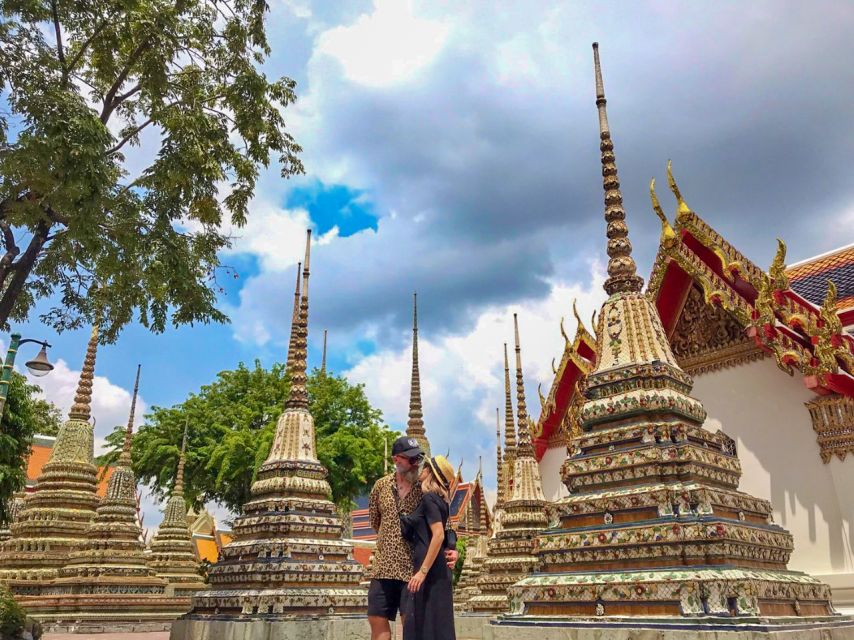
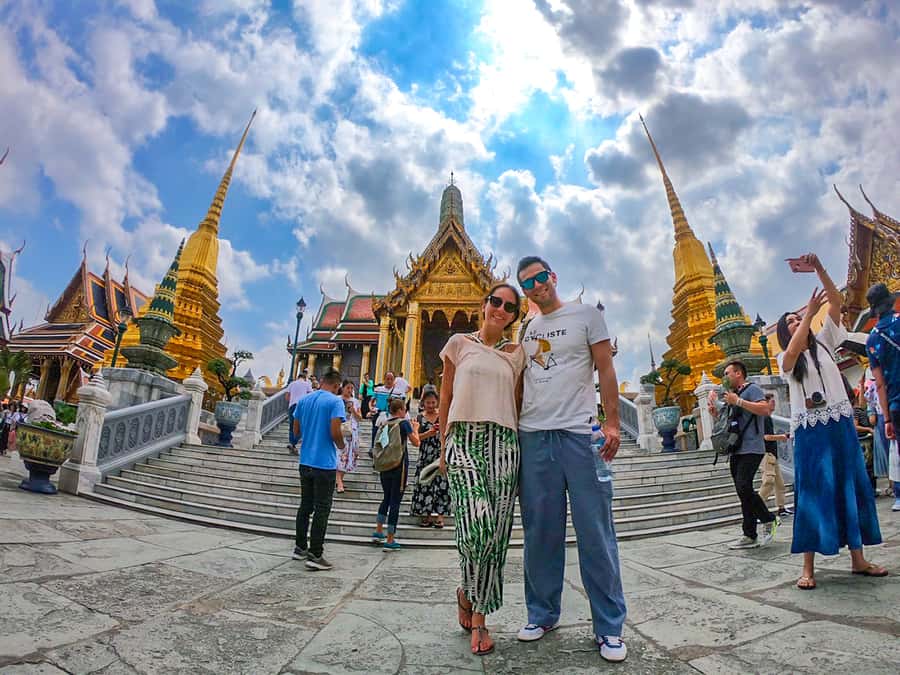
Next comes the Grand Palace, once-home of the kings of Siam and one of the most famous sites in Thailand. This is not a subtle stop, the Grand Palace is known worldwide for a reason. Expect ornate architecture and a feeling of royal importance, because this was the center of power.
From there you move into the Temple of the Emerald Buddha, also called Wat Phra Keo. This is the temple where religious ceremonies still continue today, and it is home to Thailand’s most important Buddha. In other words, you are not just looking at a historic building, you are stepping into an active religious space.
The tour description highlights the visual impact: brightly colored buildings, golden spires, and glittering mosaics. That combination is why the palace and Emerald Buddha area can feel overwhelming at first. A good guide in Spanish helps you sort what you are looking at and understand why it matters, so you do not just collect angles and captions.
There is also a real-world consideration based on a cancellation experience you might encounter. One guide cancellation note happened when the Grand Palace portion was canceled due to a passing of someone in the royal family. That is not something you can control, but it is worth knowing because it can affect how much time you get in the palace area. If your dates are close to royal-related events, be mentally flexible.
A few more Bangkok days to weigh up
- Bangkok: Damnoen Saduak Market and Maeklong Railway Market
★ 4.5 · 26,723 reviews - The Old Siam: Damnoen Saduak and Maeklong Railway Market
★ 4.5 · 10,992 reviews - From Bangkok: Ayutthaya Temples Guided Tour with Lunch
★ 4.7 · 10,535 reviews - Bangkok: Train Market & Floating Market with Boat Ride
★ 4.7 · 9,547 reviews
A river boat crossing to reset your brain before Wat Arun
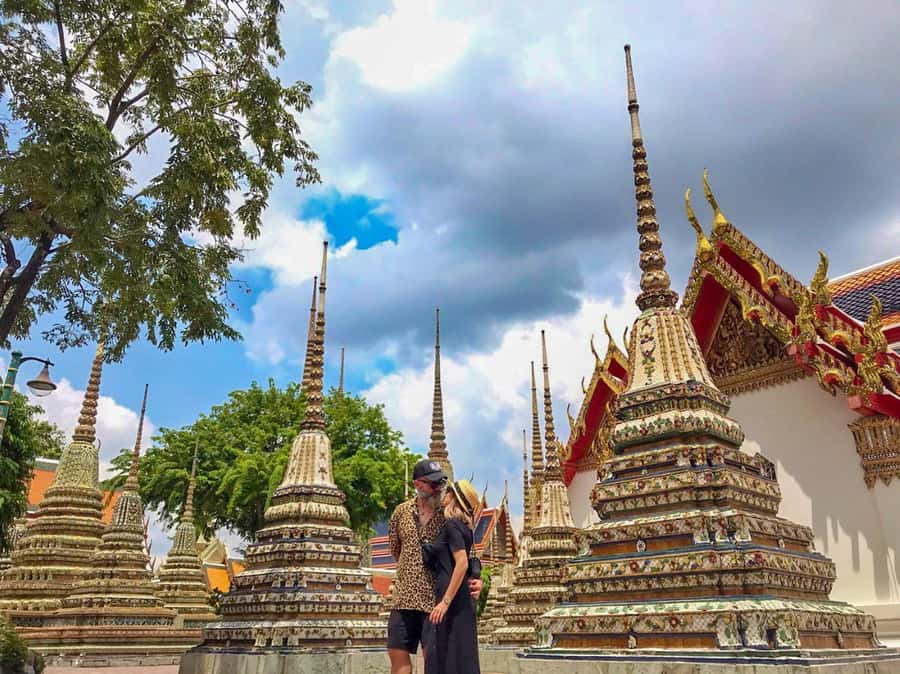
After the Grand Palace and Emerald Buddha portion, the tour crosses the river by boat. This is one of those small schedule choices that makes the whole day better.
Why it works: you change environments. Temples are dense with detail. A boat ride gives you breathing room, and it also gives you a new angle on the city. The tour specifically mentions panoramic views of Bangkok during this transfer, so you are not just moving, you are sightseeing.
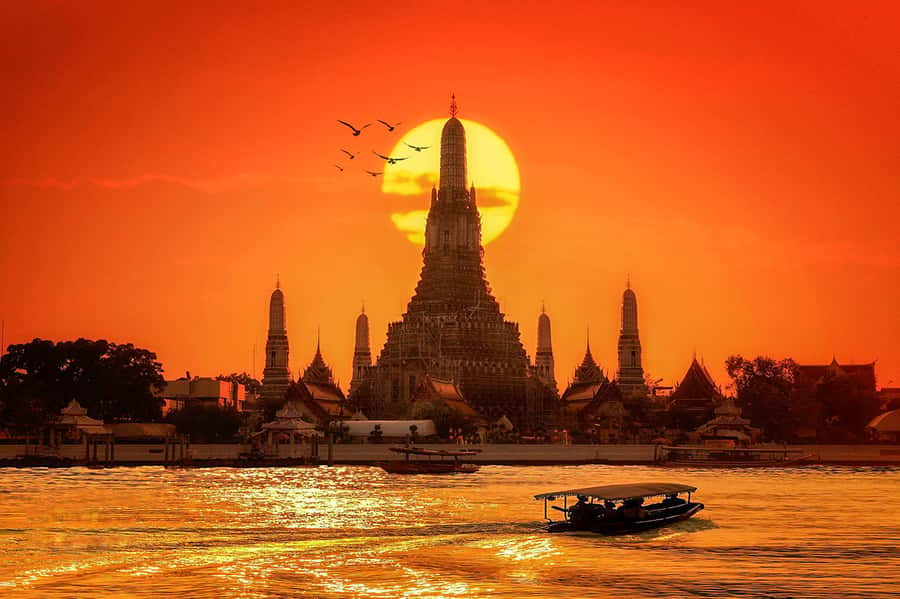
It also gives you a visual transition into Wat Arun. When you approach Wat Arun from across the water, its silhouette is easier to read. That is important because Wat Arun’s look is distinctive, and the tour ends with a focus on its shape and materials.
If you are the type who likes to photograph, treat this boat segment as part of the show, not filler. It is a good chance to frame Wat Arun before you are up close.
Wat Arun, the Temple of Dawn: porcelain tiles, bell tower, and a pagoda climb
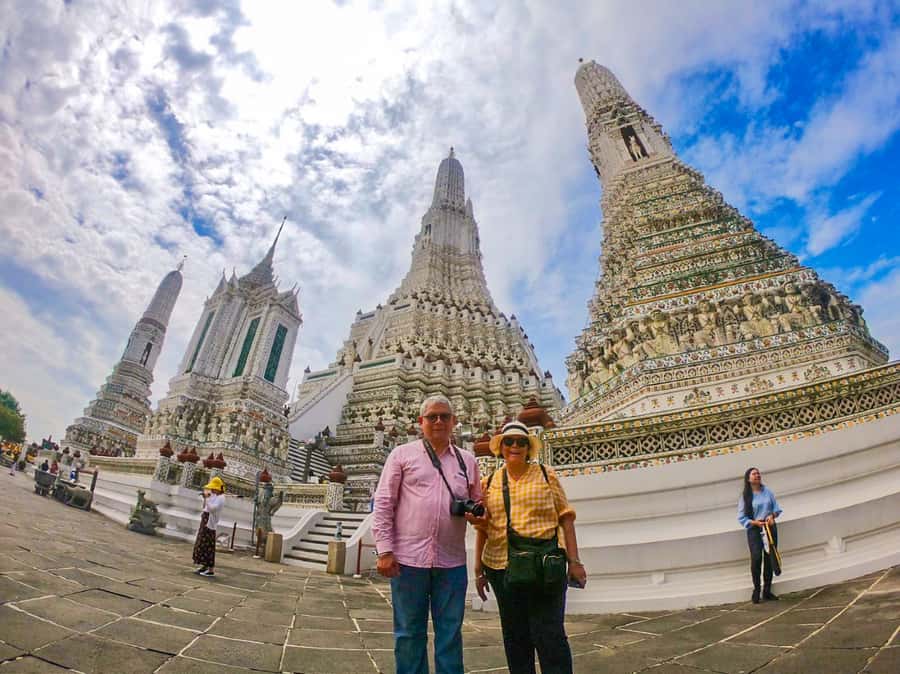
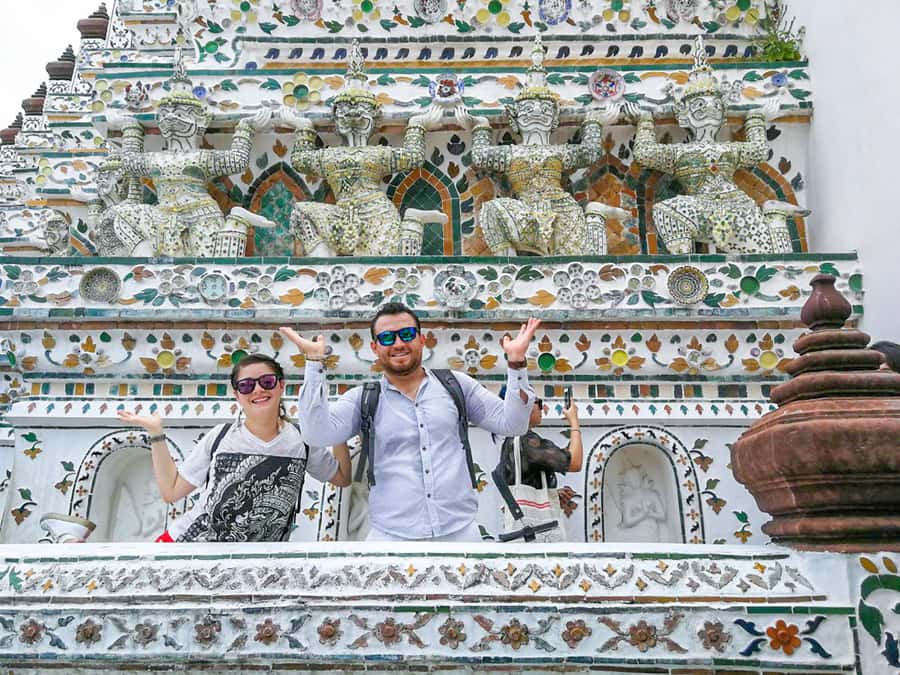
Wat Arun is also known as the Temple of Dawn. It is famous for its pagoda, colorful porcelain tiles, and a bell tower. The tour highlights giant statues too, which help with scale.
What makes Wat Arun special is how it looks from a distance and up close. The tour description mentions its silhouette made of Chinese porcelain, and that is exactly what you should pay attention to as you arrive. This is a temple where the surfaces matter, and the details are part of the attraction.
You also get to climb to the top of the pagoda area to hear about its history. That is a big difference between a standard temple walk and an actually guided temple finish. Going up changes your perspective. You can see more of the surrounding city rhythm, and the story lands better when you feel higher and closer to the structure you are learning about.
If you want the day to end with something memorable and slightly dramatic, Wat Arun is the right finale. It is visually distinct from the Grand Palace and from Wat Pho, so your brain does not feel trapped in the same style of architecture.
The Spanish guide experience, and the real value of Nori
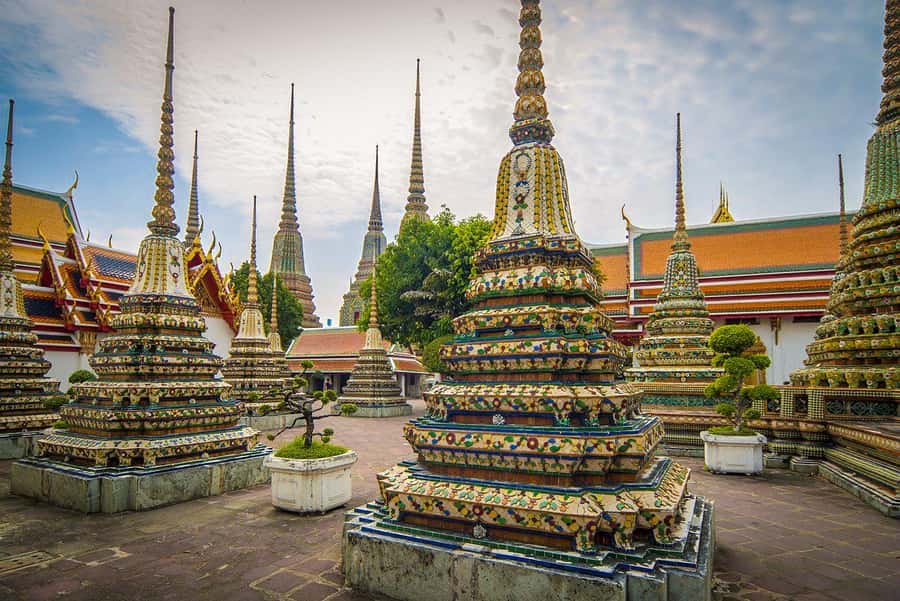
The tour is led by a live guide in Spanish. That is the core value if you want more than a checklist. When you can ask questions or follow explanations in your language, the temples stop being just impressive structures and start becoming places with meaning.
One review specifically praises the guide Nori, with a very positive comment: La guía Nori una genia. Another review also highlights the appeal of a Spanish-speaking Thai guide who was great. That kind of consistent feedback matters, because temple days can go wrong when explanations are thin or when you are left figuring things out alone.
Also, one review rated the overall value lower, saying the relationship quality-price did not compensate. That is a fair reminder. A guided tour is not just transportation and entry tickets. You are paying for interpretation, timing, and the flow that keeps the day coherent. If you prefer to do everything independently, you might feel the price less justified. If you want the story in Spanish while you walk through royal and religious spaces, it is easier to see the value.
Price and value: what $109 buys you in a 5-hour temple day
At $109 per person for about 270 minutes, you are paying for a packed itinerary with real extras included. The tour lists hotel pickup and drop-off for private tours, public transportation fees, a Spanish guide, all entry fees, and insurance.
That bundle matters because temples in Bangkok are not cheap to enter individually once you start adding up sites. Also, time is part of the cost. A guided day that reduces traffic time gives you more actual sightseeing time, and that can be worth paying for if you are trying to fit Bangkok’s big highlights into one schedule.
So is it a bargain? It depends on your style. If you hate planning, get lost easily, or want Spanish explanations, this price starts to look reasonable. If you only care about photos and you are already comfortable navigating on your own, you might decide it is not the best use of budget.
My advice: treat this as a value choice for people who want structure. It is less ideal if you enjoy slow wandering and want full freedom to linger at your own pace.
What to wear and bring so you do not get stuck at the gate
Temple rules are strict here, and you will feel it if you ignore them. The tour notes that one chapel is a national shrine, which means you must wear proper attire. Bare shoulders or knees are not permitted, and strapless-heel shoes are not allowed.
That rule is not about fashion. It is about preventing delays. If you show up in the wrong clothes, the tour can stop while you adjust. So plan ahead:
- Wear clothing that covers shoulders and knees.
- Skip sleeveless tops.
- Avoid strapless-heel shoes.
You also need to bring passport or an ID card, and cash is listed as something to bring. Luggage or large bags are not allowed, so keep your bag small enough for the day.
One more practical note: the tour is wheelchair accessible. That does not mean every surface will be effortless, but it does tell you the provider is planning for mobility needs.
Getting your day to feel smooth, not stressful
In a tour this packed, the difference between a great day and a tiring one usually comes down to readiness.
Keep expectations realistic: it is a walking-based route with multiple major temples, then a boat crossing, then a climb at Wat Arun. You will see a lot, but you will not have endless time to sit and stare. If that is your style, this tour may feel rushed.
If your style is more about hitting the big landmarks with guided context and clear routing, you are exactly the target audience. Also, if you want the story in Spanish, this is one of the best ways to get it without relying on translation apps in crowded temple areas.
Should you book this Spanish Grand Palace, Wat Pho, and Wat Arun tour?
Book it if you want a structured, Spanish-language day that covers Wat Pho, the Grand Palace plus the Temple of the Emerald Buddha, and Wat Arun within about 5 hours, with hotel pickup for private tours and entry fees handled. It is also a smart pick if you want a traffic-smart plan that uses public transport between sites.
Consider skipping or double-checking your flexibility if you strongly prefer doing things at your own pace, or if the palace portion would be your only priority. One real lesson from the field is that royal-related events can change what is accessible.
If you do book, dress for shrine rules from the start, pack light, and plan to treat the boat crossing and Wat Arun climb as part of the experience, not just transit.
FAQ
How long is the Grand Palace, Wat Pho, and Wat Arun guided tour in Spanish?
The tour duration is 270 minutes, which is about 5 hours.
What language is the guide?
The live tour guide speaks Spanish.
Where do we meet for the tour?
You meet at the gate of Bangkok City Pillar Shrine.
What is included in the price?
Hotel pickup and drop-off (private tour only), public transportation fees, the guide, all entry fees, and insurance are included.
What should I wear and what is not allowed?
The chapel that is a national shrine requires proper attire, with no bare shoulders or knees, and strapless-heel shoes are not permitted. Luggage or large bags are not allowed, and sleeveless shirts are not allowed.
Can I cancel and get a full refund?
Yes, free cancellation is available up to 24 hours in advance for a full refund.
Newest Bangkok reviews on the site
- Bangkok Dinner Cruise with Intl Buffet, Live Music & Hotel Pickup★ 4.5 · 12 reviews
- Half-Day Tour : PRIVATE Grand Palace & Temples★ 5.0 · 14 reviews
- Maeklong Railway and Damnoen Saduak Floating Market Tour★ 5.0 · 11 reviews
- The Luxury White Cruise Experience★ 3.5 · 34 reviews
- Luxury Dinner Cruise with Guide and Transfer (Opt. Executive Van)★ 5.0 · 9 reviews
- Bangkok Luggage Delivery from Hotel to Airport★ 5.0 · 25 reviews
- Baiyoke Sky Dinner Experience with Observation Deck Access★ 3.5 · 57 reviews
- Bangkok Luggage Storage★ 4.5 · 37 reviews
Grand Palace & Bangkok Temples, compared.
Grand Palace, Wat Pho, and Wat Arun Guided Tour
Read our review →
Grand Palace and Wat Phra Kaew Guided Walking Tour
Read our review →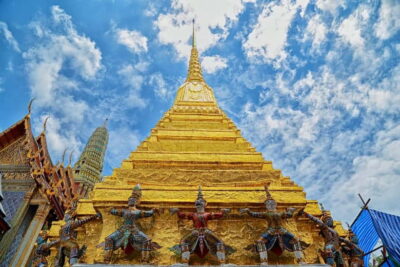
Grand Palace, Wat Pho, Wat Arun Sacred & Local Tour
Read our review →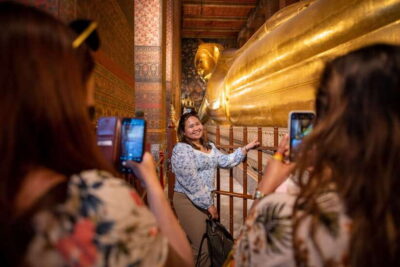
Grand Palace & Temples of Bangkok with experienced guide
Read our review →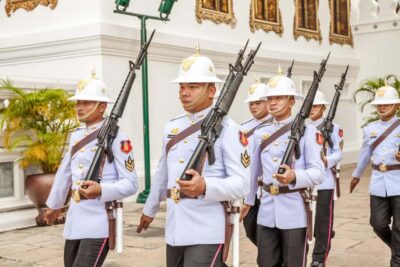
Grand Palace, Wat Pho, and Wat Arun Private Tour
Read our review →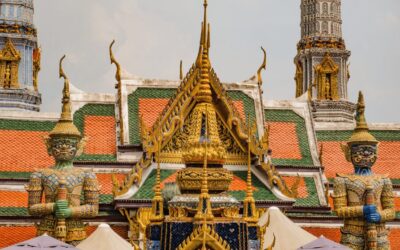
Evening Tour with Wat Arun, Wat Pho & Tuk Tuk Ride
Read our review →Browse the lists this tour appears in