
Review · RIVER KWAI TOURS
Kanchanaburi: River Kwai and Death Railway Day Tour
A day like this makes you slow down. You start with the Death Railway story, then move to the Tiger Cave Temple for the kind of view you feel in your legs. What really makes it work is the small-group pacing and an excellent guide, and I especially like how the day balances emotions with clear, practical context around each site.
Two things I’d highlight: the walk through the Kanchanaburi War Cemetery is carefully respectful, and the stops are paired with on-the-ground explanations that make the landmarks mean something. One thing to consider is that this is mostly a sightseeing day. You’ll see train activity from Tham Krasae Station, but it is not described as a train ride, so if that is your expectation, confirm before you book.
In This Review
- Key things that make this day tour worth your time
- Entering Kanchanaburi’s Death Railway story, without rushing it
- Hotel pickup and the small-group rhythm that keeps the day smooth
- Kanchanaburi War Cemetery: where the names do the talking
- JEATH War Museum: tools, uniforms, and prisoner-of-war living conditions
- Bridge over the River Kwai: famous landmark, better with context
- Tham Krasae Station views and why train timing matters here
- Coffee break at a local café, then Tiger Cave Temple
- Tiger paw prints and the 18-meter Buddha statue
- Responsible sightseeing: GSTC-certified touring plus carbon offset credits
- Price and value: what $96 actually buys you
- Who this tour fits best, and who should rethink it
- Final call: should you book this Kanchanaburi day tour?
- FAQ
- How long is the Kanchanaburi River Kwai and Death Railway day tour?
- Where does pickup take place?
- What is included in the price?
- Is lunch included?
- Is this a small group tour?
- Is there a temple dress code?
- Is the tour suitable for pregnant women or people with mobility impairments?
- What time does the guide contact you about pickup?
Key things that make this day tour worth your time
- Small group (up to 9) with an English-speaking guide, so questions actually get answered
- War-focused stops that include both the cemetery and the JEATH Museum, not just photos at famous landmarks
- Bridge over the River Kwai plus Tham Krasae Station viewpoints, built into one logical route
- Tiger Cave Temple details like the tiger paw prints and the 18-meter Buddha statue
- Responsible travel approach, including GSTC-certified touring, glass-bottled water, and carbon offset credits
Entering Kanchanaburi’s Death Railway story, without rushing it
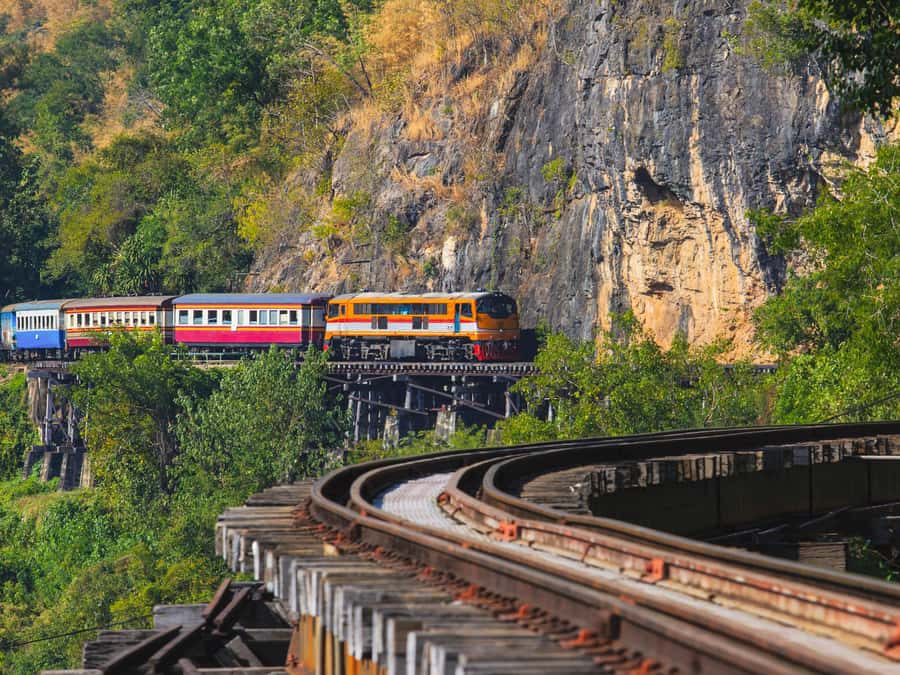
Kanchanaburi is not a place you visit by accident. This day tour takes you straight to the heart of one of World War II’s most brutal chapters: the Siam-Burma Railway, often called the Death Railway. You do it in an order that makes sense emotionally, not just geographically.
The route starts with the places where you see names, graves, and the scale of loss. Then you move to the museum, where the story turns more tangible, with artifacts, tools, uniforms, and replicas showing prisoner-of-war living conditions. Only after that do you shift to the “movie-famous” landmarks like the River Kwai Bridge and the views at Tham Krasae Station.
That sequencing matters. If you start with the bridge, you miss the point. Starting with the cemetery and JEATH makes the bridge feel real, not just historic scenery.
More River Kwai and Kanchanaburi trips:
- From Bangkok: Erawan Park & Kanchanaburi Small-Group Tour
★ 4.5 · 1,582 reviews - From Bangkok: Death Railway & Hellfire Pass Tour with Lunch
★ 4.6 · 931 reviews - From Bangkok: Historical Day Tour to River Kwai
★ 4.6 · 868 reviews
Hotel pickup and the small-group rhythm that keeps the day smooth
You get picked up from your accommodation in Kanchanaburi (or you can meet the guide at the Kanchanaburi Bus Terminal). Then you ride in an air-conditioned van with a small group, limited to 9 participants. That cap is not a luxury detail. It affects how quickly you can move through quieter areas like memorial grounds and how comfortably you can hear your guide.
Pickup time is confirmed by email the evening before. On the day, your guide holds a TripGuru sign, and you should be ready about 10 minutes early in the lobby. There’s also a built-in early-start benefit: you get a smooth transfer to your first stop and can catch up on sleep in the van.
The day runs about 8 hours total. The “working pace” is steady: short visits at some stops, longer time at others like the Tiger Cave Temple and the Tham Krasae Bridge station lunch window. If you like tight sightseeing, this fits. If you want a long, slow walk everywhere, you may feel mildly timed.
Kanchanaburi War Cemetery: where the names do the talking
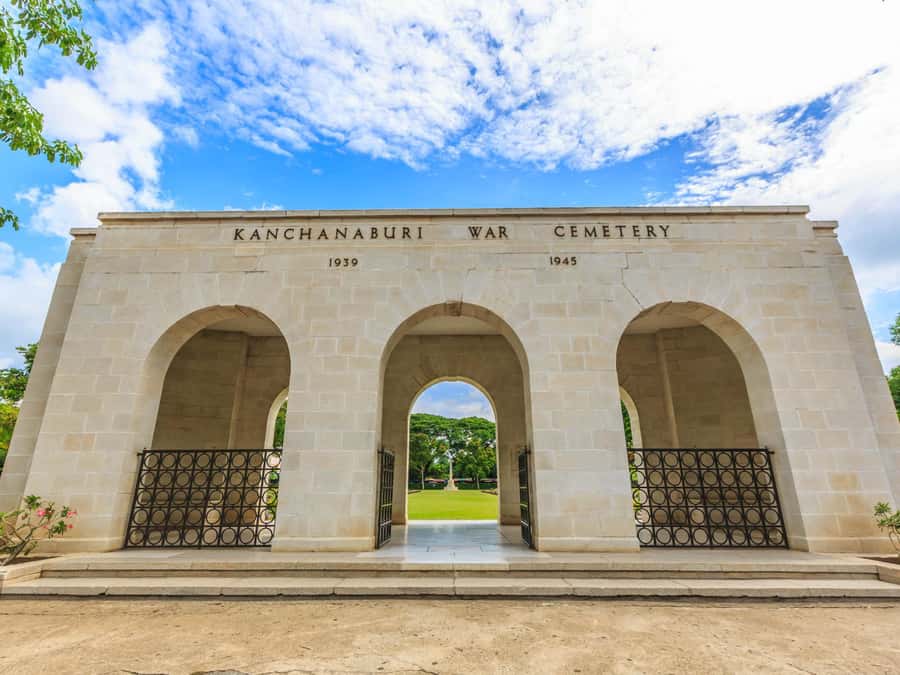
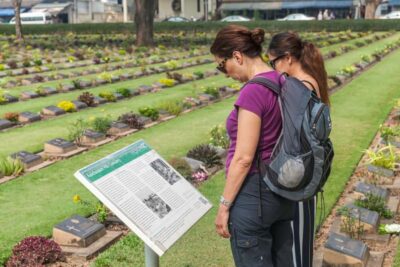
The first big stop is the Kanchanaburi War Cemetery, with about 30 minutes on site. The grounds are described as well kept, and you walk through them while honoring the fallen soldiers and prisoners of war, plus civilians who died while working on the railway under the Japanese Empire.
This is the kind of place where your posture changes without you noticing. I like that this tour gives you enough time to actually take it in, instead of making it a quick photo stop. The guiding helps too, because you are not just looking at stones. You’re learning what you’re seeing and why it matters.
Practical note: the day includes temple rules later, but memorial grounds also reward respectful behavior. Keep your voice low and avoid rushing.
JEATH War Museum: tools, uniforms, and prisoner-of-war living conditions
After the cemetery, you head to the JEATH Museum. The tour includes entrance fees here. This museum is specifically built to commemorate those who lost their lives while working on the railway during World War II.
JEATH is named for the nationalities connected to the site: Japanese, English, Australian, American, Thai, and Hollander. That naming detail gives you a cleaner mental map of the people involved, instead of keeping the story abstract.
Inside, you can expect to see exhibits related to the war such as weapons, tools, uniforms, and medals, plus replicas of the living conditions prisoners of war lived in. That combination is powerful. Artifacts explain function. Replicas explain daily reality.
A small caution: this is not a light stop. If you don’t like heavy historical content, you might find the museum emotionally demanding. But if you want to understand the railway beyond the bridge photo, this is a key reason the day tour is worth choosing.
A few more Thailand days to weigh up
- Bangkok: Damnoen Saduak Market and Maeklong Railway Market
★ 4.5 · 26,723 reviews - The Old Siam: Damnoen Saduak and Maeklong Railway Market
★ 4.5 · 10,992 reviews - Bangkok: Train Market & Floating Market with Boat Ride
★ 4.7 · 9,547 reviews - Bangkok: Floating Market and Train Market Experience
★ 4.8 · 3,998 reviews
Bridge over the River Kwai: famous landmark, better with context
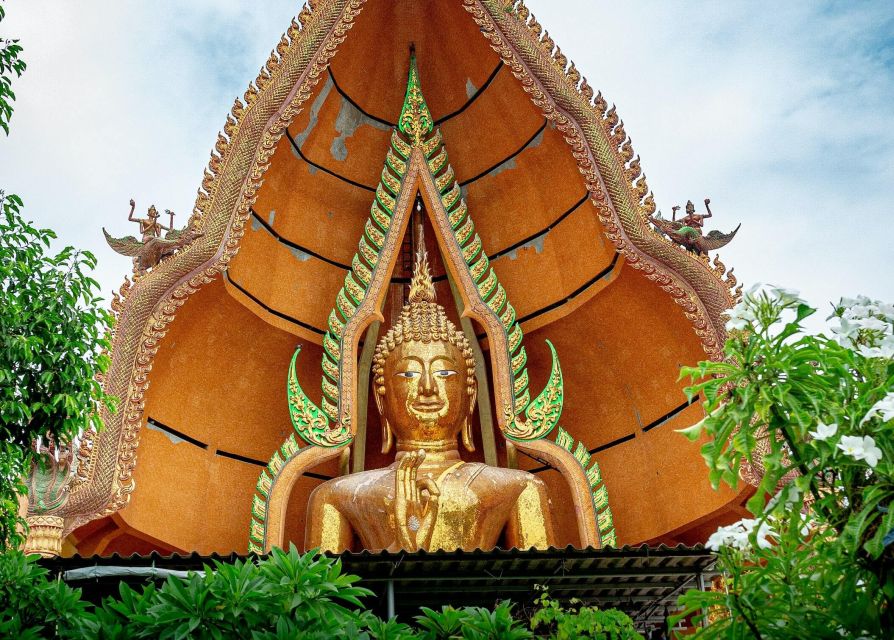
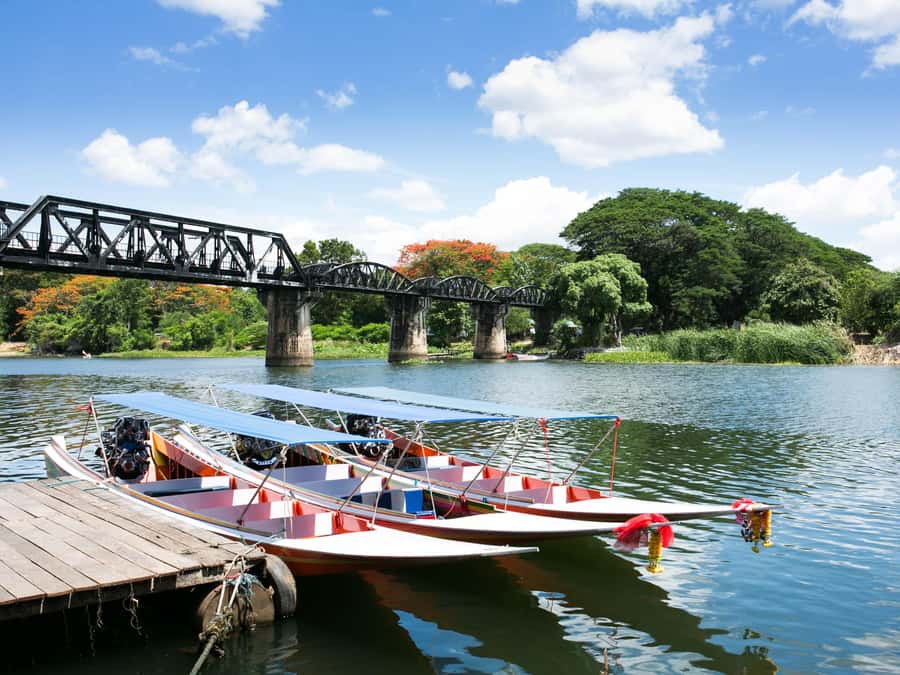
Next comes the Bridge over the River Kwai. You get about 30 minutes here for sightseeing and walking.
If you’ve seen the bridge in films or photos, you already know how iconic it looks. What this day tour does differently is how it frames the bridge. After the cemetery and the museum, the bridge becomes more than a postcard. You’re more aware of what it represented in practical terms and why it became historically significant.
It’s also a quick, natural reset. After museum rooms and memorial grounds, you shift to open air and movement. The guide’s explanation is what turns “walk by the bridge” into “understand why the bridge mattered.”
Tham Krasae Station views and why train timing matters here
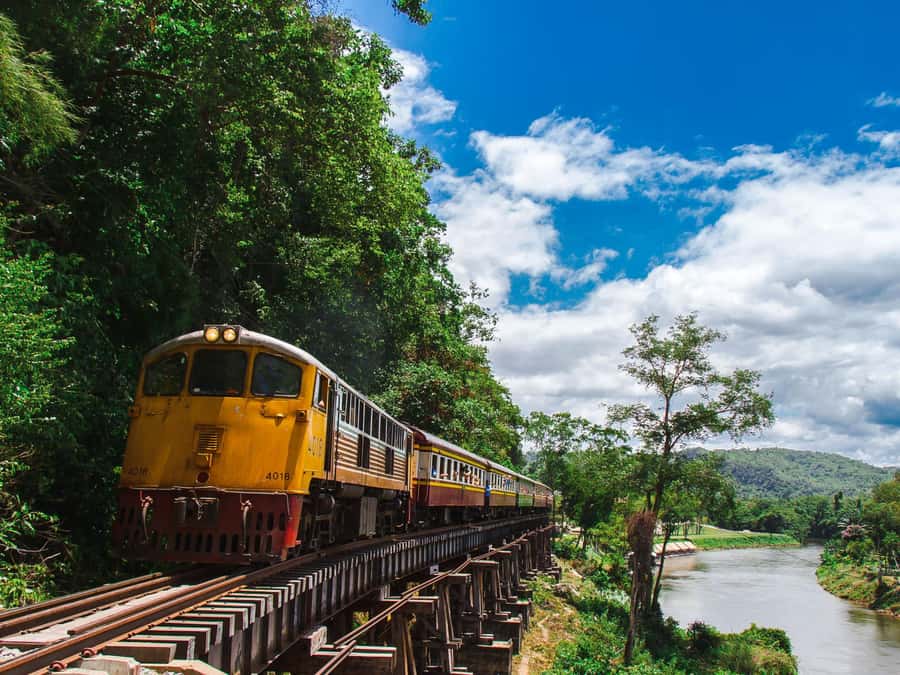
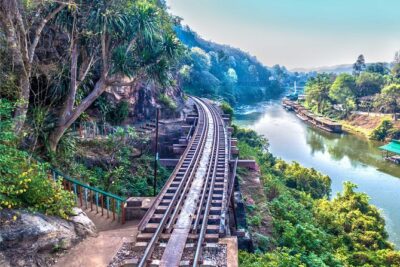
The day includes a stop at Tham Krasae Bridge railway station. You get lunch and sightseeing for about 1.5 hours here.
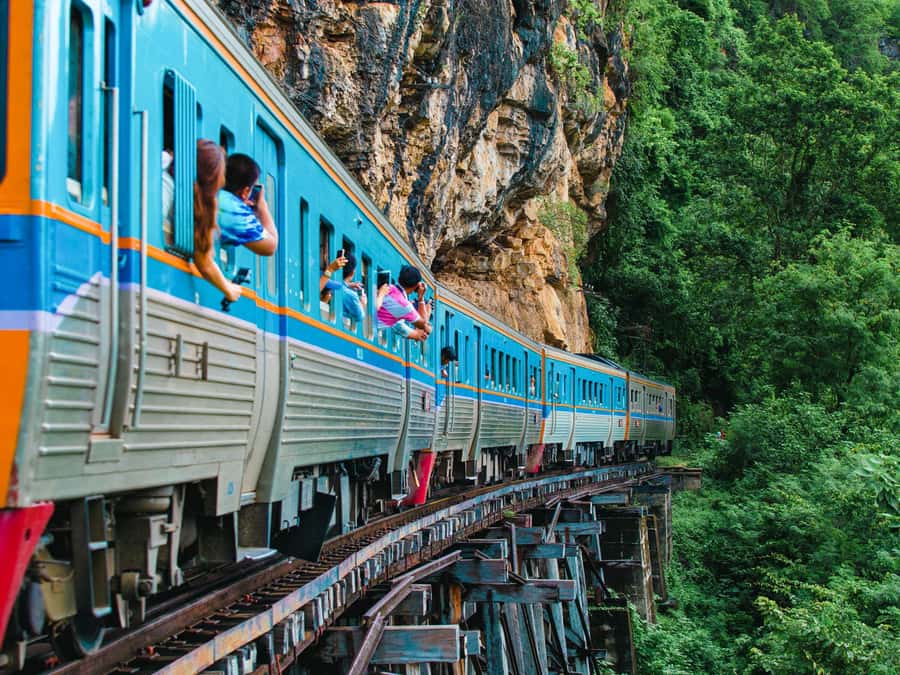
This is the moment where you might spot trains passing through a section that snakes around a cliff. The views are part of the appeal, but the train movement is the extra payoff, because it reinforces that this is still a working rail corridor and not just an old story in a museum.
Lunch is scheduled during this stretch. Lunch itself is not included, so you’ll need to plan to buy it on site or bring spending money for the meal. That’s normal for day tours in this region, and it gives you some freedom to choose what you want to eat.
If you’re the type who likes watching trains, this stop will feel like a highlight. If you came for a railway ride, it is worth double-checking expectations, since the information provided emphasizes sightseeing and viewing train activity, not riding.
Coffee break at a local café, then Tiger Cave Temple
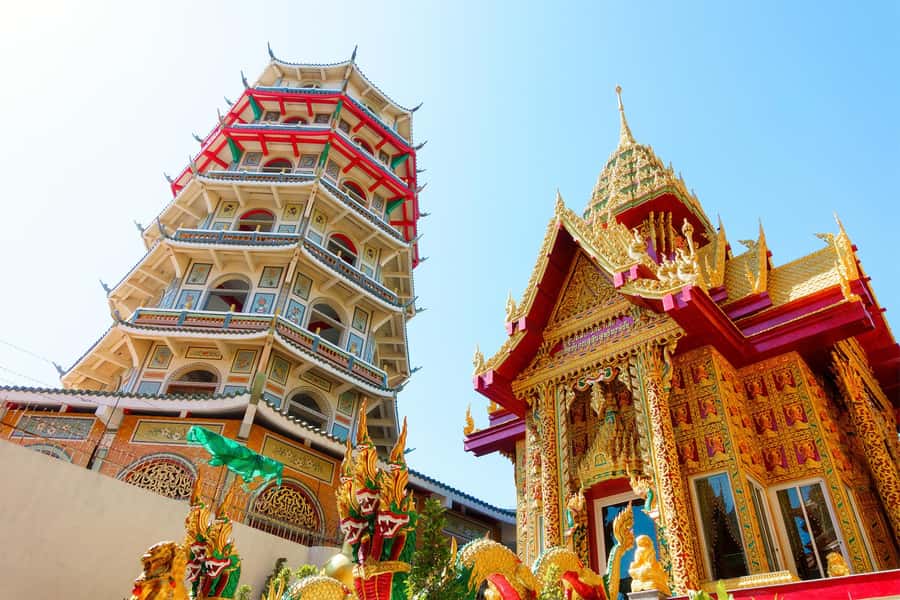
After lunch, you’ll have a 30-minute break at a local café. It’s a good time to cool off and reset, because the next stop involves a steep hike.
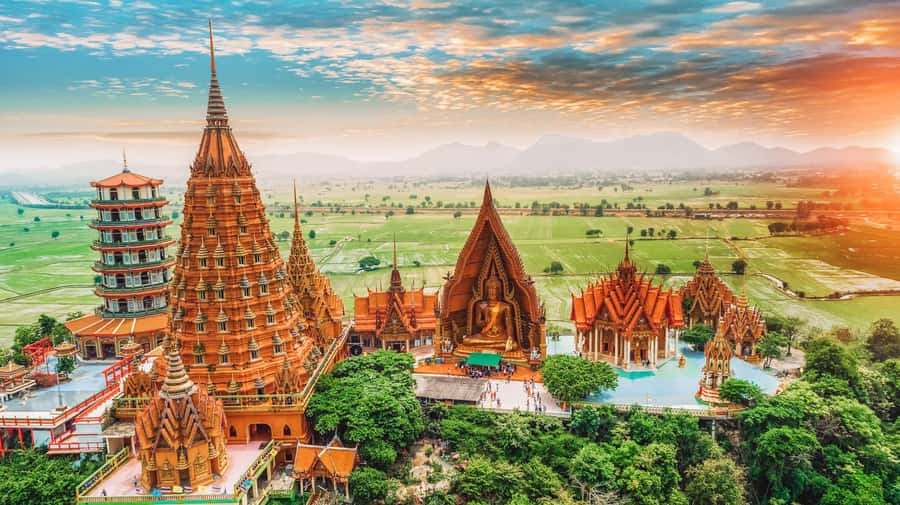
Then you go to Wat Tham Suea, also known as Tiger Cave Temple, with about 1 hour for the visit. The tour includes time for photos and highlights, so don’t feel like you have to run through it.
Tiger paw prints and the 18-meter Buddha statue
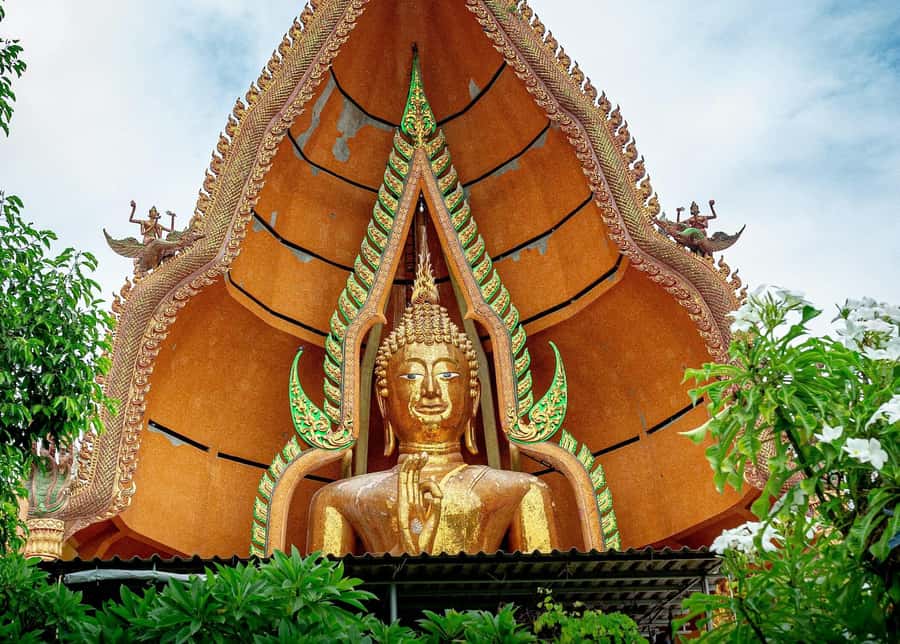
At Tiger Cave Temple, don’t miss the tiger paw prints on the cave walls. They’re one of those details you’d otherwise skim past if you weren’t told to look for them.
At the top, you’ll see a large, gleaming, 18-meter-tall Buddha statue. The hike is steep, but the design makes the climb feel purposeful: you’re moving toward a payoff viewpoint and a clear focal point.
The tour description includes that you’ll get a close-up view of the statue and impressive scenery in the surrounding area once you reach the top. This is also where the day shifts from heavy history to something more personal and sensory, like warm light on stone and the feel of the climb under the sun.
One more practical note: the tour lists clothing rules for temples. Shorts and short skirts are not allowed, and you should dress properly and appropriately. Bring sunglasses, a sun hat, and sunscreen.
Responsible sightseeing: GSTC-certified touring plus carbon offset credits
This day tour is described as responsible and low-impact, with a GSTC-certified tour. It also mentions providing water in glass bottles and offsetting carbon emissions in every tour through carbon offset credits.
For me, this hits a practical sweet spot. You still get a full, meaningful day. But you’re not leaving the tour with the sense that the experience was built purely to maximize foot traffic.
It’s not the kind of thing you notice while you’re standing at the cemetery gate or looking at the Buddha statue. But it’s the kind of thing that matters when you’re choosing between day tours that are otherwise similar.
Price and value: what $96 actually buys you
At $96 per person for an 8-hour day, you’re paying for a structured route and the pieces that add up quickly when you DIY it.
Included items:
- English-speaking tour guide
- Air-conditioned vehicle
- Entrance fee to the JEATH Museum
- Drinking water
- Insurance
- Carbon emissions offset credits
- Hotel pickup and drop-off (private option is available)
What is not included:
- Lunch
- Personal expenses
To me, the value logic is simple. You’re not just paying for transport. You’re paying for context, timing, and access to the sites in a way that keeps the day moving without feeling chaotic. Museum entry plus a guided explanation is often where group tours start to beat solo planning, especially for someone who wants the story to make sense fast.
Who this tour fits best, and who should rethink it
This is a history-and-temple day, and it matches a specific kind of traveler.
It suits you if:
- you want more than a quick stop at the River Kwai Bridge
- you care about understanding the Death Railway through the cemetery and JEATH Museum
- you’re comfortable with a steep hike at Tiger Cave Temple
- you prefer a small group and an English-speaking guide
It may not fit you if:
- you are pregnant, since the tour is noted as not suitable for pregnant women
- you have mobility impairments, since the tour is also noted as not suitable for people with mobility impairments
That said, one guiding approach is mentioned in past experiences: Na has been described as attentive and thoughtful, including helping someone with mobility issues during the Tiger Temple portion. Still, since the official guidance is clear about not being suitable for mobility impairments, use that as extra comfort, not a guarantee. If you have any limits, ask directly what the hike and walking sections look like for your situation.
Final call: should you book this Kanchanaburi day tour?
If you want the River Kwai day without turning it into shallow sightseeing, I think this tour is a strong choice. The reason is the structure: memorial first, museum second, then the landmarks. That order turns famous locations into meaningful places.
Book it if you like small-group touring, respect the seriousness of the war sites, and you’re okay with a steep climb at Wat Tham Suea. Skip or double-check if train riding is a must-have for you, since the information focuses on rail viewpoints at Tham Krasae Station rather than a ride.
If you do book, bring your sunglasses, sun hat, and sunscreen, and plan to buy lunch at the scheduled stop. Also, dress for temples, meaning no shorts or short skirts. That way the day stays comfortable, and you can focus on what you came for: understanding the past, then earning your view from the Tiger Cave Temple.
FAQ
How long is the Kanchanaburi River Kwai and Death Railway day tour?
The tour duration is 8 hours.
Where does pickup take place?
Pickup is offered from hotels or registered accommodations in Kanchanaburi. You can also meet your guide at the Kanchanaburi Bus Terminal. Pickup from roadsides or shopping malls is not available.
What is included in the price?
The price includes hotel pickup and drop-off (private tour option), an English-speaking tour guide, an air-conditioned vehicle, JEATH Museum entrance fees, drinking water, insurance, and carbon emissions offset credits.
Is lunch included?
No. Lunch is not included, though lunch time is scheduled at Tham Krasae Bridge railway station.
Is this a small group tour?
Yes. It is limited to 9 participants.
Is there a temple dress code?
Yes. Shorts and short skirts are not allowed, and you’re asked to dress properly for temples (avoid mini skirts and short shorts).
Is the tour suitable for pregnant women or people with mobility impairments?
The tour is not suitable for pregnant women or people with mobility impairments.
What time does the guide contact you about pickup?
Your team emails you the evening before to confirm your pickup time and meeting point, and your guide will be holding a TripGuru sign at pickup.
Newest Thailand reviews on the site
- Bangkok Dinner Cruise with Intl Buffet, Live Music & Hotel Pickup★ 4.5 · 12 reviews
- Half-Day Tour : PRIVATE Grand Palace & Temples★ 5.0 · 14 reviews
- Maeklong Railway and Damnoen Saduak Floating Market Tour★ 5.0 · 11 reviews
- Luxury Dinner Cruise with Guide and Transfer (Opt. Executive Van)★ 5.0 · 9 reviews
- The Luxury White Cruise Experience★ 3.5 · 34 reviews
- Bangkok Luggage Storage★ 4.5 · 37 reviews
- Bangkok Luggage Delivery from Hotel to Airport★ 5.0 · 25 reviews
- Baiyoke Sky Dinner Experience with Observation Deck Access★ 3.5 · 57 reviews
River Kwai Tours, compared.
Erawan Waterfalls and Bridge Over River Kwai Tour from Bangkok
Read our review →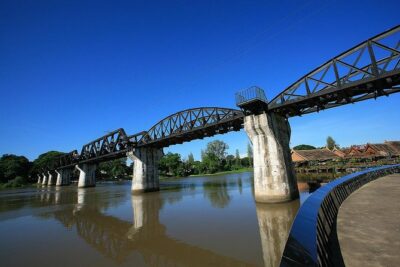
Bridge on the River Kwai and Thailand-Burma Railway Guided Tour
Read our review →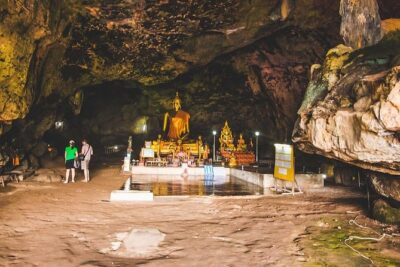
Erawan Waterfall and Elephant Care: Private Tour to Kanchanabur
Read our review →Browse the lists this tour appears in