
Review · WALKING TOURS
Phuket: Freedom Elephant Reserve – Ethereal Nature Walk
Elephants follow your curiosity. This 90-minute walk in Phuket brings you into their daily rhythm.
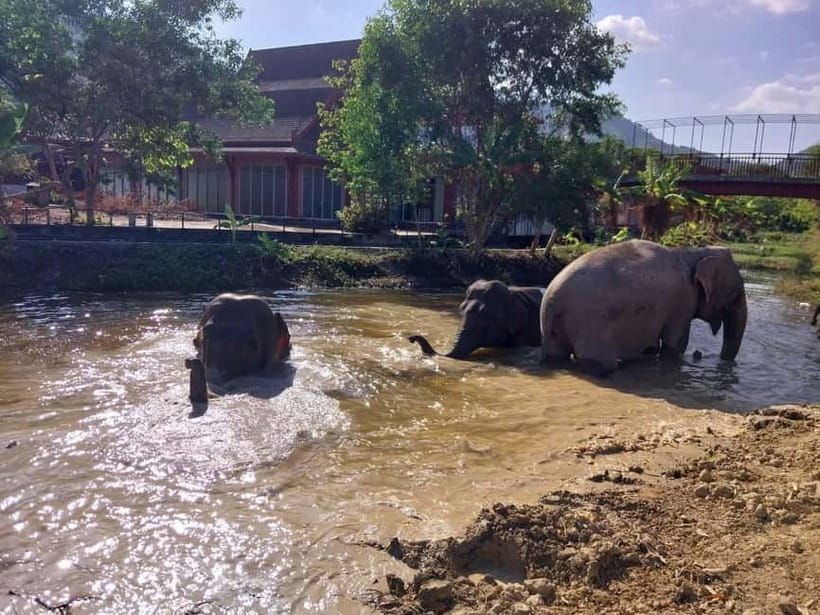
You’ll start by calling the herd in from the jungle, then watch their mud spa, sand play, and cool-down water routine up close. Mud spa moments and pool submersion are the kind of sights you remember.
I love how the experience is built around observation plus supervised interaction. You’re not there for riding or tricks, and your guide explains elephant behavior and individual stories so you notice personalities, not just animals.
I also like the hands-on parts that still feel controlled, like guided feeding and supervised chances to touch trunks while the elephants stay in charge of what they do next.
One consideration: it’s a structured program, not a free roam where you quietly trail elephants for hours. Even though the herd decides the sequence most days, there are clear do’s and don’ts, including no trunk or leg hugging and no unsupervised feeding or touching.
In This Review
- Key highlights you’ll actually care about
- A Phuket elephant walk that feels more like nature than a show
- Getting to the reserve from Phuket, and what that means for your day
- Meeting the herd: the jungle call, the first behavior cues, and why the guide matters
- The mud spa: your best chance to watch elephant intelligence in motion
- Sand pile time: why elephants choose comfort over cleverness
- Deep pool or river cool-down: the moment they can disappear
- Feeding time: fruit basket snacks, how it’s supervised, and what to bring
- Photos that look real, not rushed
- Ethics check: what to look for beyond the word sanctuary
- Who this elephant nature walk is best for
- Value in the real world: is $51 worth it?
- Should you book Freedom Elephant Reserve Phuket?
- FAQ
- How long is the Freedom Elephant Reserve nature walk?
- Is this a ride or an observation experience?
- What happens during the mud spa and water time?
- Can I feed the elephants?
- What’s included in the price?
- Do I get hotel pickup?
- What should I bring, and is there anything I can’t do?
Key highlights you’ll actually care about
- Calling the herd to meet you in the reserve, instead of watching from behind a barrier
- Mud spa routine where elephants mix mud with water using their feet, then blow it over their bodies
- Sand pile play that helps them rest comfortably and act like an exfoliant
- A deep pool or river observation where elephants can completely submerge
- Fruit basket feeding at the end, plus time for final photos
- Elephant behavior explained so you understand what you’re seeing as it happens
A Phuket elephant walk that feels more like nature than a show
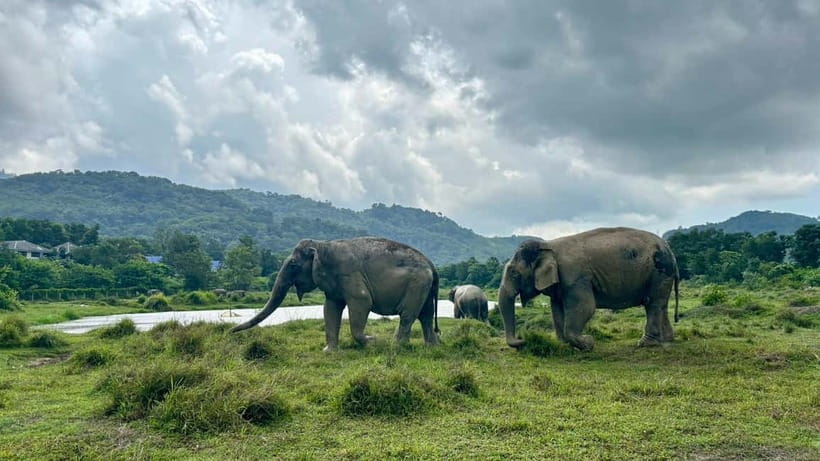
Most elephant tours in Thailand are either too scripted or too staged. This one aims for something simpler and more natural: you walk, you watch, and the elephants decide what happens next.
The big reason it works is the flow. You meet the herd after they’ve been foraging, then you follow their lead to the spots they naturally use, like the mud area, the sand pile, and the deep pool. That makes the experience feel like you’re catching a real routine, not a performance.
And yes, you’ll get close enough to feel the scale. These are calm, strong animals. When they approach, you can sense that you’re sharing space, not taking up a stage.
More walking tours in Thailand:
- Bangkok: City Highlights Temple and Market Walking Tour
★ 4.5 · 3,990 reviews - Bangkok: Grand Palace and Wat Phra Kaew Guided Walking Tour
★ 4.4 · 2,417 reviews - Bangkok: Wat Pho and Wat Arun Guided Walking Tour
★ 4.6 · 1,720 reviews
Getting to the reserve from Phuket, and what that means for your day
The activity is short at the reserve, but the day has driving time. From Phuket, the van ride is about 45 minutes each way, with the reserve visit lasting about 90 minutes.
That timing matters because the best elephant moments often happen early in the day, when the herd is moving, foraging, and making choices. If your pickup runs late, you can miss the start of that rhythm. One important practical tip: be ready in the lobby five minutes early, so you don’t lose any of the first half.
You should also check whether your area has extra transfer fees. Pickup is described as available, but it comes with limits and add-ons depending on where you’re staying, and transport is only offered if you’re traveling with two or more guests. If you’re a lone traveler, plan to arrange your own transport.
Meeting the herd: the jungle call, the first behavior cues, and why the guide matters
Your experience begins inside the reserve. The team calls the elephants over because they are usually foraging in the jungle for grass and baby leaves.
This opening is more important than it sounds. Elephants often come in on their own schedule, and that sets the tone for the whole walk. When they stride toward you, you can watch how they approach at their own pace, how they pause, and how they decide whether to keep moving or settle.
Your guide doesn’t just point and explain. They introduce the herd and share individual stories of the elephants, then describe what behavior you’re seeing. That matters because elephant body language is subtle. Without a guide, it’s easy to miss what calm actually looks like, or to interpret curiosity as something else.
Also, keep the rules in mind from the start. You’re in a strictly supervised setting. No hugging or unsupervised feeding means you’re watching the elephants do elephant things, with you stepping in only when the team guides it.
The mud spa: your best chance to watch elephant intelligence in motion
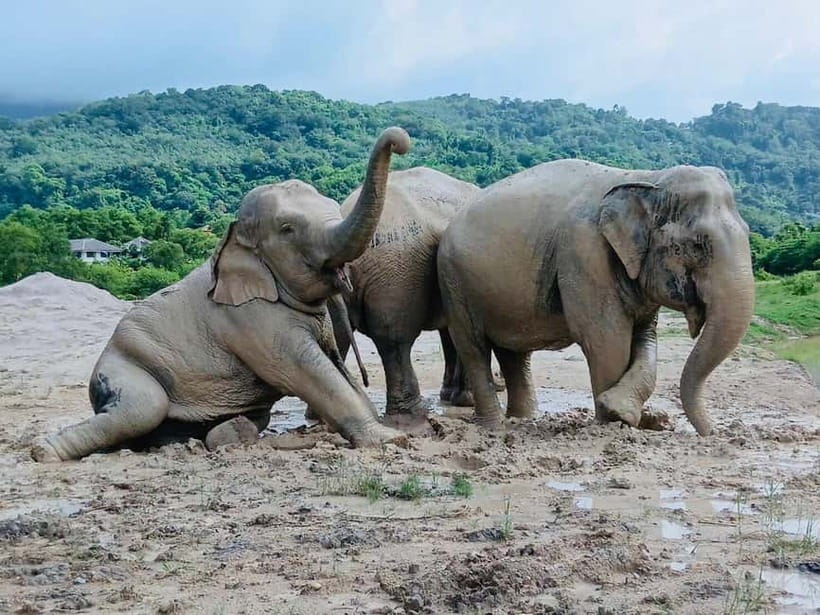
The mud spa is usually where the routine starts. It’s not just a mess for photos. It’s part of how elephants cool down, protect themselves, and regulate their comfort.
Here’s what you can expect to see. The elephants head to the mud area and use their feet to mix mud with water, creating a muddy slush. Then they suck the mixture up with their trunks and blow it all over their bodies.
Watch the sequence closely. That trunk work is precision, not chaos. Elephants are using their bodies as tools, and their behavior looks intentional because it is. You’ll also notice that they choose when the process is complete, not you.
This is also one spot where the elephant personalities show up. Some individuals seem to rush to get fully covered. Others take a slower approach, pausing as they reposition or check their surroundings.
Same stretch of coast, a different sort of day:
- Bangkok: Damnoen Saduak Market and Maeklong Railway Market
★ 4.5 · 26,723 reviews - Phuket: Maya, Phi Phi, and Bamboo Island with Buffet Lunch
★ 4.6 · 19,266 reviews - Half-Day Thai Cooking Class at Organic Farm in Chiang Mai
★ 5.0 · 19,087 reviews - The Old Siam: Damnoen Saduak and Maeklong Railway Market
★ 4.5 · 10,992 reviews
Sand pile time: why elephants choose comfort over cleverness
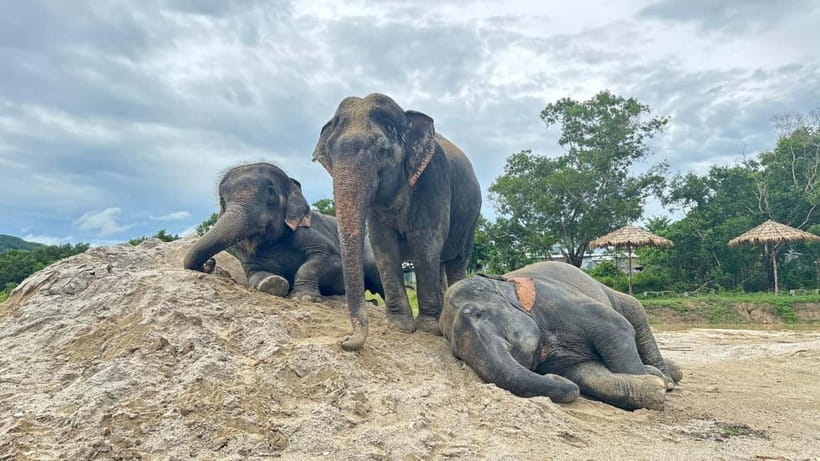
After the mud, elephants often move to the sand pile. It’s a detail many tours skip, but it’s one of the more interesting moments because it’s so specific.
Elephants appear to love big piles of sand. One reason is practical: the sand shifts under their weight, so they can lie down comfortably as it molds to their bodies. Another reason is body care, the sand acts like an exfoliant.
If you’re paying attention, you’ll see social elements too. The description notes that elephants often rub up against each other while they exfoliate. That turns “a sand pile” into something more like a shared ritual.
In plain terms, this part of the walk is great if you want to see elephants relaxing. They’re not performing. They’re resting, cooling, and caring for their skin in a way that makes sense to them.
Deep pool or river cool-down: the moment they can disappear
Next comes the big pool area, where elephants keep cool. This pool is so deep that elephants can completely submerge and disappear from sight.
That’s worth mentally preparing for. When you watch an elephant vanish under the surface, it’s not sudden panic. Submerging is described as a way to release heat absorbed earlier in the day, and it also looks like real relaxation and play.
The best viewing strategy is simple: stand where your guide tells you, watch the water movement, and wait. Elephants may surface slowly or pop up at unexpected times. If you’re constantly shifting position, you’ll miss the rhythm.
Also note how the rest of the herd often behaves during pool time. Some may stay active and toss water. Others may settle and just breathe. Again, the guide’s behavior explanations help you understand what you’re seeing in the moment.
Feeding time: fruit basket snacks, how it’s supervised, and what to bring
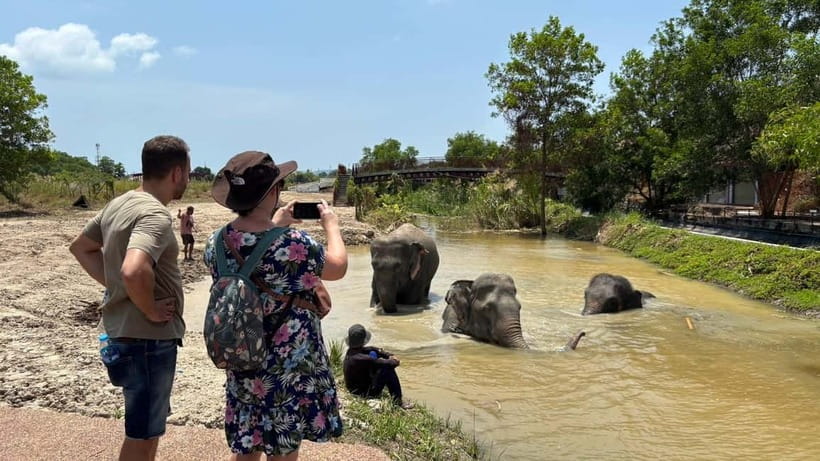
Once the elephants cool down, they move to the feeding area and wait for bananas and sugar cane to be placed there. The tour includes a fruit basket for feeding, and this is the closest you may get to that classic “interaction” most people expect.
But it’s still controlled. The experience is clear about rules: no feeding or touching without guidance, and no trunk or leg hugging. If you want photos, you’ll get final photo time, but you should keep your distance where the team asks you to.
One practical way to plan your senses is to bring your attention, not just your camera. Feeding is short compared to the walking and watching. If you spend the whole time filming, you might miss the elephant behavior your guide is explaining, like how they move between spots or how they respond to the handler cues.
Bring what you need for the sun and bugs. You’ll want a hat, sunscreen, comfortable clothes, and insect repellent. Bottled water is provided, but you should still pace yourself. A 90-minute nature walk in Phuket heat can feel longer once you’re standing still to watch elephants.
Photos that look real, not rushed
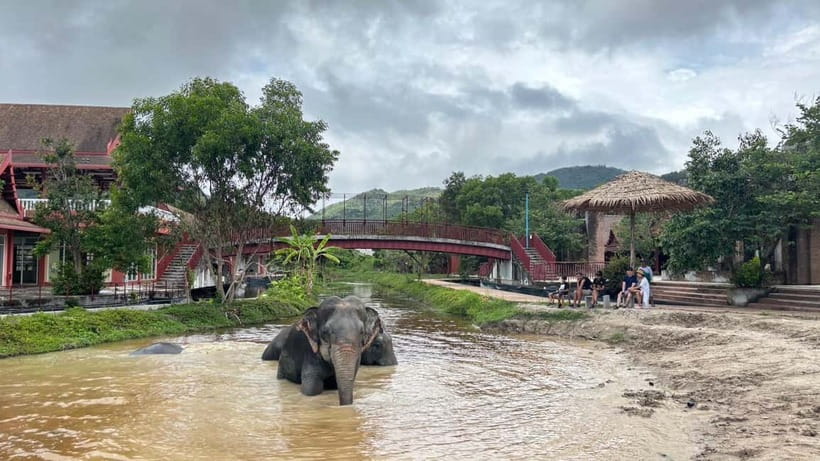
Camera time is built into the experience, including final photos at the end. You’re allowed to bring cameras, and the key instruction is to respect the animals’ space.
That means you’ll likely want to take photos in short bursts, then put the camera down so you can actually watch. If you keep moving in for better angles, you risk interfering with the elephants, and the guide may ask you to step back.
A small mindset shift helps: frame your shots around elephant behavior. For example, a mud blow or sand-rubbing moment will look more like a story than another “elephant portrait from far away.”
Ethics check: what to look for beyond the word sanctuary
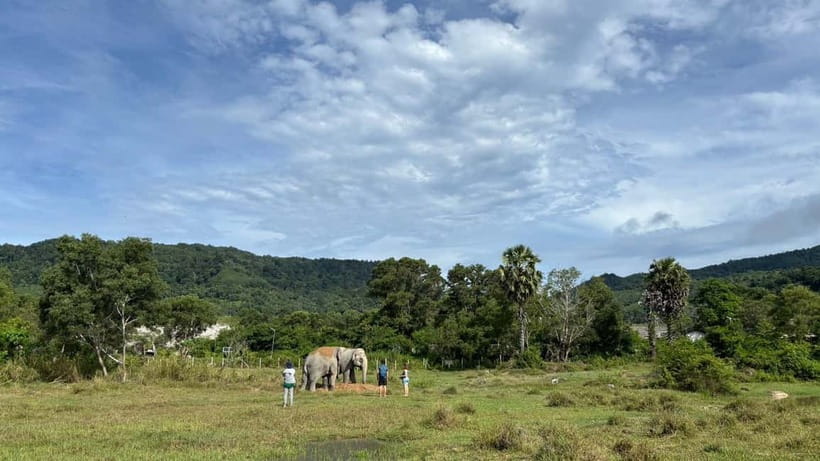
I can’t tell you what’s right for your conscience from a distance. What I can do is help you evaluate what’s happening on the ground.
This experience is explicitly an observation experience, and that’s a strong starting point. You aren’t doing trunk or leg hugging. You’re not being told to force contact. Feeding happens with guidance, and handlers stay close while the elephants do what they want.
Another positive signal is the routine focus. Mud spa, sand pile, and pool cool-down are all described as natural behaviors, and you watch elephants move through them rather than switching to staged tricks.
There’s also a note from guides and staff in the feedback about the reserve being relatively new, with operations open for around 7 to 8 months in that period. In a newer operation, the team often still fine-tunes how visitor flow works, and that can affect how scripted the visit feels.
That brings us to the balanced part. One consideration from real experience is that the visit can feel like a structured program. If your personal goal is total quiet observation with no guiding cues, this format might not fully match what you imagined. You still get a lot of elephant behavior, but you are moving through set zones.
Who this elephant nature walk is best for
This tour is a good fit if you want:
- Up-close elephant time without riding
- A guided explanation of elephant behavior and individual stories
- Mud spa and water-play viewing that feels like real life
It’s not a fit for everyone. The experience is not suitable for people with animal allergies, pregnant women, or anyone with mobility impairments. If any of those apply, skip this one and look for a different option that can accommodate you safely.
You’ll also enjoy it most if you’re comfortable walking on uneven, outdoor terrain and waiting in the sun for elephants to approach or settle. This isn’t a sit-in-a-vehicle show.
Value in the real world: is $51 worth it?
At about $51 per person for a 90-minute reserve experience, the price lands in the midrange for Phuket wildlife activities. What makes it feel worth it is what’s included: the guided nature walk, the fruit basket for feeding, mud spa and water observation time, plus hotel pickup and drop-off where the service applies.
The key value question is how much you personally care about the quality of interaction. If you’re the type who wants riding or more physical contact, this won’t satisfy that. If you want calm, supervised interaction and real behavior viewing, the value shifts in your favor.
Also remember what’s not included. Meals and fizzy drinks aren’t part of the package, so budget a snack or light meal before you go, especially if you’re picking up energy gaps with bottled water only.
Finally, consider transport fees. Extra charges apply for round-trip transfer depending on where you’re staying in Phuket. If your hotel is in a town north of Phuket proper, your final total may be higher than the base rate.
Should you book Freedom Elephant Reserve Phuket?
Yes, I’d book it if your goal is a supervised, behavior-focused elephant walk with real moments like mud blowing and deep pool submersion. The guided explanations help you understand what you’re seeing, and the experience is built around the elephants choosing their routine.
I would hesitate if you want a mostly hands-off, quiet follow-the-elephants experience with no visitor structure. This walk is organized and rule-based, which is usually a good thing for safety and elephant welfare, but it can feel less like free observation.
If you go, do it prepared: hat, sunscreen, insect repellent, comfy shoes, and patience for the herd’s timing. Then watch the elephants, not the clock. That’s where the magic lives.
FAQ
How long is the Freedom Elephant Reserve nature walk?
The experience is listed as 90 minutes.
Is this a ride or an observation experience?
It’s an observation experience. There is no trunk or leg hugging, and you should not touch or feed the animals without guidance.
What happens during the mud spa and water time?
You can expect to see elephants mix mud with water using their feet, then suck mud with their trunks and blow it over their bodies. After that, they often move to a sand pile, and then to a deep pool or river area where they can cool down and may fully submerge.
Can I feed the elephants?
Yes, you’ll have a fruit basket for feeding elephants. Feeding is supervised, and guidance is provided on what to do.
What’s included in the price?
Included items are the guided nature walk with elephants, fruit basket for feeding, mud spa experience, river or pool observation, hotel pickup and drop-off where applicable, and bottled water. Meals and fizzy drinks are not included.
Do I get hotel pickup?
Hotel pickup and drop-off are included, but fees apply for some areas north of Phuket, and the provider only offers transport for two or more guests. Lone guests must arrange their own transport.
What should I bring, and is there anything I can’t do?
Bring a hat, camera, sunscreen, comfortable clothes, and insect repellent. Cameras are allowed, and you should respect the animals’ space. You’re not allowed to litter, and you must follow guidance since feeding and touching require supervision.
Newest Thailand reviews on the site
- Maeklong Railway and Damnoen Saduak Floating Market Tour★ 5.0 · 11 reviews
- Bangkok Dinner Cruise with Intl Buffet, Live Music & Hotel Pickup★ 4.5 · 12 reviews
- Half-Day Tour : PRIVATE Grand Palace & Temples★ 5.0 · 14 reviews
- The Luxury White Cruise Experience★ 3.5 · 34 reviews
- Luxury Dinner Cruise with Guide and Transfer (Opt. Executive Van)★ 5.0 · 9 reviews
- Bangkok Luggage Storage★ 4.5 · 37 reviews
- Bangkok Luggage Delivery from Hotel to Airport★ 5.0 · 25 reviews
- Baiyoke Sky Dinner Experience with Observation Deck Access★ 3.5 · 57 reviews
Walking Tours, compared.
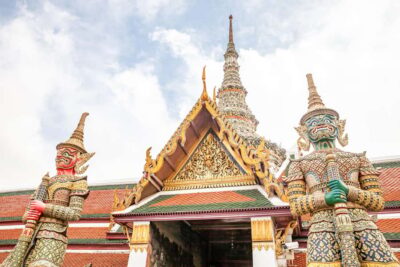
City Highlights Temple and Market Walking Tour
Read our review →
Grand Palace and Wat Phra Kaew Guided Walking Tour
Read our review →
3 Hour Old City and Temples Guided Walking Tour
Read our review →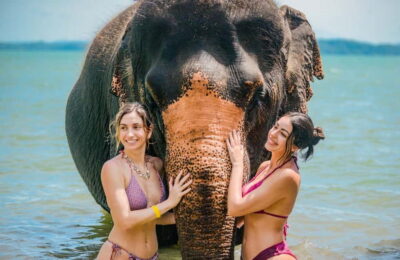
Beach walk with elephants, rain & care. 2.5 hours
Read our review →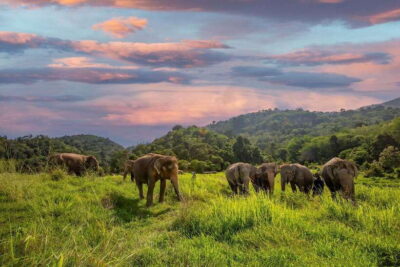
Bukit Elephant Park Sanctuary Walk and Feed Tour
Read our review →
Bangkok Authentic Tasting Thai-Chinatown Walking Food Tour
Read our review →
Browse the lists this tour appears in