
Review · WALKING TOURS
Private – China Town Walking Tour incl. secret herbal drink
Chinatown rewards curious walkers. This 3-hour Bangkok Chinatown experience is a great mix of street-level shopping, temple context, and simple food-and-drink breaks, plus a tuk tuk ride that saves you time. I especially like the small group size (six or fewer), which keeps the pace friendly, and the guide’s hands-on commentary that explains what you’re actually looking at. One drawback to plan for: there’s no round-trip pickup, so you’ll need to get yourself to the meeting point near BTS National Stadium.
You start at 1:00 pm near BTS National Stadium (exit 2) and finish around 4:00 pm at the MRT Wat Mangkon station area. Expect a lot of walking through markets and alleys, so wear comfy shoes and bring your camera.
In This Review
- Key highlights worth your time
- Why this Chinatown walk feels different from a generic stroll
- The 3-hour plan: markets, temples, and that herbal drink detour
- Stop 1: Sampeng Market and the wholesale-goods streets
- Stop 2: Yaowarat Street, jewelry lanes, and the Chinese herbs market
- Stop 3: Wat Mangkon Kamalawat, the Chinese Buddhist temple stop
- Stop 4: Ban Kao Lao Rueng and the Charoen Chai paper-artisans community
- The guide makes or breaks it, and this one earns trust
- Price and value: what you actually get for $96.22
- Logistics that matter: where to meet, where to end
- Who should book this Chinatown walk
- Tips to make the afternoon smoother
- Should you book it? My straightforward take
- FAQ
- How long is the Chinatown walking tour?
- What does the tour cost?
- Where do I meet the guide?
- What time does the tour start?
- Where does the tour end?
- How big is the group?
- What is included in the price?
- Is the herbal drink included?
- Are meals included?
- Can I cancel for a full refund?
Key highlights worth your time

- Small group, six or fewer, so questions do not get lost in a crowd
- Tuk tuk ride included, meaning you spend less time figuring out routes
- Sampeng Market + Yaowarat area, the wholesale-goods and gold-and-jewelry zones
- Wat Mangkon Kamalawat, a key Thai-Chinese Buddhist temple stop for context
- Chinese herbs market stop, with a chance to try an authentic herbal drink
- Snacks and drinks included, plus coffee and tea, so you can keep going
Why this Chinatown walk feels different from a generic stroll
Bangkok’s Chinatown, especially around Yaowarat, can be a lot at first glance. Signs, crowds, shopfronts, incense, gold displays, and lots of fast-moving life. A guided walk helps you slow down without getting stuck. The big win here is structure: you move neighborhood to neighborhood, with stops that connect the dots between markets, temples, and the Thai-Chinese community.
I like that this tour is built for people who want more than photos. You are not just “seeing Chinatown.” You learn how the area works, why certain streets feel focused (like jewelry lanes), and what the temple teaches beyond the postcard version. The guide’s style comes up again and again, especially the way Ms. Bow was described as friendly, informative, and fun to be with.
Also, value matters with tours like this. You are paying for more than walking time. This includes entrance fees, a tuk tuk ride, and practical comfort items like water, coffee, tea, and snacks. You will still have to spend for your own meals if you want more than snacks, but you get enough small breaks to keep the afternoon enjoyable.
Possible catch: because you’ll be in and out of crowded streets and narrow lanes, it helps to be comfortable with heat and close quarters. If you are expecting a calm, wide-open “stroll,” you might want a different style of tour. Chinatown is intimate by nature.
More Walking Tours in Bangkok
- Bangkok: City Highlights Temple and Market Walking Tour
★ 4.5 · 3,990 reviews - Bangkok: Grand Palace and Wat Phra Kaew Guided Walking Tour
★ 4.4 · 2,417 reviews - Bangkok: Wat Pho and Wat Arun Guided Walking Tour
★ 4.6 · 1,720 reviews
The 3-hour plan: markets, temples, and that herbal drink detour
This runs for about three hours, starting at 1:00 pm. The pace is set so you can actually see things, not just pass them. Here’s how the route comes together, stop by stop.
Stop 1: Sampeng Market and the wholesale-goods streets
You begin around the Sampeng Market area, after a short transit that gets you into the right zone for walking. Then you move along Song Wad Street, known for wholesale-style products and dense shop activity. This is the part of Chinatown that teaches you how the area “trades,” not just how it “looks.”
Then you enter the Sampeng Market zone, described as the first wholesale market in Bangkok. That matters because wholesale markets have their own rhythm. You’ll notice the emphasis on goods, bulk selling, and quick buying decisions. It is not the same vibe as a tourist night market. You are seeing how locals shop, store, and move products through the neighborhood.
What I like about this stop is that it frames Chinatown before the more famous sights. If you start with temples too early, you miss how the commercial side influences daily life, festivals, and even where people gather.
Practical tip: go with the mindset of “look close.” Small details, packaging styles, and shop signs tell you what products matter most here.
Stop 2: Yaowarat Street, jewelry lanes, and the Chinese herbs market
Next, you cross into the Yaowarat area. This is the street where it starts to feel like a jewelry trade center, with long rows of stores and shiny displays of gold, accessories, and gems. It can be visually overwhelming if you’re alone. With a guide, you get a way to organize the chaos.
After the jewelry-heavy stretch, you take a smaller alley and arrive at the Chinese herbs market. This is where the tour earns its “private and local” feel. You are not only browsing items. You’re being guided to a specific context, so you understand what the herbs are for and why the area sells them.
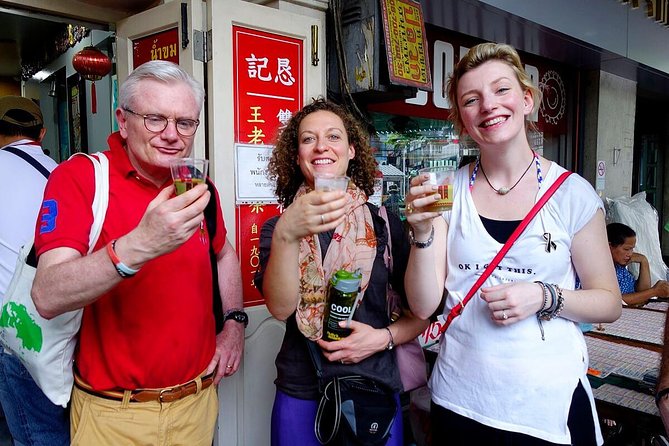
And yes, this is where the tour’s special moment happens: you are encouraged to try an authentic herbal drink. Admission here is listed as free, which is a nice perk. One review specifically highlighted the chance to try delicious drinks, and another praised how the guide made the stop feel real, not forced.
If you are curious about Thai-Chinese food culture, this stop is usually the one people remember most. The flavors are often herbal and warming, and it feels like a tiny window into daily practices, not just a novelty sip.
Same stretch of coast, a different sort of day:
- Bangkok: Damnoen Saduak Market and Maeklong Railway Market
★ 4.5 · 26,723 reviews - The Old Siam: Damnoen Saduak and Maeklong Railway Market
★ 4.5 · 10,992 reviews - From Bangkok: Ayutthaya Temples Guided Tour with Lunch
★ 4.7 · 10,535 reviews - Bangkok: Train Market & Floating Market with Boat Ride
★ 4.7 · 9,547 reviews
Stop 3: Wat Mangkon Kamalawat, the Chinese Buddhist temple stop
Then you head to Wat Mangkon Kamalawat, described as the most important Chinese Buddhist temple in Bangkok. You cross Charoen Krung Street to get there, and the guide explains beliefs and faith tied to the Thai-Chinese community.
This is the point where the tour shifts from commerce to meaning. Markets are where you buy. Temples are where you understand why people gather, what values they carry, and how traditions show up in everyday life. You’ll see incense and ritual cues, and you’ll learn what they represent in this community.
If you only visit Chinatown’s streets, you might miss that there is a spiritual side that shapes the neighborhood’s calendar and local identity. This stop corrects that.
Practical tip: dress respectfully. You’ll be in temple spaces, and it is an easy way to show respect while you explore.
Stop 4: Ban Kao Lao Rueng and the Charoen Chai paper-artisans community
Your final stop goes into the Charoen Chai Community, reached via a narrow alley off Bangkok’s oldest street. This is not the typical “snap a temple, move on” ending. It’s an artisans’ story.
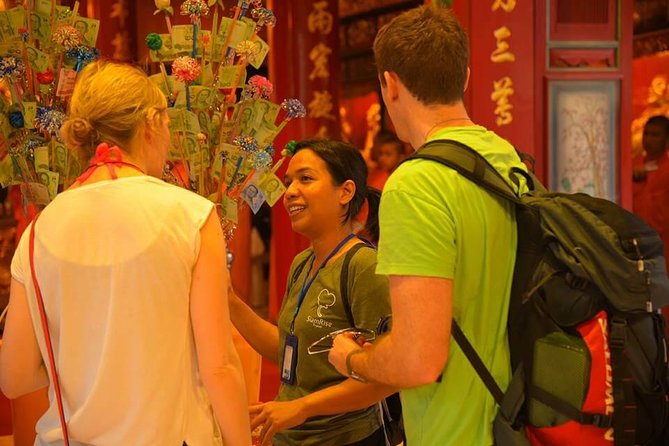
This community has handcrafted traditional Chinese joss paper products for over a century. You’ll see examples tied to major cultural moments:
- shiny gold and red envelopes used around Chinese lunar new year
- yellow flags and food trays connected to the annual vegetarian festival
- elaborate paper offerings prepared for traditional Chinese funerals
I like ending the tour here because it makes Chinatown feel human and personal. You understand that the neighborhood’s traditions are carried by real craftspeople with real tools and workflows. It is one of those stops that makes the whole afternoon click.
If you love cultural details, you’ll appreciate that this community is not presented as random trivia. It links back to why temples matter and why festivals are visible in the streets.
The guide makes or breaks it, and this one earns trust
A walking tour is basically a choreography problem. A good guide does two things at once: keeps you moving and keeps you learning. The standout theme from past participants is how friendly and informative the guide experience felt, with Ms. Bow named in multiple comments as amazing.
What you can realistically expect from this style of guiding:
- clear explanations that help you identify what you are looking at
- encouragement to try the herbal drink and other small stops
- a comfortable pace for photos and questions
One practical note: a couple of comments mentioned the guide’s language could be a bit challenging to catch at times, but the overall experience still landed well. For you, that means bring a phone for notes or translation if you want, and do not worry if every word does not land. You’ll still catch the main points by seeing the context up close.
Also, one review mentioned getting photos taken by the guide. That’s not guaranteed in every scenario, but it hints at the guide’s “help you remember it” approach. If photos matter, show your interest early and ask to capture a moment at key stops.
Price and value: what you actually get for $96.22
At $96.22 per person for about three hours, the price is not “cheap,” but it can be fair because several costs are bundled:
- tuk tuk ride included
- entrance fees and activity fees as listed
- drinks and snacks: water, coffee, tea, snacks
- English-speaking guide
- travel insurance
Where you save: you avoid paying for separate entry tickets and you do not have to coordinate your own transport for a short ride like a tuk tuk during the day. You also get a guided route that stops at specific places instead of hoping you pick the right streets.
Where you should budget: meals are not included. So if you need a real lunch or dinner, plan it around this afternoon. Snacks and drinks help, but they are not a meal.
One extra heads-up from real-world notes: one comment mentioned a small 150 THB fee connected to the public bus, beverage in Chinatown, and support for villages. That kind of thing can happen when a tour is structured around local transit or contributions that are not part of the base quote. Since the tour details here list bus fees and beverage support as included, I would recommend you confirm at booking if any cash fee might be requested that day.
Logistics that matter: where to meet, where to end
This is where small details save you stress.
You meet at BTS National Stadium Station, exit 2, street level, at 1:00 pm. Your end point is near MRT Wat Mangkon Station. That’s a smart setup because it lets you keep exploring after the tour without retracing steps.
One practical tip from earlier experiences: the exact meeting location can be confusing if you’re looking for the wrong storefront. The meeting spot was described as being tied to a specific shop sign, including mention of a pink store chain. So follow the meeting point instructions closely rather than relying only on the general station name. When in doubt, arrive 10 to 15 minutes early and check you’re at the correct street-level spot.
Also: it’s described as private, meaning only your group participates. Past notes include a case where the tour shifted from a group setup into a private experience because only one participant booked. That’s a nice reminder that the “small group” promise can work even better for your group.
Who should book this Chinatown walk
This tour fits you if:
- you want a guided route through Sampeng Market and Yaowarat without getting lost
- you care about Thai-Chinese culture and want more than street photos
- you like trying small food or drink moments, like the herbal drink stop
- you prefer English-speaking guiding and a pace that stays manageable
It might be less ideal if:
- you hate busy streets and tight alleys
- you want a long, slow sightseeing day with minimal walking
- you need full hotel pickup because you do not want to travel to the meeting point yourself
Given the mix of markets, a major temple, and artisan paper-making, it suits first-time Chinatown visitors and also people who have already seen a few big sights but want the local texture.
Tips to make the afternoon smoother
- Wear comfortable shoes. The streets and alleys can be uneven and crowded.
- Bring a camera and keep it ready. The “gold and herbs” contrast makes for great photos.
- If you’re sensitive to strong smells, be mindful around incense and herb areas.
- If you like herbal drinks, do not skip this stop. It’s the signature taste moment.
- Have some cash just in case the day’s small extra fees come up. Confirm with your operator beforehand.
Should you book it? My straightforward take
If you want a short, focused Chinatown tour that connects markets to temples and community craft, this one is a strong pick. The small group size, tuk tuk ride, and included snacks make the afternoon feel efficient. The biggest reason to book is the guiding style, especially with Ms. Bow highlighted for being friendly and informative.
Skip it only if you’re expecting a quiet walk or if you strongly prefer full meal coverage and hotel pickup. Otherwise, this is a practical way to see a side of Bangkok that you would likely miss if you just wandered on your own.
FAQ
How long is the Chinatown walking tour?
It runs for about 3 hours.
What does the tour cost?
The price is $96.22 per person.
Where do I meet the guide?
Meet at BTS National Stadium Station, exit 2 (street level). The listed meeting point address is National Stadium Wang Mai, Pathum Wan, Bangkok 10330, Thailand.
What time does the tour start?
The start time is 1:00 pm.
Where does the tour end?
The tour ends near MRT Wat Mangkon Station, with the listed end point at Wat Mangkon, 530 ถ. เจริญกรุง, Khwaeng Samphanthawong, Khet Samphanthawong, Krung Thep Maha Nakhon 10100, Thailand.
How big is the group?
It is described as a small group of just six people or fewer, and it is a private tour where only your group participates.
What is included in the price?
Included items: English speaking guide, drinking water and snacks, bus fee, entrance fees and activity as mentioned, and travel insurance. The tour also includes coffee and tea, and the tuk tuk ride price is included.
Is the herbal drink included?
The Chinatown herbs market stop specifically mentions trying an authentic herbal drink, and that stop is listed as admission ticket free. (So it is part of the tour experience.)
Are meals included?
No meals are included beyond the snacks provided.
Can I cancel for a full refund?
Yes. Free cancellation is available, and you can cancel up to 24 hours in advance of the experience start time for a full refund.
Newest Bangkok reviews on the site
- Bangkok Dinner Cruise with Intl Buffet, Live Music & Hotel Pickup★ 4.5 · 12 reviews
- Half-Day Tour : PRIVATE Grand Palace & Temples★ 5.0 · 14 reviews
- Maeklong Railway and Damnoen Saduak Floating Market Tour★ 5.0 · 11 reviews
- The Luxury White Cruise Experience★ 3.5 · 34 reviews
- Luxury Dinner Cruise with Guide and Transfer (Opt. Executive Van)★ 5.0 · 9 reviews
- Bangkok Luggage Storage★ 4.5 · 37 reviews
- Bangkok Luggage Delivery from Hotel to Airport★ 5.0 · 25 reviews
- Baiyoke Sky Dinner Experience with Observation Deck Access★ 3.5 · 57 reviews
Walking Tours, compared.
City Highlights Temple and Market Walking Tour
Read our review →
Grand Palace and Wat Phra Kaew Guided Walking Tour
Read our review →
3 Hour Old City and Temples Guided Walking Tour
Read our review →
Beach walk with elephants, rain & care. 2.5 hours
Read our review →
Bukit Elephant Park Sanctuary Walk and Feed Tour
Read our review →
Bangkok Authentic Tasting Thai-Chinatown Walking Food Tour
Read our review →
Browse the lists this tour appears in