
Review · GRAND PALACE & BANGKOK TEMPLES
Wat Pho, Wat Arun and Wat Hong Rattanaram Private Tour
A half day, three eras of Thai power. This private guided tour connects Bangkok’s shift from Thonburi to today with stops that explain why each temple looks the way it does. I love seeing the Wat Pho reclining Buddha up close, and I also like how the tour physically moves you across the Chao Phraya River to Wat Arun. One thing to consider is the temple dress code and shoe rules, since this is not the kind of outing where you can show up in shorts and slides.
The guides get serious credit for making the day feel personal. I’m seeing praise for guides like Mina, Kay, Amy, Lily, Emi, and Tawee, with comments that they are friendly, patient, and good at explaining what you’re looking at. If you want more than photo stops, that guide style is a big part of the value here.
You’ll want to plan for comfort too. The tour is listed for 4 hours, with hotel pickup possible in main Bangkok areas, but you should also expect you may remove shoes multiple times and dress in proper temple attire (no bare shoulders and knees, no sleeveless tops, and keep footwear easy to take off).
In This Review
- Key Things You’ll Notice on This Temple Trio Tour
- A 4-hour loop across Bangkok’s old and new capitals
- Wat Pho: reclining Buddha, gold, and the classic temple look
- Wat Arun on the Chao Phraya: Temple of Dawn and why the details matter
- Wat Hong Rattanaram: Chinese and Western art styles, plus Sukhothai roots
- Value and pricing: is $100 per person fair?
- Guides that set the tone: what the reviews point to
- What to wear, shoe rules, and river-day comfort
- Who this private tour suits best
- After the temples: how to use the remaining time
- Should you book this Wat Pho, Wat Arun and Wat Hong Rattanaram private tour?
- FAQ
- Which temples are included?
- How long is the tour?
- Does the price include hotel transfers?
- Are temple entry tickets included?
- What language is the guide?
- What should I wear to enter the temples?
- Is lunch included?
Key Things You’ll Notice on This Temple Trio Tour
- Thonburi to Bangkok, explained as you walk, not as a lecture
- Wat Pho, Reclining Buddha first, plus the classic motifs of the complex
- Wat Arun’s porcelain and seashell sparkle, tied to why it became Temple of Dawn
- Wat Hong Rattanaram’s art mashup, with Chinese and Western influences side by side
- Real cultural connections across Thai kingdoms, including Sukhothai and Ayutthaya time periods
A 4-hour loop across Bangkok’s old and new capitals
This tour is built like a story you can follow with your feet. In about half a day, you jump between three temple sites that reflect Thailand’s changing centers of power and belief. The big idea is simple: Bangkok did not just “appear.” It grew out of earlier capitals and kingdoms, and the temples are a physical record of that shift.
The timing works well if you have limited daylight in Bangkok. It is also a good way to avoid the usual temple chaos, because the order of stops makes sense: start with Wat Pho near the Grand Palace area, then cross the river to Wat Arun, and finish at Wat Hong Rattanaram nearby. That flow helps you keep the landmarks straight and makes the explanations easier to remember.
More Grand Palace and temple mornings in Bangkok:
- Bangkok: Grand Palace, Wat Pho, and Wat Arun Guided Tour
★ 4.8 · 3,632 reviews - Bangkok: Grand Palace and Wat Phra Kaew Guided Walking Tour
★ 4.4 · 2,417 reviews - Bangkok: Grand Palace, Wat Pho, Wat Arun Sacred & Local Tour
★ 4.3 · 2,256 reviews
Wat Pho: reclining Buddha, gold, and the classic temple look
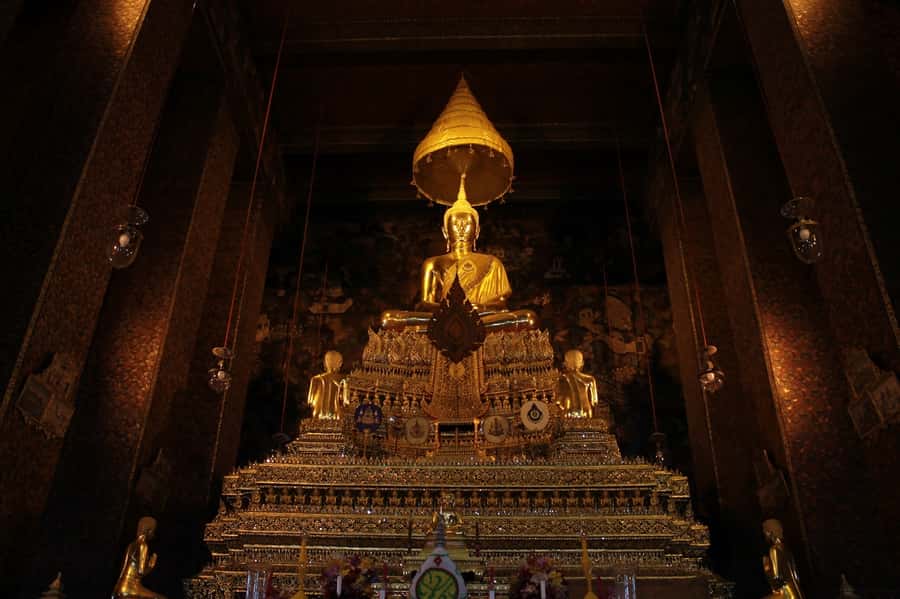
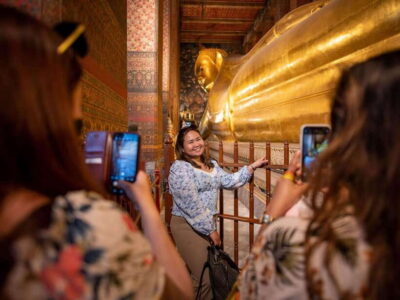
Wat Pho is where this tour begins, and it’s a smart starting point. The complex is known for its large golden Reclining Buddha statue, and it sets the tone for what you’ll see at the other temples: Thai Buddhist art that is detailed, orderly, and meant to be read slowly.
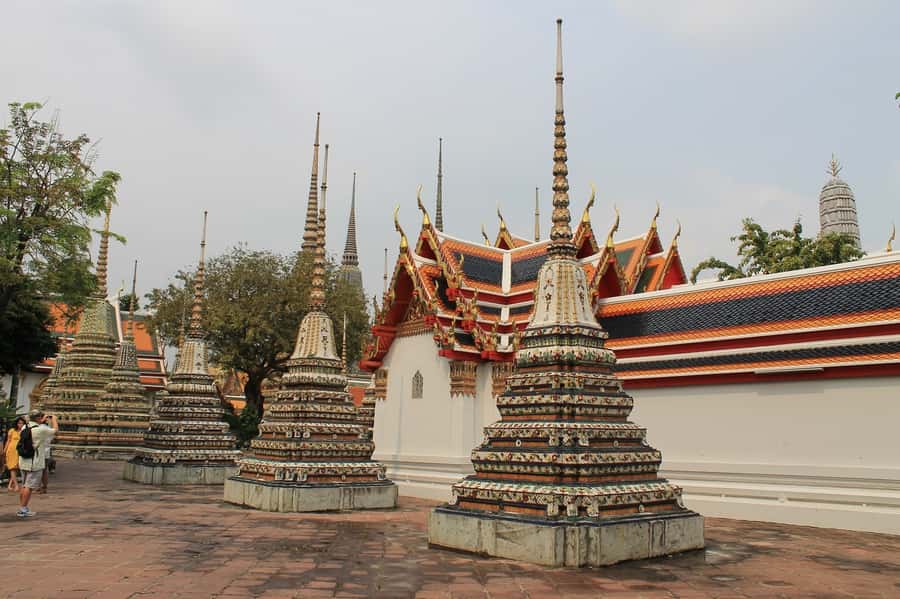
What I like about starting here is that Wat Pho gives you the visual language first. You’ll see typical motifs around the temple grounds, and your guide can connect those symbols to the practical day-to-day meaning of Buddhism in Thailand. The reclining Buddha is the headline, but the surrounding details help you avoid the common first-timer problem of only noticing the biggest thing in the frame.
There’s also a specific cultural payoff. Wat Pho is tied to the tradition of Thai massage, and the tour highlight notes that this is where the practice was born. Even if you are not planning to get a massage, knowing the temple’s link to healing traditions makes the whole complex feel more grounded in everyday life, not just sightseeing.
One practical drawback: Wat Pho is close to major palace-area sites, so expect activity around you. A private guide helps you move efficiently, but you may still deal with crowds in the surrounding streets. If you are sensitive to noise, I’d aim for the calmest start time your operator offers.
Wat Arun on the Chao Phraya: Temple of Dawn and why the details matter
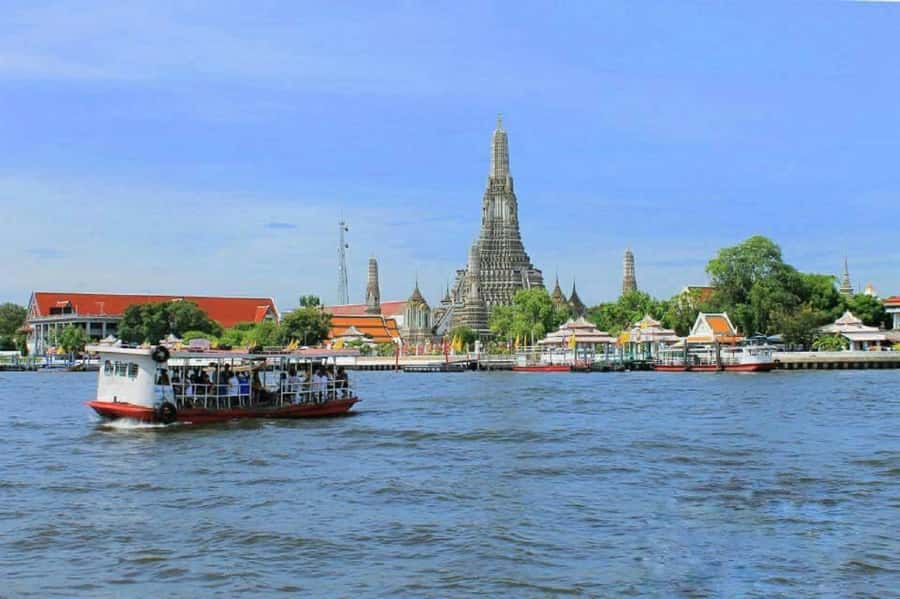
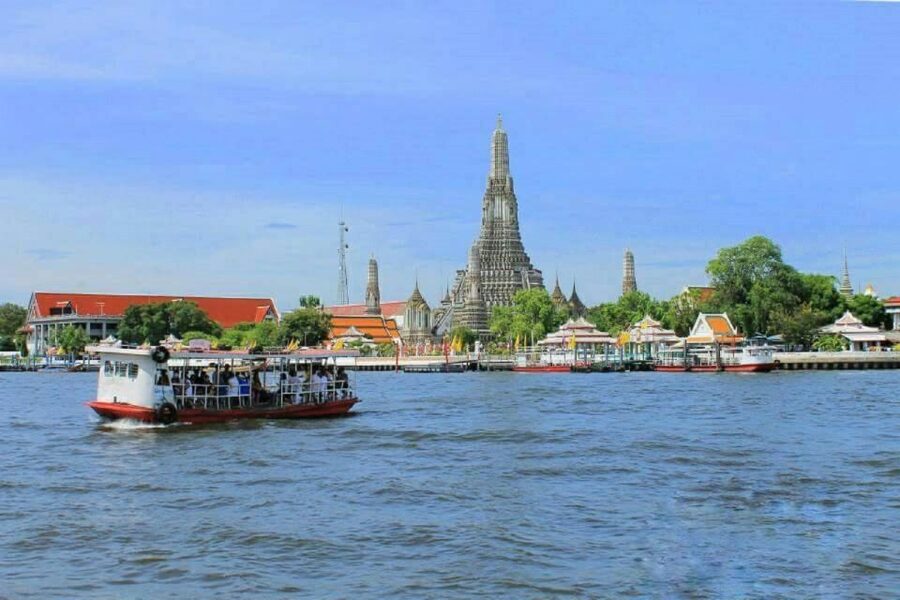
Next comes the river crossing, and that moment is more than a scenic pause. The tour takes you across the Chao Phraya River to Wat Arun, known as the Temple of Dawn. The guide’s job here is to make the place click: what you’re looking at is not random decoration, it is a statement about time, devotion, and the artistry Bangkok inherited from earlier Thai eras.
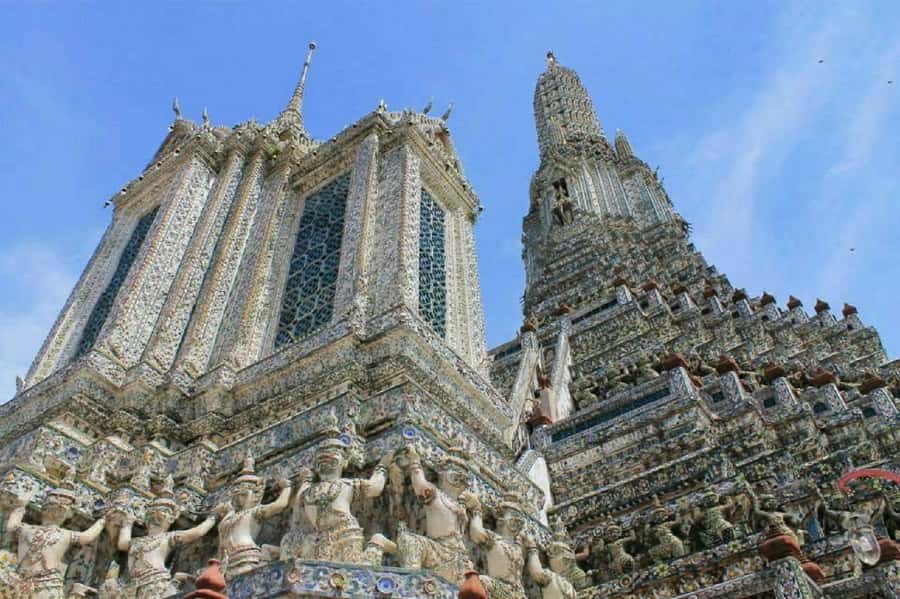
Wat Arun is famous for its stupa-like pagoda form. The highlight description calls out that the structure is encrusted with colorful glazed porcelain tiles and seashells. That matters because the surface is part of the religious message. The pagoda is meant to catch light, show texture, and create a sense of motion as the day changes.
Your guide should also help you interpret the layers. Besides the pagoda, you’ll see many Buddha statues across the temple grounds. When someone explains the layout and what different parts are for, you stop walking past things and start noticing how the space is organized.
The timing also tends to feel better here than in a cookie-cutter group tour. With a private setup, you can spend extra minutes where you care most, like the details of the pagoda surface or the views from the river-adjacent area.
Wat Hong Rattanaram: Chinese and Western art styles, plus Sukhothai roots
The final stop, Wat Hong Rattanaram, is a great way to end because it feels different from the other two. The tour highlight describes a unique combination of Chinese and Western art styles, and that fusion is exactly why this temple is worth a place in your itinerary.
You’ll also get a kingdom connection that most people miss unless they have context. The tour notes the Buddha image from the Sukhothai Kingdom, which ruled Thailand from 1238 until 1438. That is a huge time range, and it helps you understand that Thai religious art did not come from one point in time. Different eras contributed to the visual vocabulary you see across Bangkok.
Why I think this stop is especially valuable on a private tour: the “why” behind the art matters here. Without an explanation, you might just label it as unusual. With a guide, you can connect the design choices to historical trade, cultural exchange, and changing artistic influences.
Also, it is a satisfying finish because you are moving from grand, highly recognized landmarks to a temple that feels more specific and characterful. If your goal is to understand Thailand as more than a highlight reel, this stop helps you do that.
A few more Thailand days to weigh up
- Bangkok by Private Guide: Full Day Tour In and Around
★ 5.0 · 4,323 reviews - Phi Phi: Private Longtail Boat to Maya Bay with Snorkeling
★ 4.7 · 1,632 reviews - Mu Ko Ang Thong Park: Semi-private Sunset Cruise Tour
★ 4.8 · 1,314 reviews - Chiang Rai Temples: Private Tour from Chiang Mai
★ 5.0 · 1,267 reviews
Value and pricing: is $100 per person fair?
At $100 per person, this is not a budget tour, but it is also not priced like a luxury private driver plus a scripted museum lecture. You are paying for several things at once: an English-speaking guide, roundtrip hotel transfers, a personalized routing in Bangkok, and included entry tickets for Wat Pho (THB 200) and Wat Arun (THB 100).
The big value question is time. Four hours is tight enough that you want someone else to handle logistics while you focus on seeing. Hotel transfers matter because they reduce the “how do we get there?” friction that can eat up your half-day.
One thing to keep in mind: the included ticket amounts listed are for Wat Pho and Wat Arun. The tour does visit Wat Hong Rattanaram, but the provided info does not list a ticket price for it. If you are trying to calculate the total all-in cost, confirm what is included for that final temple with the operator.
Where the tour clearly earns its price is the guide quality. The standout pattern in the feedback you have is not just that the guides were friendly. It is that they were described as informative, patient, and tuned to what the person needed that day. For solo travelers or older visitors, that matters. If you are someone who wants history explained in human terms, a good guide is the difference between “I saw temples” and “I understood why they matter.”
Guides that set the tone: what the reviews point to
This tour’s strongest theme is the guide experience. I see names like Mina, Kay, Amy, Lily, Emi, Oiee, and Tawee linked to praise for being pleasant, supportive, and good at history and temple architecture explanations.
A couple of practical takeaways matter for you:
- You can expect a guide who will slow down for questions, not just march you through.
- You may get smart timing help, including suggestions for what to do after the temples and, in some cases, getting to viewpoints or key areas before peak crowds.
- You’ll likely leave with a clear plan, like where to go next around the Grand Palace area after your temple circuit.
That last part is underrated. A private tour is not just the four hours inside temples. A good guide makes your next choices easier, and that is where Bangkok can either feel effortless or exhausting.
What to wear, shoe rules, and river-day comfort
This tour comes with temple conduct rules, and you should treat them as part of the experience, not a hassle.
You cannot wear:
- Shorts
- Short skirts
- Sleeveless shirts
There is also a national shrine attire requirement: no bare shoulders and knees, and strapless-heel shoes are not appropriate. For the footwear rule, shoes must be removed before entering temple buildings. The tour info also recommends comfortable shoes that come off easily.
My practical advice: wear light, breathable clothing that covers your knees and shoulders. Bring an extra layer only if you know you get cold, because temples can be cooler once you step inside. And if you are wearing socks that you care about, consider bringing backups, because you will be removing shoes more than once.
For the river crossing, keep your phone and camera protected from incidental splashes and wind. You are not doing anything extreme, but you are on a working river in a city, and small discomforts can add up over four hours.
Who this private tour suits best
This is a strong fit if any of these describe you:
- You want a personalized half-day with an English-speaking guide.
- You like history that is tied to what you see on the walls and pagodas, not just dates.
- You are traveling with limited time and want the “big three” temple experience without building your own route.
- You prefer a calmer pace than a large group tour, especially for photo time and questions.
It is also a good option if you are a solo traveler. The feedback includes praise for solo-friendly guide support, including patience and care, which is exactly what you want in a place with temple rules and shoe-removal moments.
If you are the type who only wants the most famous sites and you hate explanations, you might feel the tour is more structured than you want. But if you like understanding the symbols, the capitals connection, and how Thai kingdoms influenced temple styles, you will likely enjoy it.
After the temples: how to use the remaining time
By the time you finish this trio, you’ll have a stronger sense of where Bangkok’s religious art fits in the country’s timeline. That makes the rest of the day easier. You will recognize architectural patterns and understand why some temples feel grand and others feel more hybrid.
The guides on this tour are known for giving next-step suggestions, even recommending where to go after you visit the Grand Palace area. So when your guide asks what you want to do next, think about whether you want more temples, a meal that leans local, or just time to relax near the river.
Should you book this Wat Pho, Wat Arun and Wat Hong Rattanaram private tour?
I’d book it if you want a guided, private way to connect Bangkok with Thailand’s earlier capitals and kingdoms in a single afternoon. The mix is smart: Wat Pho for the reclining Buddha and Thai massage tradition, Wat Arun for the dawn pagoda and its porcelain detail, and Wat Hong Rattanaram for the Chinese-Western art blend plus the Sukhothai Buddha link.
Skip it or think twice if you cannot meet the dress code, hate shoe removal, or only want free-and-simple sightseeing with no explanations. Also, if you need lunch built into your day, note that it is not included.
Overall, at $100 per person, the price makes sense because you get a private guide, hotel transfers, and included entry for two major temples, plus a route that helps you learn instead of just collect stamps.
FAQ
Which temples are included?
This private tour includes visits to Wat Pho, Wat Arun, and Wat Hong Rattanaram.
How long is the tour?
The duration is 4 hours.
Does the price include hotel transfers?
Yes. Roundtrip Bangkok hotel transfers are included, with pickup possible from main areas of Bangkok.
Are temple entry tickets included?
Entry tickets are included for Wat Pho (THB 200 per person) and Wat Arun (THB 100 per person). The provided info does not list an entry ticket amount for Wat Hong Rattanaram.
What language is the guide?
The tour includes an English-speaking guide.
What should I wear to enter the temples?
You should follow the temple dress code: no shorts, short skirts, or sleeveless shirts. For a national shrine, you will need proper attire with no bare shoulders and knees. Shoes must be removed before entering temple buildings.
Is lunch included?
No, lunch is not included.
Newest Thailand reviews on the site
- Bangkok Dinner Cruise with Intl Buffet, Live Music & Hotel Pickup★ 4.5 · 12 reviews
- Half-Day Tour : PRIVATE Grand Palace & Temples★ 5.0 · 14 reviews
- Maeklong Railway and Damnoen Saduak Floating Market Tour★ 5.0 · 11 reviews
- The Luxury White Cruise Experience★ 3.5 · 34 reviews
- Luxury Dinner Cruise with Guide and Transfer (Opt. Executive Van)★ 5.0 · 9 reviews
- Bangkok Luggage Storage★ 4.5 · 37 reviews
- Bangkok Luggage Delivery from Hotel to Airport★ 5.0 · 25 reviews
- Baiyoke Sky Dinner Experience with Observation Deck Access★ 3.5 · 57 reviews
Grand Palace & Bangkok Temples, compared.
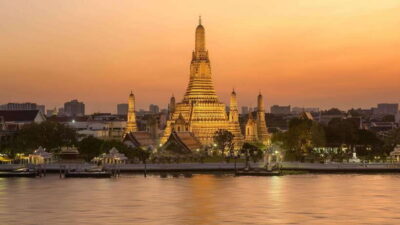
Grand Palace, Wat Pho, and Wat Arun Guided Tour
Read our review →
Grand Palace and Wat Phra Kaew Guided Walking Tour
Read our review →
Grand Palace, Wat Pho, Wat Arun Sacred & Local Tour
Read our review →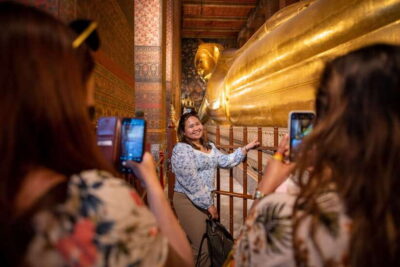
Grand Palace & Temples of Bangkok with experienced guide
Read our review →
Grand Palace, Wat Pho, and Wat Arun Private Tour
Read our review →
Evening Tour with Wat Arun, Wat Pho & Tuk Tuk Ride
Read our review →Browse the lists this tour appears in