
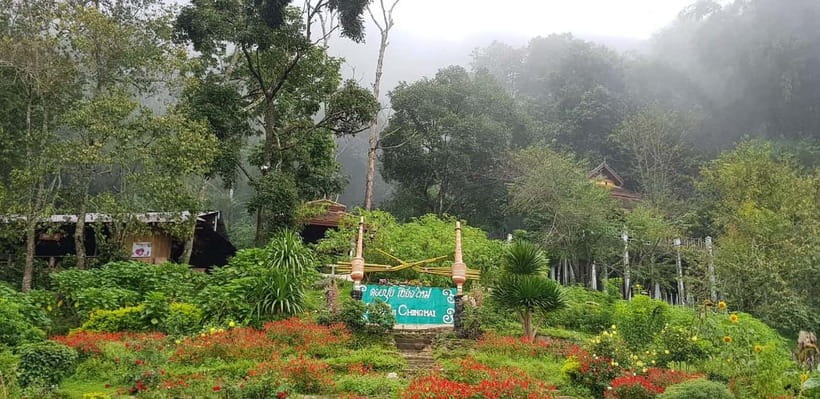
Review · DOI SUTHEP TOURS
Chiang Mai: Doi Suthep Temple & Hmong Village Tour
Doi Suthep is all about the climb and views. This half-day trip hits Wat Phra That Doi Suthep’s golden pagoda and the mythical Naga staircase, then rewards you with a 3,520-foot viewpoint over Chiang Mai. My only heads-up is the Hmong village portion can feel rushed or shopping-forward, so if you want a slow, quiet village hang, go in with clear expectations.
I also like that you get hotel pickup in much of downtown, plus a licensed English guide to connect the dots between temple art, Lanna architecture, and daily hill tribe life. It runs about 4 hours total, and it’s wheelchair accessible, but you will still want comfortable shoes if you choose to walk up those 306 steps.
In This Review
- Key highlights to know before you go
- A 4-hour loop: temples, views, and a village stop that stays practical
- Pickup timing and where the van actually finds you
- Rolling hills drive: it’s not sightseeing theater, it’s repositioning
- Wat Phra That Doi Suthep: the Naga staircase and a golden pagoda that you can see from far away
- Cable car or stairs: choose your comfort, not your pride
- The viewpoint at 1,056 meters: where Chiang Mai looks like a map
- Hmong village visit: culture and textiles, with a shopping reality check
- Guide style and group rhythm: why your morning can feel different
- Price and value at about $22 per person: what you’re really paying for
- Practical tips: shoes, dress code, and how to shop without stress
- Should you book this Doi Suthep and Hmong village tour?
- FAQ
- How long is the Chiang Mai Doi Suthep and Hmong village tour?
- What are the pickup times and areas in Chiang Mai?
- Is the cable car included, or do I need to climb the stairs?
- What is included in the ticket price?
- Is there time to visit the Hmong village market, and can I buy things?
- Is the museum ticket at the Hmong village included?
- What should I bring, and what clothes are not allowed?
Key highlights to know before you go
- Golden pagoda at Wat Phra That Doi Suthep: Lanna style details with gold-plated surfaces and decorative umbrellas
- Naga staircase (306 steps): dragon-headed serpent elements that make the climb feel like part of the story
- Cable car or stairs: you can go up by cable car or walk, both included
- Big viewpoint for Chiang Mai: a high lookout at roughly 1,056 meters
- Hmong village visit and handicrafts: learn about daily life, then browse textiles and crafts
A 4-hour loop: temples, views, and a village stop that stays practical
This tour is built for travelers who want real Chiang Mai texture without burning an entire day. You get a morning drive through the hills, a guided temple visit at Wat Phra That Doi Suthep, and a shorter guided stop at a Hmong hill tribe village. It’s not a two-week cultural study, so you’ll have to enjoy it for what it is: a tight, efficient sampler.
What makes the half-day format work is the order. You do the temple while you’re still fresh, when the climb is easier to enjoy. Then you shift to the village visit, which is more about meeting people and seeing everyday material culture, including clothing and textiles. The day ends with drop-offs back in central areas.
Timing matters on this one. The day moves in van segments: about an hour driving to the temple, then a short transfer to the village, then a longer ride back to downtown. If you’re the type who needs lots of unscheduled time, you might find the pacing a little structured. If you like a clear plan and don’t mind moving as a group, it feels efficient.
More Temple Tours in Chiang Mai
- Chiang Mai: Chiang Rai Temples, Karen Tribe and Hot Springs
★ 4.7 · 5,401 reviews - Chiang Rai White Temple and Blue Temple Day Tour
★ 4.6 · 3,366 reviews - Chiang Mai: White, Red/Black & Blue Temples Tour with Lunch
★ 4.2 · 2,017 reviews
Pickup timing and where the van actually finds you
Pickup depends on where you’re staying, and this tour is pretty specific about it. If you’re in the Night Bazaar and Old Town zones, pickup is between 8:00 and 8:30 am. Santitham and Nimman Haemin pickups tend to run 8:30 to 9:00 am.
Two practical notes help you avoid stress. First, bring your hotel name so the driver can locate you correctly, and if you’re using a place like an Airbnb, you need to pick a nearby building location that shows up on Google Maps with a clear name. Second, this is a van tour, so be ready for a bit of waiting while everyone is assembled.
At the end, you get drop-offs in downtown, including locations like McDonald’s in Chiang Mai and the McDonald’s near Imhotel Tai Pae (listed as 맥도날드 임호텔-타패점). That’s handy if you want to head straight to lunch without another long transit plan.
Rolling hills drive: it’s not sightseeing theater, it’s repositioning
The drive through the rolling hills is part of the value here. You’re leaving the city for a temple perched up on the mountain, so you need that moving time anyway. Still, the ride is a nice reset, especially if your Chiang Mai days so far have been mostly street-level exploring.
You’ll spend about 1 hour in the first van segment. Then there’s another transfer, roughly 20 minutes, to the Hmong village. That structure means you’re not bouncing all day. The van time is simply what makes the temple and village pair possible in a single morning.
If you hate car rides, this tour might test your patience. If you accept it as the cost of seeing a mountain-top temple plus a hill tribe village in one go, it feels like a fair trade.
Wat Phra That Doi Suthep: the Naga staircase and a golden pagoda that you can see from far away
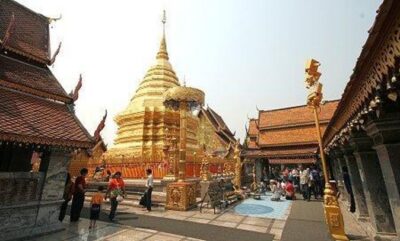
The temple stop is the star. You’ll get a guided visit for about 1 hour at Wat Phra That Doi Suthep, one of Chiang Mai’s best-known religious sites. The big visual is the golden pagoda in a Lanna architecture style, covered with engraved gold plates and framed by four ornamental umbrellas.
But the temple is more interesting than the photo. The approach has story energy. From the bottom, you either take the cable car up or climb a staircase of 306 steps. Either way, the design theme continues: those steps are lined with the mythical Naga, a dragon-headed serpent that snakes down the stairway.
That Naga feature matters because it turns a climb into a guided experience. Even if your legs are complaining halfway up, you’re not just going from point A to point B. You’re walking through temple symbolism.
One more detail you’ll likely notice is how the temple complex is positioned to give you that sweeping sense of height. The guide’s explanations can help you connect what you’re seeing to local religious ideas and regional art style, which is why a strong guide makes this stop feel way more than sightseeing.
More Doi Suthep visits:
- Chiang Mai: Doi Suthep and Wat Umong Enchanting Evening Tour
★ 4.6 · 1,811 reviews - Chiang Mai: Doi Suthep, Wat Umong, and Pha Lat Sunrise Tour
★ 4.7 · 1,425 reviews - Chiang Mai: Wat Pha Lat & Wat Phra That Doi Suthep Tour
★ 4.8 · 1,207 reviews - Wat Phra That Doi Suthep spiritual Sunrise Tour with an Ex-monk
★ 5.0 · 798 reviews
Cable car or stairs: choose your comfort, not your pride
You have two included ways up: cable car or 306 steps. For me, this is one of the best features of the tour because it lets you match the experience to your body.
If you choose the stairs, wear shoes you trust. The walk is long enough that slippery footing would be annoying, and you’ll be outside on a mountain. Bring water and sunscreen too, since the temple viewpoint can be sunny.
If you choose the cable car, you still get to enjoy the temple once you arrive, including the guided look at the golden pagoda and the view. The cable car also helps if you’re traveling with anyone who has mobility limits, or if you simply want to save your energy for the viewpoint and the village visit later.
Either choice is valid. This isn’t one of those tours where you feel guilty unless you suffer. The tour includes both options for a reason.
The viewpoint at 1,056 meters: where Chiang Mai looks like a map
After you reach the top area, you get the payoff: a panoramic view of Chiang Mai from a viewpoint listed at 3,520 feet (about 1,056 meters). This is one of those moments where the city stops feeling like a place you wander and starts feeling like a system you can understand.
That’s why this part is worth the effort. From street level, you experience Chiang Mai as neighborhoods, markets, and streets. From up here, you see the layout, the spread, and the sense of how the city relates to the surrounding hills.
If the weather is hazy, don’t panic. The point still lands. You’ll often get at least enough clarity to appreciate the scale. And with a guided stop, your guide can point out what you’re likely looking at based on direction and general geography, so you’re not just staring at fog and guessing.
Hmong village visit: culture and textiles, with a shopping reality check
The village stop is a 40-minute guided visit. This is the part where expectations matter most, because it’s not set up as a long conversation or a slow community walk. The plan is to show you daily life basics, colorful traditional clothing, and then give you time to browse.
Here’s the value: you’ll see how textiles and handmade crafts show up in real life, not just in a display. The visit includes opportunities to purchase local handicrafts, including textiles, ornaments, and handicrafts. In other words, this part of the experience doubles as a market visit.
You should also know there can be a pull toward shopping. Some guides are careful and patient, while others move faster because the schedule is tight and everyone wants to make the most of the morning. One useful mindset for you: look, ask questions, and buy only what you truly like. Negotiating can be fun, but don’t let it turn into a stressful game where you feel pressured to spend.
There is also an optional museum ticket at the village listed at 20 Baht. If you’re curious, you can treat it as a small add-on, but it isn’t required.
One more thing: this village visit can vary in how relaxed it feels. If you want more time to browse a market area, you may need to ask your guide early and clearly. Otherwise, you’ll likely stick to the tour timing and see what the allotted minutes allow.
Guide style and group rhythm: why your morning can feel different
This tour is led by a licensed English guide, and guide quality can change the feel a lot. One name you may hear mentioned is Taya, who has been called out for being very informative during the Doi Suthep portion. That matters because temple visits can be pure looking, or they can be guided learning. A good guide helps you understand what you’re seeing, especially with things like Lanna architectural features and the symbolic meaning behind temple design.
The group rhythm also affects your experience. The tour keeps moving between stops, and there’s a short turnaround at each. That’s great if you like structure. It can be frustrating if you want to linger.
There’s also a practical speed issue at the village stop. If you’re hoping for a long, unhurried textile browsing session, don’t count on it. The visit is time-boxed, and your guide may try to stay on schedule.
That said, there are signs the guide can also be flexible in real-life situations. For example, when someone had a problem with being able to pay, the guide reportedly helped by advancing entries so they could still access parts of the village area. That’s a good reminder that guides are not just traffic managers, they’re also problem solvers when something goes wrong.
Price and value at about $22 per person: what you’re really paying for
At $22 per person for a roughly 4-hour tour, the value comes from what’s included, not from the sticker price.
You’re getting:
- Hotel pickup and drop-off within downtown
- Wat Phrathat Doi Suthep ticket
- Cable car (so you don’t have to decide and then pay)
- Licensed English tour guide
- Travel accident insurance
That combination is meaningful. Temple entry plus cable car can add up quickly if you were doing it on your own. The guide also saves you time, because you’re not trying to piece together which parts matter most and how to interpret the temple details.
Where the value can drop slightly is the village portion, because it can feel more market-oriented than you might want. The Hmong stop is still guided and educational, but it’s also a place where shopping is part of the deal. If you love textiles and handicrafts, that’s perfect. If you’re there mainly for cultural learning and you prefer slower conversations, you might wish for more time.
So I’d frame it like this: you’re paying for an organized, efficient mountain day with transport, temple access, and an added village visit. If those are your goals, the price makes sense.
Practical tips: shoes, dress code, and how to shop without stress
This is a morning trip, so plan for outdoor walking and strong sun.
Bring:
- Comfortable shoes (especially if you choose stairs)
- Camera
- Sunscreen
- Water
Dress smart for temple rules and comfort. Shorts and sleeveless tops can put you in awkward territory because the tour lists restrictions like short skirts and sleeveless shirts as not allowed. You also want to avoid anything that feels too revealing. Think modest and breathable.
The tour also bans:
- Pets
- Luggage or large bags
- Non-folding wheelchairs and non-folding strollers
- Unaccompanied minors
That last one is important if you’re traveling as a family. If there are kids, make sure they meet the tour’s policy.
When it comes to shopping in the Hmong village, a simple strategy works best. Browse first, compare second, and only negotiate when you’re ready to buy. If you’re trying to decide between textiles, look closely at what’s actually being made, not just the final look. And don’t feel obligated to buy because you’re standing in front of a vendor. The visit gives you time, so you can treat it like a real market stop.
Should you book this Doi Suthep and Hmong village tour?
Book it if you want:
- A guided half-day temple experience at Wat Phra That Doi Suthep
- The option to go up by cable car or tackle 306 steps
- A scenic view over Chiang Mai from about 1,056 meters
- A short, structured Hmong village visit with chances to see and shop for textiles and crafts
Skip it or switch expectations if you strongly prefer:
- A long, slow village immersion with no shopping pressure
- Lots of free time to wander independently
My take: this tour is a solid way to combine Chiang Mai’s most iconic mountain temple with a hill tribe village visit, and the included cable car plus temple access help the value. Just go in knowing the village time is limited, and plan to focus on what you can learn and enjoy in 40 minutes, then browse with confidence rather than feeling rushed.
FAQ
How long is the Chiang Mai Doi Suthep and Hmong village tour?
The tour duration is 4 hours.
What are the pickup times and areas in Chiang Mai?
Pickup depends on your area. Night Bazaar and Old Town areas are picked up between 8:00 and 8:30 am. Santitham and Nimman areas are picked up between 8:30 and 9:00 am.
Is the cable car included, or do I need to climb the stairs?
Both options are included. You can take the cable car to reach the top, or climb the 306 steps to the temple.
What is included in the ticket price?
Included items are hotel pickup and drop-off within downtown, Wat Phrathat Doi Suthep ticket and cable car, a licensed English tour guide, and travel accident insurance.
Is there time to visit the Hmong village market, and can I buy things?
You have a guided visit to the Hmong village for about 40 minutes, and the visit includes opportunities to purchase local handicrafts. Bargaining is possible during your visit.
Is the museum ticket at the Hmong village included?
No. A museum ticket at the Hmong hill tribe village is listed as optional for 20 Baht.
What should I bring, and what clothes are not allowed?
Bring comfortable shoes, a camera, sunscreen, and water. The tour lists short skirts and sleeveless shirts as not allowed, along with pets and large bags.
More Temple Visits around Chiang Mai
- Chiang Mai: 3 Hour Old City and Temples Guided Walking Tour
★ 4.6 · 1,568 reviews - Chiang Rai Temples: Private Tour from Chiang Mai
★ 5.0 · 1,267 reviews - From Chiang Mai: White Temple & Golden Triangle Day Trip
★ 4.6 · 1,193 reviews - From Chiang Mai: Chiang Rai’s Temples Exploration Day Trip
★ 4.5 · 871 reviews
Newest Chiang Mai reviews on the site
- Tour with Hike in Kiew Mae Pan Natural Trail from Chiang Mai★ 4.8 · 26 reviews
- Chiang Mai: 22 km XC Mountain Biking from Sticky Waterfall★ 4.7 · 13 reviews
- Sticky Waterfall Half-day with Private Car★ 4.9 · 37 reviews
- Sticky waterfalls- Elephants- Bamboo or White water rafting.★ 5.0 · 9 reviews
- Red, Blue, White Temples & Hot Spring Trip from Chiang Mai★ 4.4 · 143 reviews
- Private Tour Pha Chor Canyon & Doi Inthanon National Park★ 5.0 · 23 reviews
- Private Tour Doi Inthanon, Trekking Kew Mae Pan Nature Trail★ 5.0 · 11 reviews
- Private Doi Inthanon, Nature Trail, Wat Phra That Doi Kham★ 5.0 · 6 reviews
Doi Suthep Tours, compared.
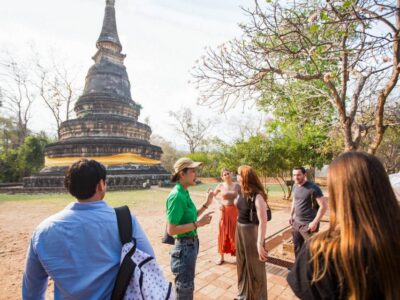
Doi Suthep and Wat Umong Enchanting Evening Tour
Read our review →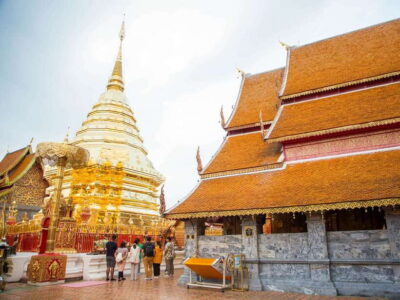
Doi Suthep, Wat Umong, and Pha Lat Sunrise Tour
Read our review →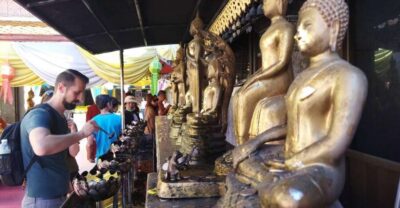
Wat Phra That Doi Suthep spiritual Sunrise Tour with an Ex-monk
Read our review →

4-Hour Doi Suthep & Hmong Hill Tribe Village from Chiang Mai
Read our review →
Spiritual Sunrise Wat Doi Suthep, Pha Lat, Alms & Meditation
Read our review →Browse the lists this tour appears in