
Review · COOKING CLASSES
Chiang Mai: Morning Cooking Class with Market Visit
Five hours of Thai food, from market to pan. It starts with hotel pickup and a local market run, then moves to an organic garden where you pick ingredients, and ends in an air-conditioned kitchen studio cooking your own meal.
I love that you learn by doing, not just watching. The class has an English-speaking instructor and a practical flow, from shopping and herb picking to hands-on technique.
One consideration: the day is timed tightly around the morning market, and the driver only waits a short window after pickup time, so you’ll want to be ready when they come.
In This Review
- Key highlights that matter
- Morning flow: how the day actually plays out
- Hotel pickup and timing, the part that can make or break it
- The market visit: smelling ingredients before you name them
- Organic garden and farm stop: herbs you actually pick
- Galangal Cooking Studio: technique, not just recipes
- Choosing your dishes: how to build your perfect Thai meal
- Starter options
- Main stir-fry options
- Soup options
- Curry options and curry paste practice
- Dessert options
- Dietary needs: vegan, vegetarian, halal, and gluten-free
- Price and value: is $41 actually fair?
- What you get to take home, besides full stomach
- Family-friendly rhythm and how the class feels day to day
- Practical tips to get the best outcome
- Who should book this Chiang Mai cooking class
- Should you book this Chiang Mai morning market and cooking class?
- FAQ
- How long is the Chiang Mai morning cooking class?
- Is hotel pickup and drop-off included?
- What time does pickup happen?
- What happens before you start cooking?
- What dishes will I cook?
- Is the instructor teaching in English?
- Can people with dietary restrictions join?
- What is included in the price, and what is not included?
- Is free cancellation and reserve-pay-later available?
Key highlights that matter
- Market-first ingredient shopping for a real sense of what Thai cooks actually buy
- Pick-your-own herbs at an organic garden, with simple farming context you can use
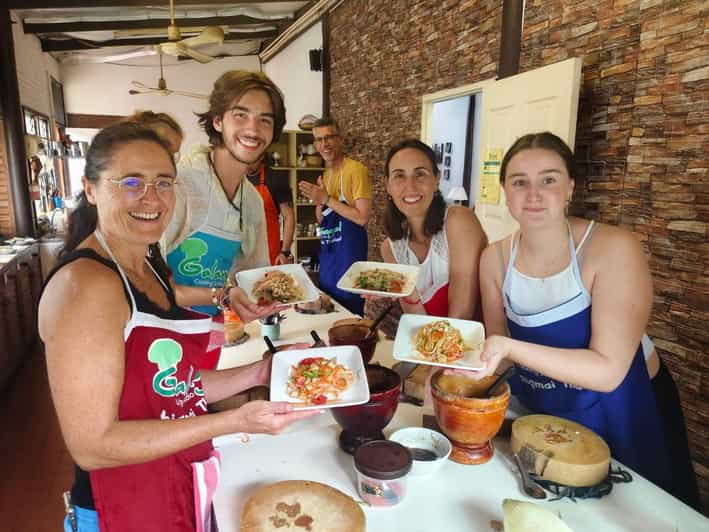
- Hands-on Thai technique as you cook a total of 6 dishes plus dessert
- Choose your dishes across starter, stir-fry, soup, curry paste, and curry
- Take-home PDF recipes so your cooking doesn’t end when the class does
Morning flow: how the day actually plays out
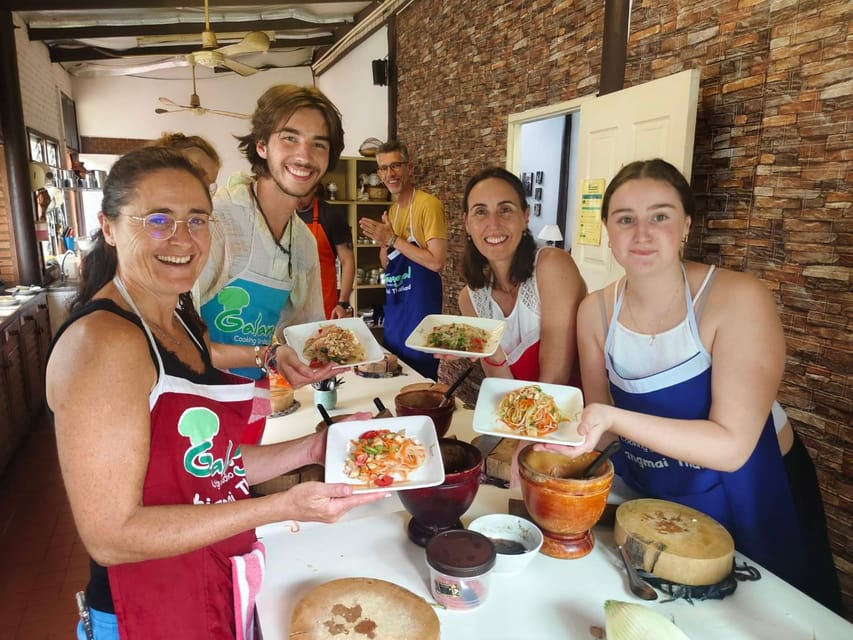
This is a classic Chiang Mai morning plan, built around three phases: shop, grow, cook. It’s designed to get you from the sights and smells of Thailand into the skills you can use later.
The day starts with hotel pickup in Chiang Mai. You’ll then head to a local market to see and select fresh ingredients. After that, you go to an organic garden and farm area to learn how vegetables and herbs are grown in Thailand, and you’ll pick items you can use in your cooking. Then you move to the cooking studio where the lesson and meal prep happen in an indoor kitchen and air-conditioned dining room.
The pacing is part of the value. You’re not stuck repeating the same steps all morning. You’ll also be deciding what to cook, which keeps the time feeling purposeful.
More Cooking Classes in Chiang Mai
- Half-Day Thai Cooking Class at Organic Farm in Chiang Mai
★ 5.0 · 19,087 reviews - Chiang Mai: Cooking Class, Market & Thai Herbs Garden Tour
★ 4.9 · 4,824 reviews - Chiang Mai: Authentic Cooking Class with Market & Farm Visit
★ 4.9 · 4,546 reviews
Hotel pickup and timing, the part that can make or break it
Pickup runs between 8:30 and 9:00 AM. The driver arrives before 9:00, and you’re asked to wait in the hotel lobby 5 to 10 minutes before the scheduled pickup time. The driver will wait no longer than 5 minutes after the scheduled time, and traffic and multiple pickup points can affect how fast you roll out.
Here’s the practical move: set a reminder to be ready early, not right on time. If your hotel is outside the pickup coverage, you’ll be told you need to get yourself to the market or cooking studio, and they’ll share the address and arrival time. If you prefer to skip pickup, you can also come directly to the cooking studio.
Why this matters: the market visit is part of the learning. If you show up late, you can miss that ingredient shopping and context, and that reduces what you get out of the class.
The market visit: smelling ingredients before you name them
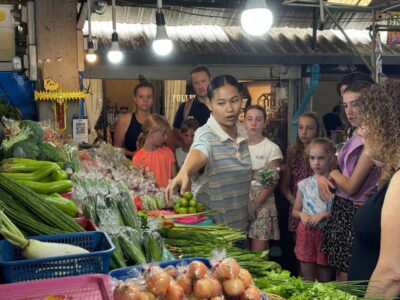
You start with a local market where you can shop for fresh ingredients. This is one of the smartest parts of the experience because Thai cooking is ingredient-driven. Seeing the produce in person helps you understand what you’re aiming for, not just the recipe steps.
You’ll get to smell and handle items while you browse. That matters for Thai flavor because herbs, aromatics, and chili heat are not all interchangeable. The whole point is to help you recognize what makes each dish taste like itself, like the difference between a bright herb note and a deeper earthy one.
Also, the market feel is typically very local, with Thai shoppers doing real errands, not just sightseeing. You’ll get a sense of what’s normal to buy on a regular day, which makes your later cooking choices feel more grounded.
One small note: the market tour is listed as depending on interest. In practice, that often means you can lean in and ask questions, or you can keep the shopping focus on what you need for your chosen dishes.
Organic garden and farm stop: herbs you actually pick
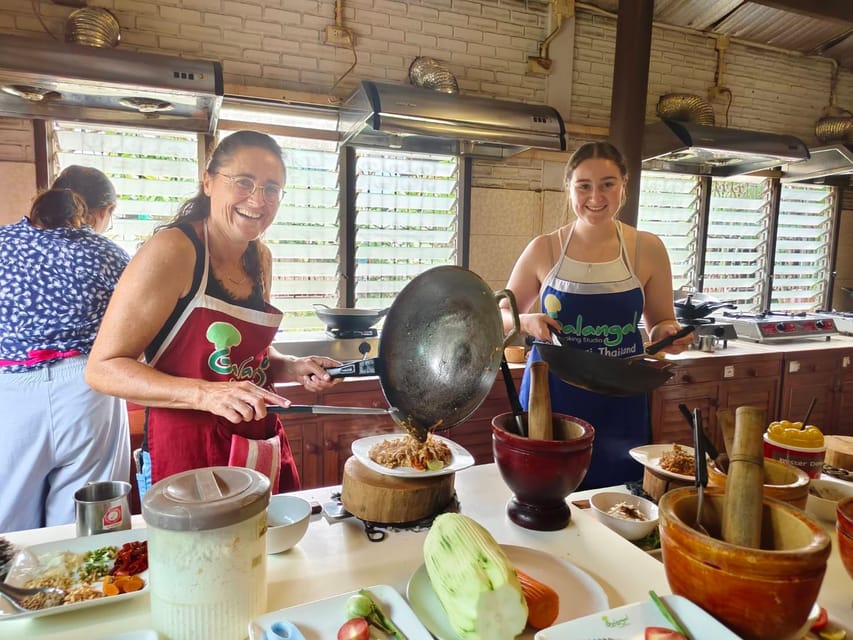
After the market, you head to an organic garden area. This is where you learn the basics of how vegetables and herbs are grown in Thailand, and you get to pick some of the ingredients you’ll use later.
Picking your own herbs and vegetables does two things. First, you remember the ingredient names because you physically chose them. Second, it gives you a better sense of how fresh Thai cooking tastes when ingredients are at their peak.
If you like gardening or you’re the type who cares where food comes from, this stop adds meaning beyond the cooking. If you’re purely in it for recipes, it still helps, because your ingredient choices will make more sense once you know what’s typically grown and harvested in-season.
More Market Tours in Chiang Mai
- Chiang Mai: Cooking Class with Market and Pickup
★ 4.9 · 1,365 reviews - Chiang Mai: Evening Cooking Class and Local Market Visit
★ 4.9 · 648 reviews - Chiang Mai: Evening Local Street Food Market Tour
★ 4.8 · 604 reviews - Chiang Mai: Kalare Night Bazaar Boxing Stadium Muay Thai
★ 4.7 · 507 reviews
Galangal Cooking Studio: technique, not just recipes
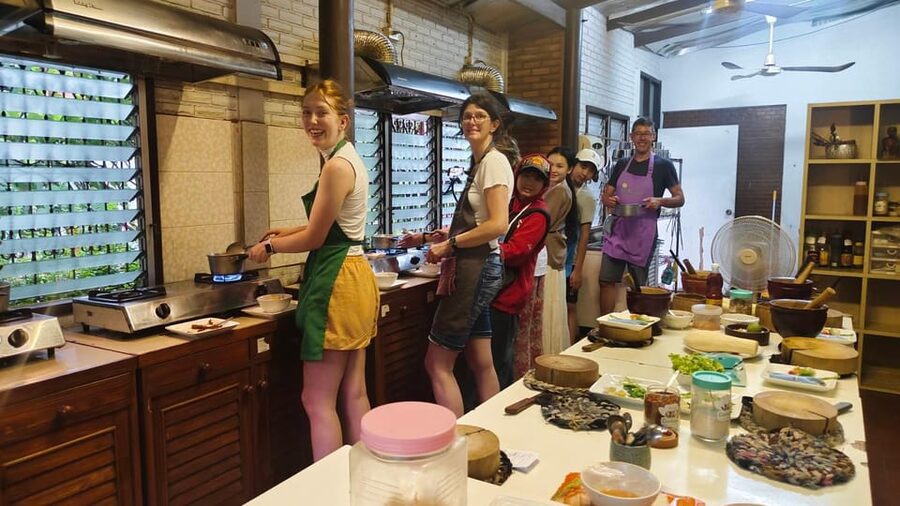
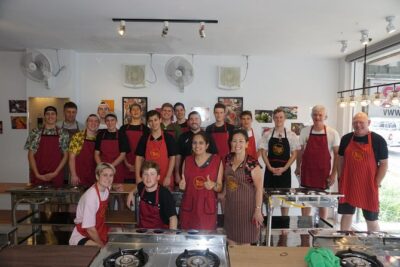
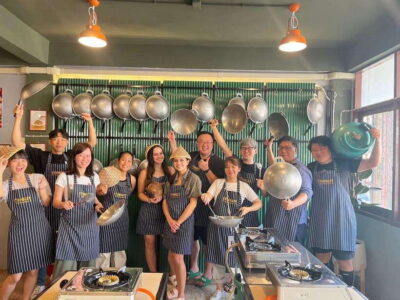
Once you arrive at the cooking studio, the lesson starts. This part is hands-on and structured so you can learn the cooking skills used in Thai cuisine. The studio has an indoor kitchen and a dining room that’s air-conditioned, which is a welcome break in Chiang Mai mornings.
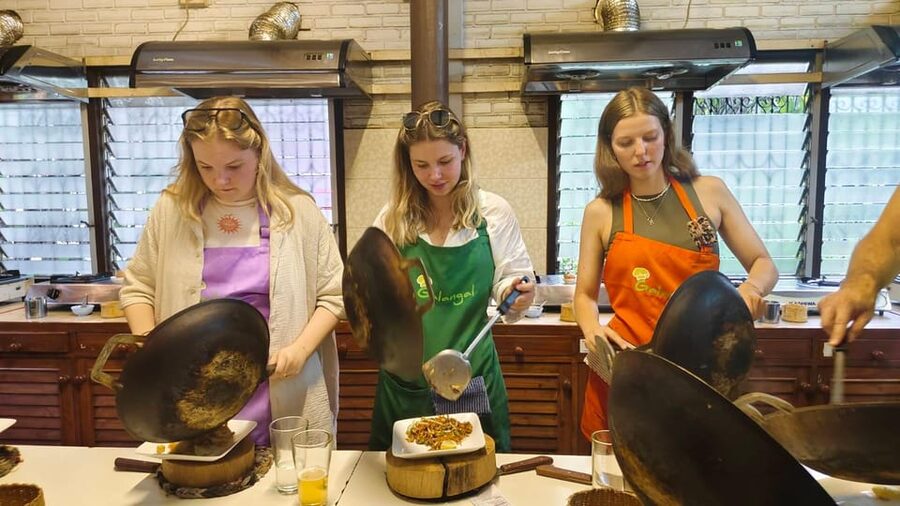
Your instructor teaches in English, so you should be able to follow the steps and also understand why each step matters. In several cases, the teaching style is praised as very clear, and that’s important if you’re a beginner. You’re cooking multiple dishes, not just one, so clarity saves you from turning the class into chaos.
If you’re cooking with a group, you’ll likely work at stations and rotate through tasks as the chef guides timing. The class is set up so different skill levels can keep up.
And yes, the food you make is meant to be eaten together at the end. That turns the morning into an actual meal, not just a tasting of your mistakes.
Choosing your dishes: how to build your perfect Thai meal
The class has you cooking a total of 6 dishes, and you choose among multiple options. You’ll make a mix that covers starter, soup, stir-fry, curry paste (and curry), and dessert.
Starter options
Pick one of these:
- Som Tam (papaya salad)
- Por Pia Thod (spring rolls)
- Larb Kai (chicken salad)
- Yam Woon Sen (glass noodle salad)
If you like bright, crunchy flavors, Som Tam is the obvious choice. If you want something more comforting and crispy, Por Pia Thod gives you that texture hit. If you’re curious about Thai-style herbs and meat salad flavors, Larb Kai and Yam Woon Sen are great ways to taste different Thai approaches to seasoning.
Main stir-fry options
Pick one:
- Pad Thai
- Pad See Ew
- Kai Pad Med Mamuang Him Ma Pan (chicken with cashew nuts)
- Pad Kaphao Kai (minced chicken with holy basil)
Pad Thai is the crowd-pleaser, and you’ll learn the balance that keeps it from tasting one-note. Pad See Ew leans into the chewy noodle side and savory stir-fry flavors. If you want a dish that feels a little more “Thai home-style,” holy basil minced chicken and cashew chicken are excellent choices because you can taste how aromatics drive the sauce.
Soup options
Pick one:
- Tom Yum Kung (hot and sour prawn soup)
- Tom Kha Kai (chicken soup with coconut milk)
- Tom Kha Je (vegan soup with coconut milk)
- Tom Zap Kai (hot and sour with chicken)
This is where Thai flavor goes from sharp to creamy. Tom Yum Kung gives you the classic hot and sour profile. Tom Kha types bring coconut milk into the mix, softening the edges and making the soup feel richer. Having vegan soup as an option is a real win, because you can keep the same Thai flavor family without compromising ingredients.
Curry options and curry paste practice
You can choose one of these curry styles:
- green
- red
- yellow
- massaman
- panang
You’ll also learn about curry paste, because curry in Thailand is built on aromatics and spice paste, not just bottled curry flavor. This is one of the strongest learning outcomes, since curry paste knowledge travels with you. Even if you don’t recreate every spice from scratch later, you’ll understand the structure.
Dessert options
For dessert, choose:
- mango sticky rice with ice cream
- Kuay Tod (deep-fried banana)
Mango sticky rice feels familiar if you’ve tried Thai desserts before, but making it yourself is a different experience than buying it. Kuay Tod is the fun wildcard if you want a crispy contrast and a more snack-like finish.
Dietary needs: vegan, vegetarian, halal, and gluten-free
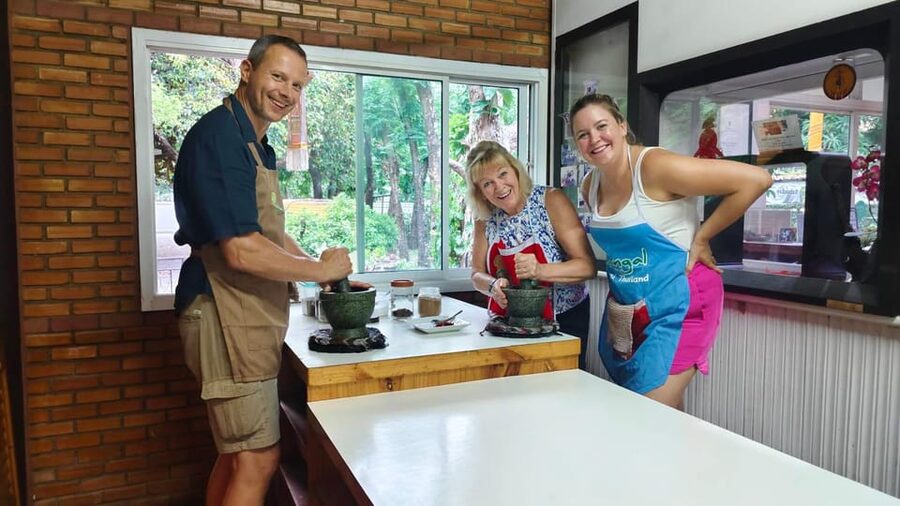
This class is explicitly available for people who are:
- vegan
- vegetarian
- halal
- gluten free
- and people with allergies, as noted in the activity info
That matters because Thai menus can quietly rely on ingredients that don’t fit every diet. Here, the class is designed to accommodate a range of needs rather than treating it as an exception. When a course is structured this way, you can actually participate fully, from shopping to cooking, instead of just eating around the edges.
One practical tip: if you have a specific allergy, bring the detail with you when you arrive. The class info says they can work with allergies, so the more precise you are up front, the smoother it usually goes.
Price and value: is $41 actually fair?
At $41 per person for a 5-hour experience, this is one of the better deals in the Chiang Mai cooking category because you’re paying for multiple things at once: pickup and drop-off, market time, organic garden time, instructor guidance, and the ingredients and equipment for the class.
You’re also getting a recipe PDF book to take home. That turns the class from a one-day memory into something you can repeat. The value is strongest if you’re a beginner or you want to cook Thai food with more confidence at home.
Just know there’s an extra fee listed as not included: 500 baht per adult and 350 baht for children ages 6 to 12. The activity doesn’t specify what that visitor fee is for, so treat it as a budget add-on and plan to pay it at the point it applies.
Overall: if you want a morning activity with real substance, not just a demo, this price structure makes sense.
What you get to take home, besides full stomach
The standout take-home is the PDF recipe book. That’s more useful than a handout you toss in your bag. With a PDF, you can cook the next week, not next year.
It also helps that the class includes water, tea, and coffee. Small comfort, but it keeps the day from feeling like constant thirst management while you’re shopping and cooking.
Because you choose dishes, the recipe book is a better match to what you actually made. That means you’re more likely to use it.
Family-friendly rhythm and how the class feels day to day
The overall vibe is friendly and supportive. In particular, one of the reasons people recommend this kind of class is that it can feel like a shared family outing. Kids can be included, and the teaching approach is described as making space for younger participants to cook alongside adults.
The class also seems to be flexible in group size. Some people end up with very small groups, which can make instruction feel more personal. You also get step-by-step guidance, which is huge when you’re working with herbs and spice pastes for the first time.
If you’re traveling with a mix of cooking interest levels, this format tends to work well. The market and garden parts give non-experts something to learn, while the hands-on kitchen keeps enthusiastic cooks busy.
Practical tips to get the best outcome
A few things to do before you go:
- Come with an empty stomach, since you’ll be hungry during setup and then eating what you make later.
- If you need medication, bring it with you.
- Skip alcohol and drugs, since the activity states they are not allowed.
In the moment:
- Be ready to ask questions about ingredients you’re unfamiliar with. The English instruction is there for a reason.
- Choose dishes that you genuinely want to eat. The class moves fast enough that enthusiasm helps.
And on timing:
- If you’re relying on pickup, aim to be at the lobby early so you’re not negotiating a tight window.
Who should book this Chiang Mai cooking class
Book it if:
- you want a hands-on introduction to Thai flavors
- you like learning through ingredient shopping and picking herbs
- you want clear English instruction and a recipe take-home plan
- you have dietary needs and want a class that can accommodate them
- you’re traveling with friends, family, or even a child who can join in
You might choose something else if:
- you dislike markets, herb picking, and the idea of cooking multiple dishes in a half-day
- you want a totally relaxed, slow-paced tour where timing does not matter at all
Should you book this Chiang Mai morning market and cooking class?
Yes, with eyes open. If you want an actual cooking education, not just a photo stop, this format delivers: market shopping, organic ingredient picking, then a studio where you cook a full set of Thai dishes and dessert.
To make the decision easy, ask yourself one question: do you want the learning that comes from building your meal from scratch? If the answer is yes, this class is a strong value at $41 and an easy way to leave Chiang Mai with skills you can use back home.
FAQ
How long is the Chiang Mai morning cooking class?
It lasts about 5 hours.
Is hotel pickup and drop-off included?
Yes. Pickup and drop-off are included for hotels in specific areas around the old city, Santitham, and Huay Keaw Road, and some parts of other nearby roads. If your hotel is outside the pickup area, they will let you know and you may need to arrange your own transport.
What time does pickup happen?
Pickup is offered between 8:30 and 9:00 AM, and the driver arrives before 9:00 AM. You should wait in the lobby 5 to 10 minutes before pickup, and the driver will wait no longer than 5 minutes after the scheduled time.
What happens before you start cooking?
You go to a local market to see and shop for fresh ingredients. Then you visit an organic garden and farm area, where you learn about how vegetables and herbs are grown and pick some ingredients to use in the cooking class.
What dishes will I cook?
You cook a total of 6 dishes. You choose a starter (Som Tam, Por Pia Thod, Larb Kai, or Yam Woon Sen), a main (Pad Thai, Pad See Ew, Kai Pad Med Mamuang Him Ma Pan, or Pad Kaphao Kai), a soup (Tom Yum Kung, Tom Kha Kai, Tom Kha Je, or Tom Zap Kai), and a curry style (green, red, yellow, massaman, or Panang). You also make dessert (mango sticky rice with ice cream or Kuay Tod).
Is the instructor teaching in English?
Yes. The instructor provides instruction in English.
Can people with dietary restrictions join?
Yes. The activity is available for vegan, vegetarian, Halal, gluten-free participants, and people with allergies.
What is included in the price, and what is not included?
Included: hotel pickup and drop-off, market tour (depending on interest), PDF recipe book versions, instruction from expert staff, water, tea, and coffee, and all ingredients and equipment for the class. Not included: a visitor adult fee of 500 baht per person and a visitor child (ages 6-12) fee of 350 baht per person.
Is free cancellation and reserve-pay-later available?
Yes. You can cancel up to 24 hours in advance for a full refund, and you can reserve now and pay later.
More Markets in Chiang Mai
- Chiang Mai: Thai Cooking and Market Tour with Lanna Smile
★ 5.0 · 44 reviews - Chiang Mai: Sticky Waterfall by Local Truck with Market Stop
★ 4.8 · 26 reviews - Chiang Mai: Traditional Thai-Akha Cooking Class& Market Tour
★ 5.0 · 25 reviews - Chiang Mai: Half Day Evening Cooking Class with Market Tour
★ 4.9 · 19 reviews
More Shopping Tours in Chiang Mai
- Evening Cooking Class in Organic Farm with Local Market Tour
★ 5.0 · 394 reviews - Chiang Mai: Elephants, Sticky Waterfalls, Market and Temple
★ 4.9 · 227 reviews - Half-Day Cooking Class with Market Tour
★ 5.0 · 163 reviews - Chiang Mai: Traditional Thai Cooking Class with Market Tour
★ 4.8 · 137 reviews
Newest Chiang Mai reviews on the site
- Tour with Hike in Kiew Mae Pan Natural Trail from Chiang Mai★ 4.8 · 26 reviews
- Chiang Mai: 22 km XC Mountain Biking from Sticky Waterfall★ 4.7 · 13 reviews
- Sticky Waterfall Half-day with Private Car★ 4.9 · 37 reviews
- Sticky waterfalls- Elephants- Bamboo or White water rafting.★ 5.0 · 9 reviews
- Red, Blue, White Temples & Hot Spring Trip from Chiang Mai★ 4.4 · 143 reviews
- Private Tour Pha Chor Canyon & Doi Inthanon National Park★ 5.0 · 23 reviews
- Private Tour Doi Inthanon, Trekking Kew Mae Pan Nature Trail★ 5.0 · 11 reviews
- Private Doi Inthanon, Nature Trail, Wat Phra That Doi Kham★ 5.0 · 6 reviews
Cooking Classes, compared.
Half-Day Thai Cooking Class at Organic Farm in Chiang Mai
Read our review →
Cooking Class, Market & Thai Herbs Garden Tour
Read our review →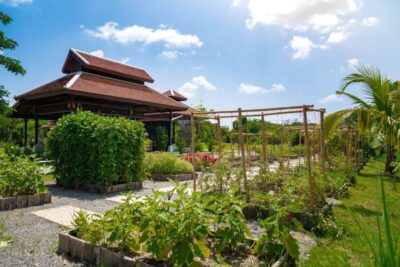
Authentic Cooking Class with Market & Farm Visit
Read our review →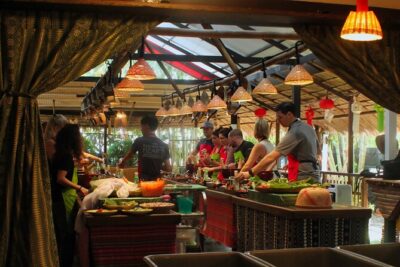
Phuket Thai Cooking Class with Market Tour Option
Read our review →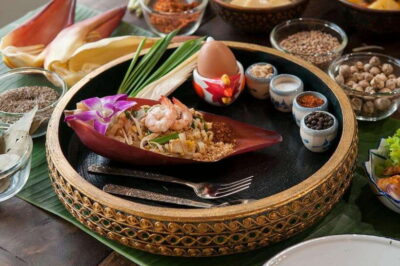
Tingly Thai Cooking School Half-Day Cooking Class
Read our review →Browse the lists this tour appears in